Greasy, baked-on stovetop messes are one of the hardest kitchen cleaning jobs. Scrubbing hard can leave you tired and still staring at dark spots around the burners. That’s why a lot of people have started trying a simple mix of Coca-Cola and Dawn dish soap to loosen stubborn grime before they scrub.
This DIY is meant to soften sticky grease and dried food residue so it lifts more easily. It won’t replace a deep-cleaning session for every stove, but it can make your regular cleanup faster and less frustrating.
What You’ll Need
- Coca-Cola (regular, not diet, about equal parts to the soap)
- Dawn dish soap (the blue Platinum version shown in the source works well)
- A small glass or microwave-safe measuring cup
- A spoon for stirring
- A soft sponge or non-scratch scrubber
- A microfiber cloth
- Warm water and a second cloth for rinsing
- Gloves (optional, but recommended)
Why This DIY Can Be Useful
Dish soap is designed to cut through grease, so it’s a natural base for loosening oily splatters. Cola adds a sugary, slightly acidic liquid that can help soften dried-on food residue and make it easier to wipe away. Together, they create a gentle paste-like mixture that clings to grime long enough to work, rather than running off right away.
Keep your expectations realistic. This mix works best on light to moderate buildup. Heavily burnt-on spots may still need more time or a second application.
How to Make It
- Make sure the stove is turned off and completely cool before you start. Remove grates and burner caps if you can, and set them aside.
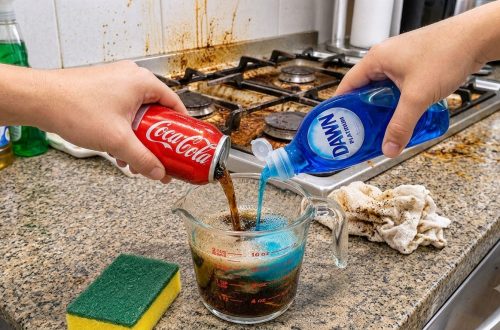
- Pour roughly equal amounts of Coca-Cola and Dawn into your measuring cup. Start with a small batch, about a quarter cup of each, so you don’t waste product.
- Stir gently until the liquids are combined. Some foaming is normal, so let it settle for a moment before using it.
- Pour the mixture into a small bowl or cup you can dip a sponge into, so you can apply it with control.
How to Use It
- Dampen a sponge or cloth slightly with the mixture. You want it wet enough to spread, but not dripping onto the cooktop or into burner openings.
- Work the mixture onto the greasiest areas of the stovetop, the backsplash near the burners, and the grates if they are removable and safe to soak.
- Let it sit for about 5 to 10 minutes so it can loosen the residue. Don’t let it dry out on the surface.
- Scrub gently in small circles using a soft sponge or non-scratch scrubber. Add a little more mixture if spots start to look dry.
- Wipe away the loosened grime with a damp microfiber cloth. Rinse the cloth often to avoid spreading residue around.
- Go over the surface once more with clean warm water to remove any sticky film left behind from the cola and soap.
- Dry the stovetop thoroughly with a clean towel before using it again.
What to Expect
Most people notice that baked-on grease softens and wipes away with less effort. Light splatters and everyday grime usually come up cleanly after one round. Tougher, older buildup may only loosen partially, so it can take more than one try.
Don’t expect a brand-new look from one cleaning. The goal is an easier, more effective routine, not a miracle transformation.
Helpful Tips
- Clean small sections at a time so the mixture doesn’t dry before you scrub it.
- Wipe up leftover sugary residue promptly. Sticky film can attract dust and grime if left behind.
- Test on a small, hidden area first if your stove has a special finish, such as enamel, glass, or a coated surface.
- Keep a separate cloth for stove cleaning so it doesn’t mix with dishwashing towels.
Important Notes / Safety
Never use this mixture on a hot stovetop, and keep it away from open flames and electric heating elements. Let the surface cool fully first.
Do not mix this DIY with bleach or other cleaners, especially products containing ammonia or chlorine. Combining cleaning products can create harmful fumes.
Work in a kitchen with some airflow, and open a window or run the range hood if available. Avoid letting liquid seep into burner openings or electrical controls. Rinse well and dry the surface completely after cleaning.
Check your stove’s care instructions before using any homemade cleaner. Some finishes can be dulled by sugary or acidic liquids if left on too long. If in doubt, skip the DIY and use a cleaner recommended by the manufacturer.