Looking for simple, natural ways to support your plants? Many everyday kitchen and yard materials can play a helpful role in a home garden. This guide walks through practical gardening hacks inspired by a popular visual list of natural tips, with honest notes on how and when each one works best.
Why Natural Gardening Hacks Are Popular
Many gardeners want to feed their plants without relying heavily on synthetic products. Natural materials such as coffee grounds, eggshells and banana peels are easy to collect, and they can be recycled into the garden instead of being thrown away. The key is to use them thoughtfully, because more is not always better.
Coffee Grounds for Acid-Loving Plants
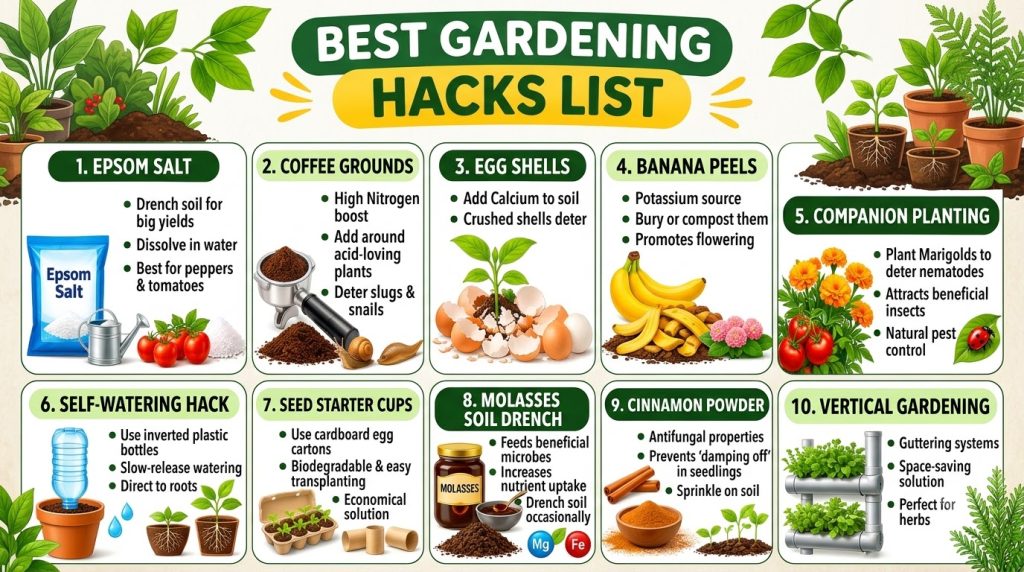
Used coffee grounds can be a useful addition for plants that prefer slightly acidic soil, such as blueberries, azaleas and some hydrangeas. Spread a thin layer and mix it lightly into the top few centimeters of soil, or add it to your compost pile. Avoid thick mounds, which can become compacted and slow water from reaching the roots.
Epsom Salt for Magnesium
Epsom salt contains magnesium and sulfate, nutrients that some plants use in small amounts. It is most useful when a soil test or the plant’s appearance suggests a magnesium shortage. Dissolve a small amount in water and apply it sparingly, since overuse can cause problems of its own.
Eggshells as a Slow Calcium Source
Crushed eggshells add calcium to the soil, but they break down slowly. Rinse the shells, dry them, and grind them into a fine powder before mixing them into compost or the soil. Think of them as a long-term addition rather than a quick fix.
Banana Peels in Compost
Banana peels contain potassium, which supports healthy plant growth. Chop them into small pieces and add them to your compost bin, or bury them shallowly in a garden bed. Composting first is often the gentlest approach and helps reduce odors and pests.
Other Hacks Worth Exploring
The same infographic style often highlights ideas such as molasses, cinnamon powder and companion plants. Molasses can feed soil microbes when used in diluted form. Cinnamon powder is sometimes sprinkled on soil surfaces to discourage fungus on cuttings, though it works best as a light, preventive measure. Companion planting, which pairs plants that grow well together, can also help make a garden more balanced and productive.
Tips for Trying Garden Hacks Safely
- Start with one or two hacks and observe how your plants respond over several weeks.
- Test your soil when possible, so you know what your plants actually need.
- Use natural materials in moderation, and avoid piling on large amounts of any single ingredient.
- Keep records of what you tried, when, and what changed.
Final Thoughts
Natural gardening hacks can be a fun and budget-friendly way to learn more about plant nutrition and make use of household scraps. They work best as part of a broader routine that includes good watering, healthy soil, sunlight and proper plant selection. Try a few ideas that fit your garden, and enjoy watching your plants grow.