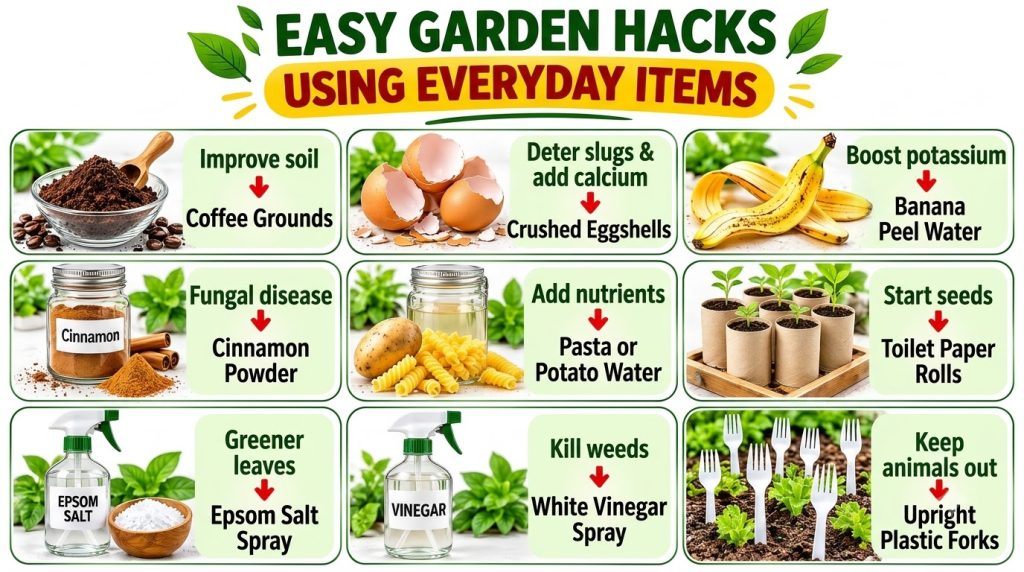
Your garden does not always need expensive products to thrive. Many useful gardening helpers are already sitting in your kitchen, bathroom, or recycling bin. In this guide, we walk through nine simple everyday hacks that many home gardeners use for plant care, along with practical tips for using each one safely and sensibly.
1. Coffee Grounds for Soil Enrichment
Used coffee grounds can be mixed lightly into garden soil or added to compost. They contribute organic matter, which may help soil hold moisture and support beneficial organisms over time. Spread them in thin layers and work them in, because a thick crust can compact and slow water from soaking in.
2. Crushed Eggshells for Calcium
Rinse eggshells, let them dry completely, and grind them into a fine powder. Eggshells break down slowly, so they are best added to compost or worked into soil well before planting. They are a gradual source of calcium rather than a quick fix for any plant problem.
3. Banana Peels in Compost
Banana peels can be chopped and added to a compost bin, where they break down into nutrients including potassium. Cut them into small pieces so they decompose faster, and balance them with dry leaves or cardboard to avoid odors and soggy compost.
4. Cinnamon Powder as a Light Dusting
Many gardeners lightly dust cinnamon on cuttings or the surface of potting soil because it has traditional uses in home gardening. Keep the layer very thin, and remember that cinnamon is a supportive helper rather than a cure for disease or pests.
5. Pasta Water for Watering
Plain, unsalted pasta water that has fully cooled can be used once in a while to water houseplants. Salted water, sauces, or oils should never be used, since they can harm soil and roots. Regular fresh water remains the best everyday choice.
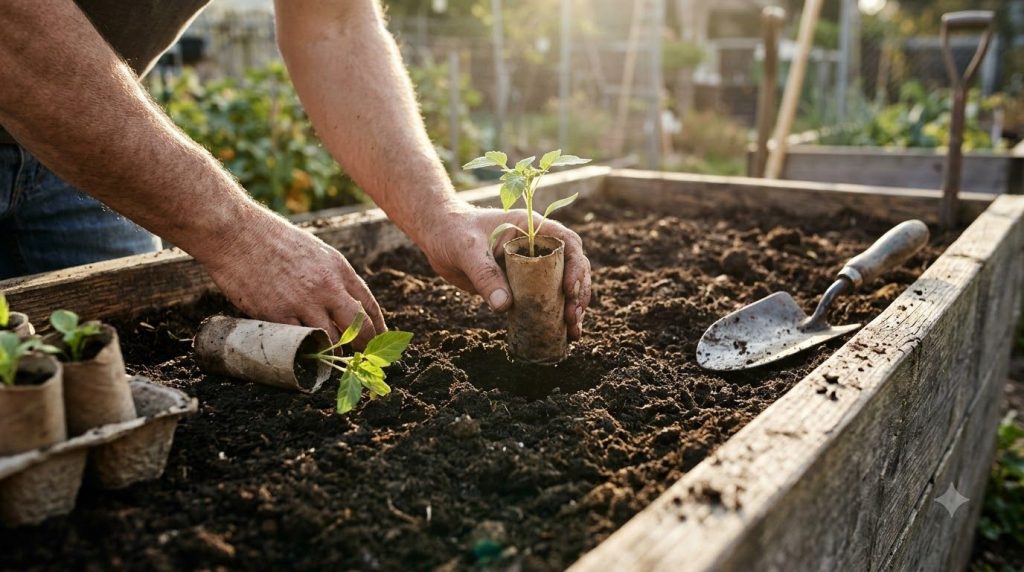
6. Toilet Paper Rolls as Seedling Pots
Cardboard tubes from toilet paper rolls make simple biodegradable pots for seedlings. Fill them with potting mix, sow your seeds, and plant the whole tube into the ground or a larger container when roots begin to grow. This reduces transplant stress and cuts down on plastic waste.
7. Epsom Salt Spray for Magnesium
Epsom salt contains magnesium and sulfur, which some gardeners use when plants show signs of need. Use a diluted solution and only when a soil test or plant symptoms suggest it. Overuse can cause imbalances, so moderation is important.
8. White Vinegar Spray for Cleaning Tools and Surfaces
A diluted white vinegar solution is more useful for cleaning pots, tools, and garden surfaces than for feeding plants. Apply it sparingly and test on a small area first, because vinegar can damage leaves and alter soil acidity if used too often.
9. Plastic Forks for Loosening Soil
An old plastic fork can gently loosen the top layer of compacted potting soil or mark where seeds were sown. It is a handy, low-cost tool for small containers and seed trays, and it lets you aerate soil without disturbing roots.
Tips for Using Everyday Hacks Wisely
Test any new method on a few plants before applying it widely. Observe how your plants respond over several weeks, and keep notes on what works in your climate and soil. Combining these hacks with good watering habits, adequate sunlight, and healthy soil will give you the best results.
Final Thoughts
Simple household items can support a greener, more sustainable garden when used thoughtfully. Start with one or two ideas that suit your space, learn how your plants respond, and build from there. Happy gardening!