Who doesn’t love having more plants without spending a fortune at the garden center? Propagation is one of the most rewarding skills a plant lover can learn. With a healthy leaf or stem cutting, a glass of water, and a little patience, you can grow new plants from the ones you already enjoy.
Why Propagate Plants at Home?
Propagation lets you expand your plant collection, share favorite plants with friends, and replace plants that have struggled. It is also a budget-friendly way to fill your home or garden with greenery. Watching roots form in clear water is a calming experience that many gardeners find inspiring.
Which Plants Can Grow from a Leaf?
Not every plant reproduces the same way. Some plants root easily from a single leaf, while others need a stem cutting that includes a node, the small bump where new growth emerges. Before you begin, check which method suits your plant.
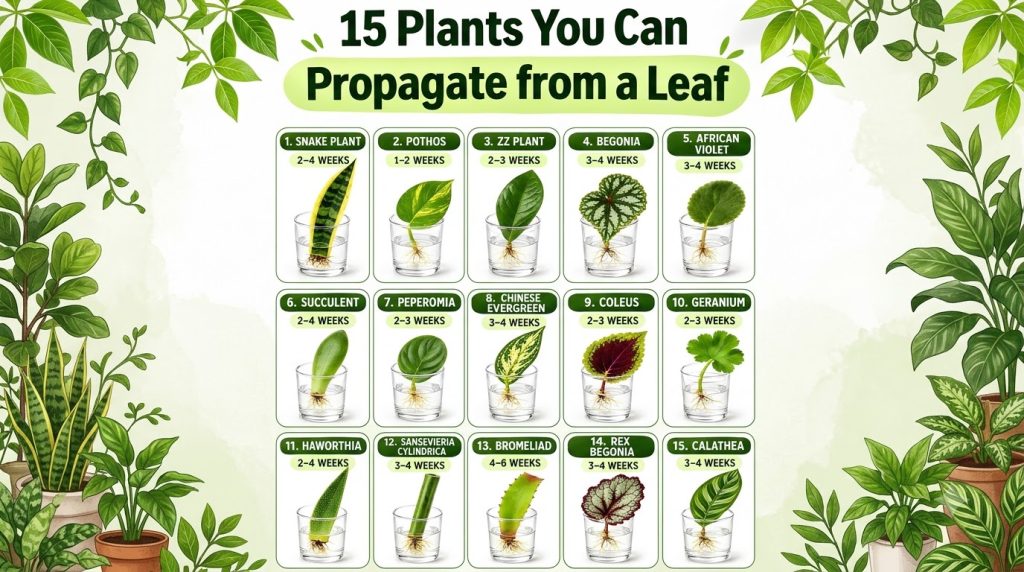
- Leaf cuttings: African violets, peperomia, begonia rex, and some succulents such as echeveria.
- Stem cuttings with nodes: pothos, philodendron, tradescantia, and many herbs such as mint and basil.
- Offsets and plantlets: spider plants and some succulents that produce small baby plants.
Results vary by species, season, and growing conditions, so treat propagation times as estimates rather than promises.
What You Need to Get Started
- A healthy parent plant free of pests and disease
- Clean, sharp scissors or pruning shears
- Small clear glasses or jars filled with room-temperature water
- A bright spot with indirect light
- Fresh potting mix and small pots for when the roots are ready
Step-by-Step: Rooting a Leaf or Cutting in Water
- Choose a healthy leaf or stem. Pick mature, unblemished growth. For stem cuttings, look for at least one node.
- Make a clean cut. Cut just below a node or at the base of the leaf stalk. A clean cut helps prevent rot.
- Remove lower leaves. Strip off any leaves that would sit below the waterline, since they can decay and foul the water.
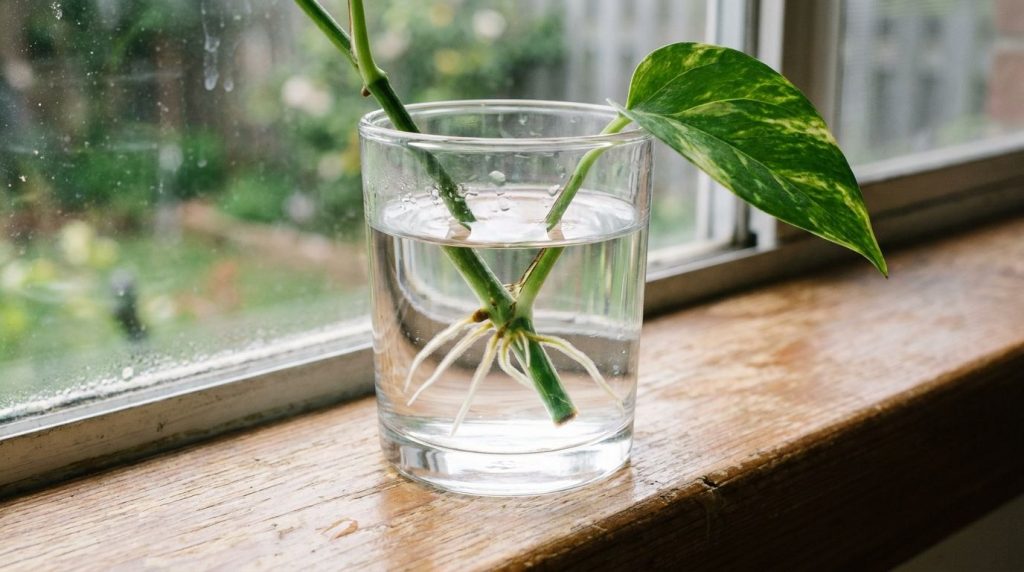
- Place in water. Set the cutting in a clear glass so the node or leaf base is submerged, but keep the upper leaves dry.
- Give it bright, indirect light. Direct harsh sun can overheat the glass, so a bright windowsill away from the hottest rays works well.
- Change the water regularly. Refresh the water every few days or whenever it looks cloudy to keep the cutting healthy.
When Should You Move the Cutting to Soil?
Once the roots are a few centimeters long and look sturdy, the cutting is ready for potting mix. Plant it in a small pot with well-draining soil, water gently, and keep it in bright, indirect light while it adjusts. Water roots can be fragile, so handle them carefully during the transition.
Common Mistakes to Avoid
- Leaving leaves underwater: Submerged foliage tends to rot.
- Using dirty containers: Clean glasses reduce the risk of bacteria and algae.
- Expecting instant results: Roots can take weeks, and some plants are slower than others.
- Skipping water changes: Stagnant water can slow rooting and encourage decay.
Tips for Success Through the Seasons
Spring and early summer are often the best times for propagation because plants are actively growing. In winter, growth slows, so cuttings may take longer to root. Keeping cuttings in a warm, bright spot helps during cooler months.
Final Thoughts
Propagation is a simple, hands-on way to grow your collection and deepen your connection with plants. Start with an easy species like pothos, practice good cutting technique, and enjoy watching new roots appear. Each cutting you root is a small victory and a new plant to care for.