Every gardener runs into trouble sooner or later. Aphids gather on new shoots, leaves start to yellow, and a bed that looked healthy last week suddenly needs attention. An organic garden first aid kit gives you simple, low-cost remedies to reach for before problems spread. This guide walks through the ideas behind a basic kit and shows how to get started safely.
What Belongs in an Organic Garden First Aid Kit
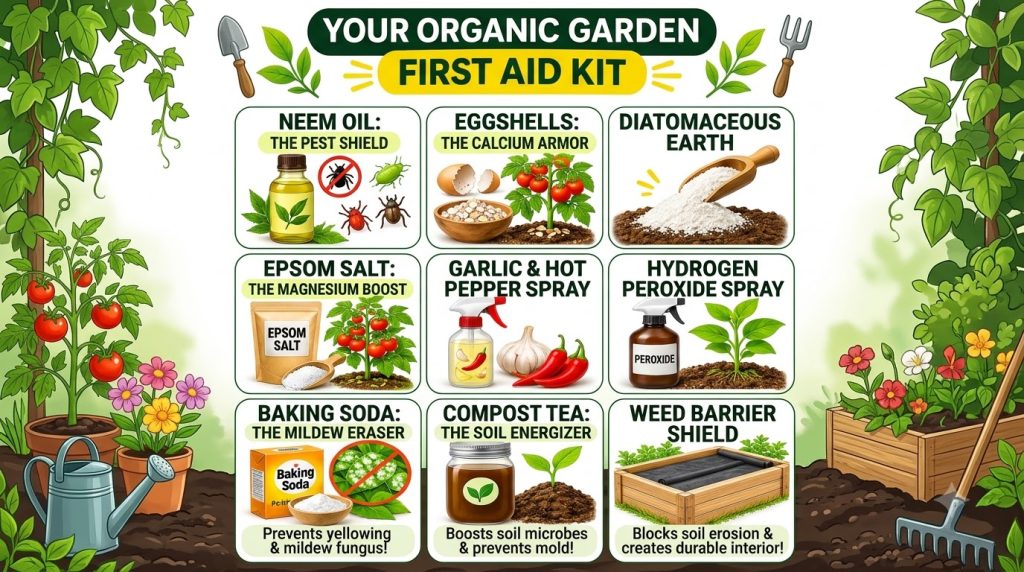
A good kit focuses on a few reliable, everyday ingredients rather than a long shelf of products. Most home gardeners already have many of them in the kitchen or garage.
- Garlic and onion for homemade sprays
- Mild liquid soap for sticky, soft-bodied pests
- Neem oil or horticultural oils, used according to label directions
- Diatomaceous earth for dry areas where crawling insects are a problem
- Epsom salt for gardens lacking magnesium, used sparingly
- Compost or worm castings to support soil health
Garlic Spray for Garden Pests
Garlic spray is one of the most popular homemade remedies. Its strong scent can discourage some insects from settling on your plants. To prepare a basic version, crush several garlic cloves, steep them in warm water for several hours or overnight, then strain the liquid. Dilute it before use, and add a few drops of mild liquid soap so the spray sticks to the leaves.
Always test the spray on a small area of one leaf first and wait a day or two. Some plants are more sensitive than others. Apply in the cool part of the day, cover both the top and underside of leaves, and reapply after rain or watering. Treat the spray as one tool in a broader plan, not a complete cure.
Helpful Habits Beyond the Spray
Remedies work best alongside good garden habits. Healthy plants are more resilient, so focus on the basics:
- Water at the base of plants in the morning to keep foliage drier.
- Check the undersides of leaves every few days to catch pests early.
- Rotate crops and avoid overcrowding to reduce pest build-up.
- Mulch to hold moisture and keep soil temperatures steadier.
- Encourage beneficial insects by planting flowers such as marigolds, alyssum, and yarrow.
Safety and Common Mistakes
Organic does not always mean risk-free. Keep these tips in mind:
- Label your homemade sprays and store them away from children and pets.
- Avoid spraying during hot sun or strong wind, which can scorch leaves or cause drift.
- Do not mix several products at once without checking compatibility.
- Wear gloves and eye protection when handling concentrated ingredients or oils.
- Observe how plants respond over a week before deciding a remedy works for your garden.
Building Your Own Kit
Start small. Choose three or four remedies that match the problems you face most often, such as aphids, slugs, or dry soil. Keep a simple notebook with dates, weather, and results. Over a season, you will learn which methods suit your plants, climate, and routine. A thoughtful kit grows with your garden, and each season brings new lessons about caring for the plants you love.