Raised beds are one of the most rewarding ways to grow vegetables, herbs, and flowers, but their success depends largely on what happens beneath the surface. Healthy soil supplies nutrients to roots, holds moisture between waterings, and supports the living community of microbes and earthworms that keeps a garden productive. Because raised beds are contained and often filled with a custom soil mix, they need steady attention throughout the year. This seasonal guide walks you through a simple rhythm of soil care that you can adapt to your own climate.
Why Soil Care Matters in a Raised Bed
In the ground, soil renews itself slowly through surrounding earth and natural decay. In a raised bed, you are the main source of renewal. Plants draw nutrients from a limited volume of soil, and water drains more quickly through the bed, so organic matter needs to be replenished regularly. Watching the soil closely, rather than only the plants, helps you spot problems early and keep your harvests consistent.
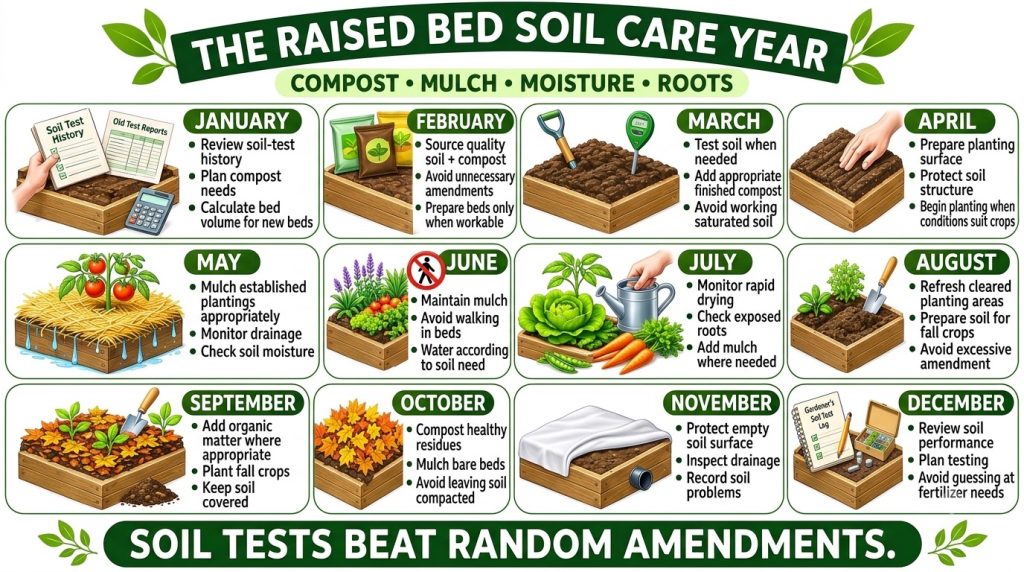
Winter: Planning and Protecting the Bed
- Clear out spent plant debris and remove any diseased material from the bed.
- Top the soil with a layer of compost or leaf mold to protect its structure.
- Review last season’s notes to decide which crops and soil amendments to adjust.
- Cover the bed with mulch or a cover crop if your winters are mild enough for growth.
Spring: Refreshing and Preparing the Soil
- Gently loosen the top few centimeters of soil with a fork, avoiding heavy digging that disturbs soil life.
- Mix in well-finished compost to restore organic matter and improve texture.
- Test soil moisture and drainage so you can plan watering and planting schedules.
- Sow or transplant early crops once the soil has warmed and is workable.
Summer: Watering, Mulching, and Monitoring
- Water deeply and less often so moisture reaches the roots and the surface can dry slightly between sessions.
- Apply a layer of straw, shredded leaves, or other organic mulch to reduce evaporation and keep soil temperature steadier.
- Watch for signs of nutrient shortage, such as pale leaves or slow growth, and respond with balanced organic feeding.
- Check for pests and remove them by hand where possible, which keeps the soil ecosystem intact.

Autumn: Feeding and Resting the Bed
- Harvest remaining crops and add their healthy plant residues to a compost pile.
- Sow a cover crop such as clover or vetch to protect the soil and add nitrogen where appropriate.
- Spread a fresh layer of compost over the bed to prepare it for the cooler months.
- Note which areas drained slowly or looked compacted so you can address them next spring.
Building a Year-Round Soil Care Habit
Soil care works best as a routine rather than a one-time project. Keeping a simple garden journal, checking the bed every few weeks, and returning organic matter to the soil each season will gradually improve its structure and fertility. Over time, you may notice stronger plants, fewer problems, and more reliable harvests. Start with one or two tasks from this guide, then build the rest of the calendar into your gardening rhythm at a comfortable pace.