Most people only reach for cloves during the holidays, yet a small jar of them can support a surprisingly useful set of home preparations. The trick is knowing which method fits which job, how much to use, and when to stop.
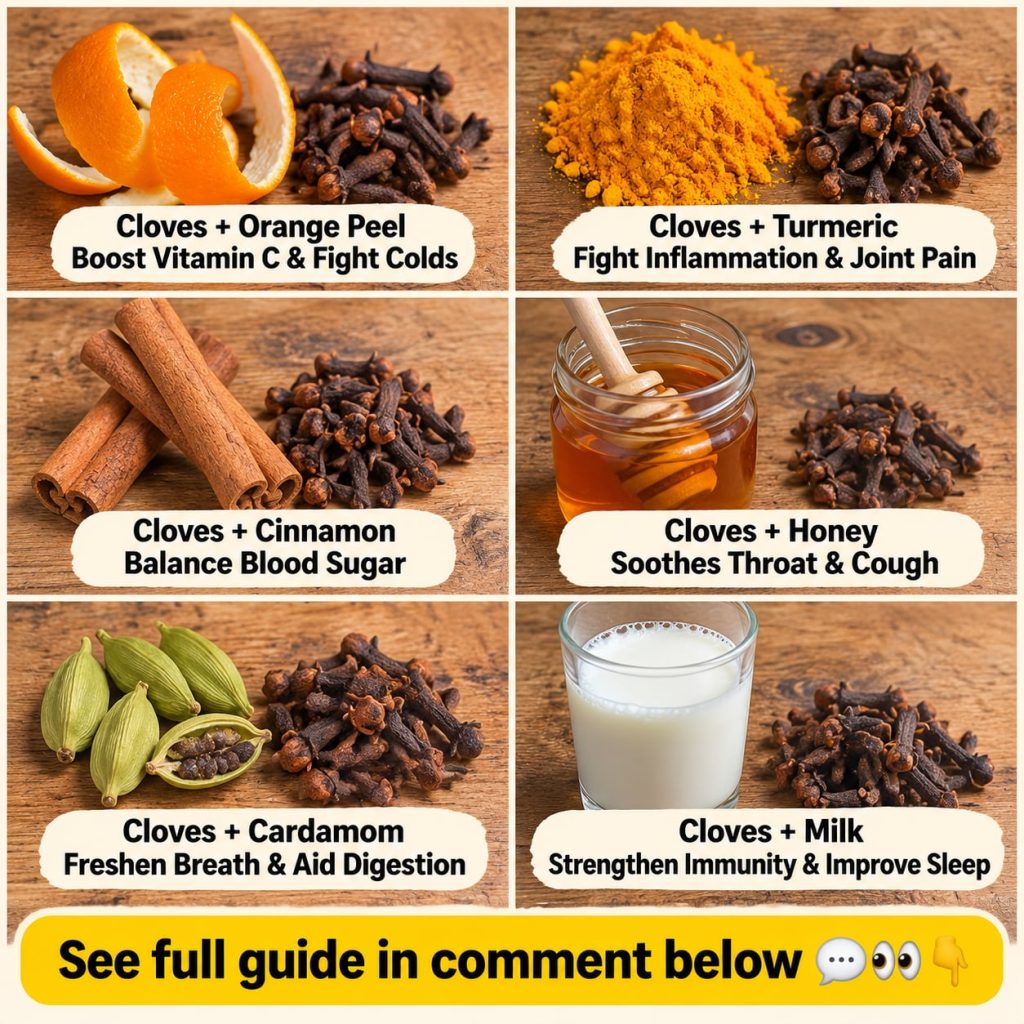
What Cloves Are and Why They Are Used at Home
Cloves are the dried flower buds of the clove tree. They are strongly aromatic, and their main active compound, eugenol, gives them their characteristic scent and sharp taste. In home practice, cloves are mostly used in mild infusions, simple oil preparations, and cleaning mixtures. They are not a substitute for medical care, so treat every preparation below as a household project rather than a treatment.
Ingredients You Need
- Whole dried cloves, about 10 to 15 per batch
- Filtered water
- Raw honey (optional, for taste)
- Fractionated coconut oil or light olive oil
- White vinegar
- A clean glass jar with a tight lid
Approximate Measurements
| Preparation | Clove amount | Base | Typical use |
|---|---|---|---|
| Clove infusion (tea) | 3 to 5 whole cloves | 1 cup water | Drink as a mild warm tea |
| Diluted clove oil | 8 to 10 whole cloves | 1/2 cup carrier oil | Light topical use, heavily diluted |
| Clove vinegar spray | 10 whole cloves | 1 cup white vinegar | Household surface cleaning |
Method 1: Simple Clove Infusion
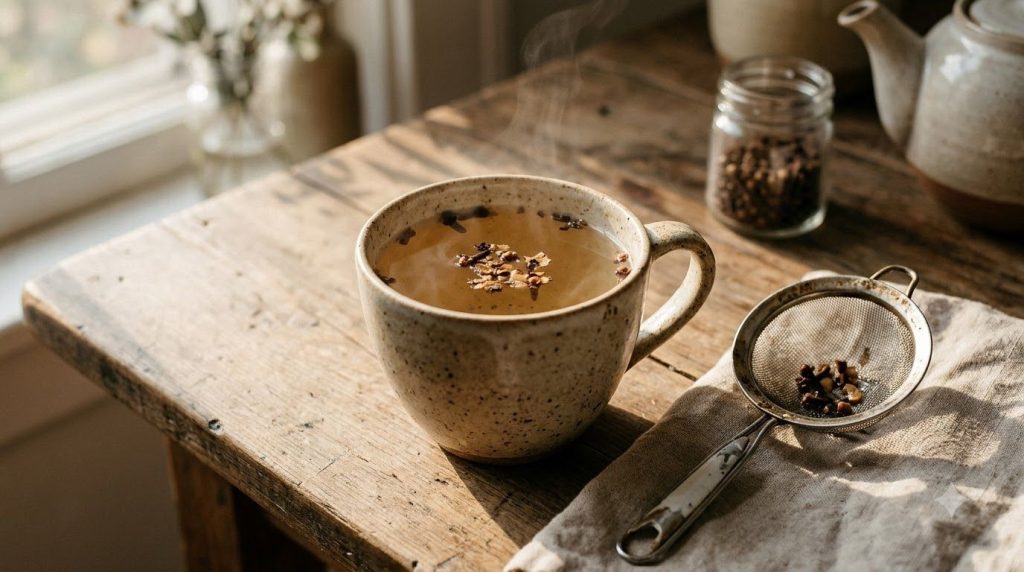
Crush 3 to 5 cloves lightly with the back of a spoon. Bring 1 cup of filtered water to a boil, remove it from the heat, add the cloves, and cover. Let it steep for 5 to 8 minutes. Strain, then add honey if you like. Boiling the cloves for a long time makes the drink much harsher, so steeping is the better method.
Method 2: Clove-Infused Carrier Oil
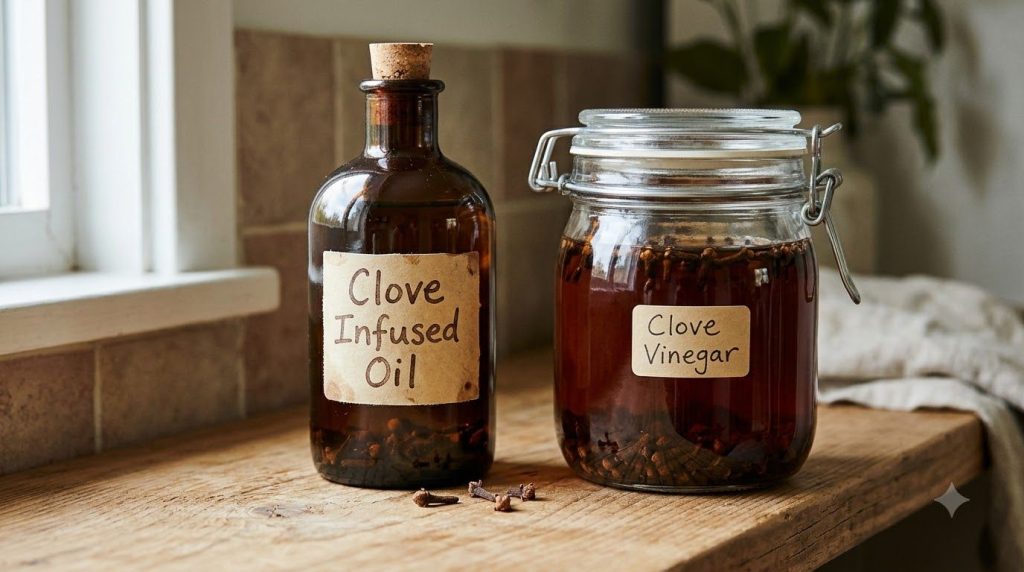
Warm 1/2 cup of carrier oil gently in a small pan over very low heat for about 5 minutes. Do not let it simmer. Add 8 to 10 lightly crushed cloves, remove from heat, cover, and let it infuse for 24 hours. Strain into a clean glass bottle. Before any topical use, dilute further and do a patch test on a small area of skin first.
Method 3: Clove Vinegar Cleaning Spray
Place 10 whole cloves in a clean jar and cover them with 1 cup of white vinegar. Seal and leave for 7 days in a cool, dark cupboard. Strain into a spray bottle. This mix is for wiping cutting boards, counters, and cabinet fronts. Do not use it on natural stone, and never mix it with bleach.
How to Use Each Preparation
Drink the clove infusion once a day at most, and keep it mild. Use the diluted oil sparingly on a small area only. Use the vinegar spray on non-porous surfaces, then wipe with a clean cloth.
How Often to Use
Keep the tea to occasional use rather than daily routine. Use the oil only when needed and in small amounts. Use the vinegar spray as often as your kitchen needs cleaning, then store the leftover mix properly.
How to Choose Good Cloves
Look for whole cloves with a dark reddish-brown color and a strong, sweet aroma. Pale or dull cloves have usually lost much of their scent. Ground cloves lose potency faster, so buy whole cloves and crush them as needed.
Storage
- Keep whole cloves in an airtight glass jar away from heat and light.
- Store the infused oil in a labeled dark bottle in the refrigerator and use within 1 to 2 weeks.
- Keep the clove vinegar in a sealed bottle at room temperature for up to 1 month.
- Discard any batch that smells off, cloudy, or moldy.
Practical Tips
Quick Tip: Crush cloves right before use, because their aromatic oils fade once exposed to air. Before You Brew: Strain thoroughly, since fine clove particles can make a drink gritty. Fresh vs Dried: Dried whole cloves are the standard choice for home preparations, and fresh clove buds are rarely available outside specialty markets.
Common Mistakes
- Boiling cloves for a long time, which makes the tea harsh and bitter.
- Using too many cloves, which makes the preparation overpowering.
- Storing infused oil or vinegar in an unsealed container.
- Applying clove oil undiluted to skin.
- Using old, pale cloves that have lost their aroma.
Cautions and Who Should Avoid It
Clove preparations are not suitable for everyone. Avoid undiluted clove oil on skin and never give it to children. Pregnant or breastfeeding women, people with liver conditions, anyone taking blood thinners, and people preparing for surgery should speak with a healthcare professional before using any clove preparation. Stop using a product and seek medical advice if you notice irritation, burning, or an allergic reaction.
Quick Summary
- Best preparation for drinking: a steeped clove infusion using 3 to 5 cloves per cup.
- Best use-case for oil: small, diluted, patch-tested topical use.
- Best cleaning use: clove vinegar spray on non-porous surfaces.
- Storage: whole cloves in an airtight jar, oil in the fridge for up to 2 weeks, vinegar at room temperature for up to a month.
- Avoid: boiling, undiluted oil on skin, and use by children or anyone with the conditions listed above.
Frequently Asked Questions
Can I use ground cloves instead of whole cloves?
You can, but ground cloves lose their aroma faster and make infusions cloudy. Whole cloves are better for steeping and infusing.
How long does clove-infused oil last?
Store it refrigerated and use it within 1 to 2 weeks. Discard it if it smells rancid.
Can I refrigerate the clove tea?
Brewed clove tea is best made fresh. If you must keep it, refrigerate it for no more than 24 hours.
Can I freeze clove preparations?
Freezing is not recommended for the oil or tea, because texture and scent change. Keep whole cloves frozen only if you store them long term in a sealed container.
How often should I drink clove tea?
Keep it occasional, not daily, and check with a healthcare professional if you have any existing health condition.
Can I reuse the cloves?
Used cloves have released most of their aroma after one infusion. It is better to start a new batch.
When should I avoid clove preparations?
Avoid them if you are pregnant, breastfeeding, giving them to children, preparing for surgery, or taking blood thinners, unless a healthcare professional approves.
Keep Reading
You may also like: Practical guide to drying herbs at home. Read more: Simple DIY cleaning mixes for the kitchen. Related remedy: How to make a basic herbal infusion.
Final Thoughts
Cloves are most useful when you treat them as a precise household ingredient rather than a cure-all. Start with a small batch, label it, store it well, and keep each preparation in its lane.