Most people pull purslane out of the garden without a second look. The plant that pushes up through cracks in driveways and between vegetable rows is one of the few wild greens with a crisp, lemony bite, and many home cooks now harvest it on purpose. Before you add it to your routine, though, the practical details matter more than the hype.

What Purslane Is
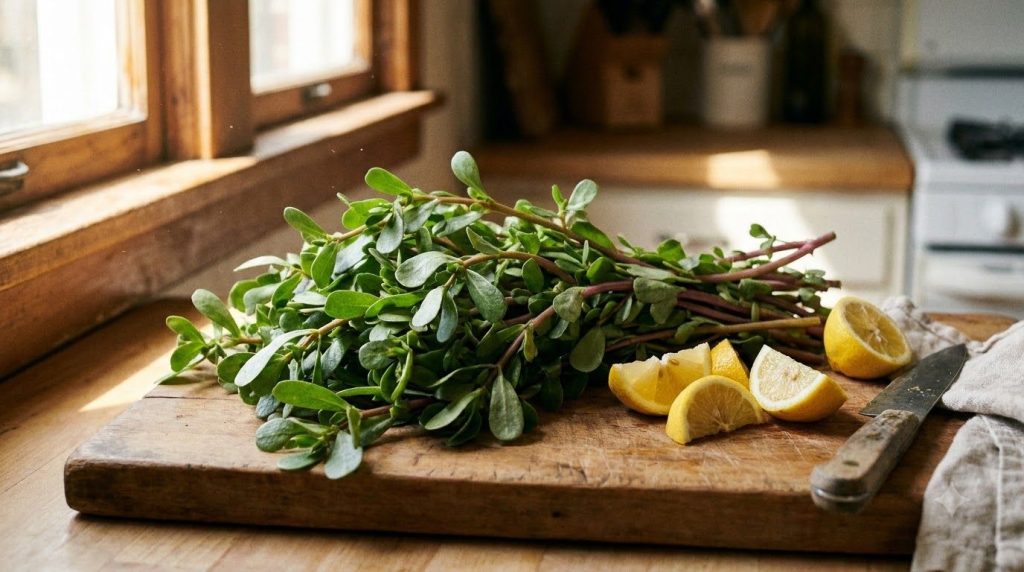
Purslane (Portulaca oleracea) is a low-growing succulent with thick, fleshy leaves and smooth stems that often turn reddish when the plant gets full sun and dry soil. Those stems store water, which is why the plant handles heat and drought so well. The taste is mildly sour and slightly salty, closer to a crunchy mix of watercress and lemon than to a typical salad leaf.
Ingredients and Approximate Measurements
- 1 large bunch fresh purslane, about 150 g (5 oz), stems and leaves included
- 1 tablespoon extra virgin olive oil
- 1 teaspoon fresh lemon juice, or to taste
- 1 small garlic clove, finely minced
- Pinch of salt and black pepper
- Optional: 2 tablespoons crumbled feta or diced cucumber
Simple Formula: Lemon-Garlic Purslane Salad
This basic recipe keeps the plant crisp and shows its natural flavor. Use it as a starting point before trying other preparations.
- Harvest tender tips, cutting 5 to 8 cm (2 to 3 in) from the top of each stem. Choose young, bright green growth.
- Rinse the purslane in cold water twice. Let it soak for about 2 minutes to release grit, then spin or pat it dry.
- Trim away any woody or discolored ends. The thin stems are edible, so keep them.
- Whisk the olive oil, lemon juice, garlic, salt, and pepper in a small bowl.
- Toss the purslane with the dressing just before serving so it stays crunchy.
Quick Tip: Dress the greens only at the last minute. Acid and salt soften the leaves within 10 to 15 minutes.
How to Use It and How Often
Treat purslane as a food, not a supplement. A handful of fresh greens two to three times per week fits most eating patterns. Add it to salads, sandwiches, eggs, or grain bowls for a bright, sour note.
Best Time to Use It: Harvest in the morning, when the stems are most turgid and the leaves are at their freshest.
Fresh vs Cooked vs Vinegar-Infused
| Preparation | Best Use | Flavor and Texture | Storage Window |
|---|---|---|---|
| Fresh raw | Salads, wraps, garnish | Crisp, lemony, juicy | 3 to 5 days refrigerated |
| Lightly sautéed | Side dish, eggs, rice | Softer, mild, tomato-like | Eat the same day |
| Vinegar-infused | Dressing base, pickles | Tangy, sharp, concentrated | Refrigerate and use within 1 week |
How to Buy or Choose Purslane
Your best source is your own garden or a trusted farmers market grower. Look for firm, plump leaves and stems that snap cleanly. Avoid bunches that are slimy, yellowed, or wilted. Skip plants growing along busy roads, near railway lines, or in areas that may have been sprayed with herbicides.
Storage
Wrap unwashed purslane loosely in a dry paper towel, place it in a sealed container, and refrigerate. Washing before storage adds moisture that encourages slime, so rinse only right before use. Fresh purslane usually keeps 3 to 5 days.
Practical Tips
- Pick the youngest tips for a milder flavor and better crunch.
- Pair it with fats like olive oil or cheese to balance its sourness.
- Chop finely and add to yogurt sauces or cold cucumber soup.
Did You Know? Purslane is one of the few leafy plants that stores water in its stems, which helps it stay crisp for days after harvest when kept cool.
Common Mistakes
- Harvesting from sprayed lawns, roadsides, or industrial edges.
- Confusing it with spurge. Purslane has no milky sap, and its leaves are smooth and fleshy. Spurge produces a white, milky sap when broken.
- Storing wet bunches, which turns the leaves slimy within a day or two.
- Boiling too long. Overcooking makes the texture slippery and dulls the flavor.
- Eating large raw portions every day without variety in your diet.
Cautions and Who Should Avoid It
Purslane contains oxalates, compounds that can contribute to kidney stones in some people. If you have a history of kidney stones, gout, or you follow a low-oxalate diet, speak with your clinician before adding it regularly. People who take blood-thinning medication, are pregnant or breastfeeding, or manage a chronic condition should also check with a healthcare professional first. Purslane is a food ingredient and is not a substitute for medical treatment.
Quick Summary
- Best preparation: fresh raw in a simple lemon-garlic salad.
- Best use case: a crisp, sour green for salads, sandwiches, and eggs.
- Storage: dry, wrapped, refrigerated, used within 3 to 5 days.
- When to use: two to three times per week as part of varied meals.
- What to avoid: sprayed or roadside plants, wet storage, and overcooking.
Frequently Asked Questions
Can I use fresh or dried purslane?
Fresh purslane has the best flavor and crunch. Drying concentrates the texture and changes the taste, so most people prefer it fresh in cooking and salads.
How long does purslane last?
Fresh purslane typically keeps 3 to 5 days in the refrigerator when stored dry and sealed. Use it sooner for the best texture.
Can I refrigerate it?
Yes. Wrap it in a dry paper towel and place it in a sealed container. Avoid storing it while wet.
Can I freeze purslane?
Freezing softens the leaves significantly, so it works best in cooked dishes like soups or sautés rather than raw salads.
How often should I eat it?
Two to three times per week in moderate portions fits most eating patterns. Rotate it with other greens for variety.
Can I reuse the leaves?
Leaves are best used the same day you harvest them. Reusing leftover cooked purslane is fine if it has been refrigerated promptly.
When should I avoid it?
Avoid it if you have a history of kidney stones, follow a low-oxalate diet, take blood thinners, or have been advised by a doctor to limit high-oxalate foods.
You may also like: how to identify edible wild greens safely
Read more: a beginner guide to growing herbs and greens at home
See the full guide: natural remedy preparation basics
Final Thoughts
Purslane is more than a garden nuisance. Harvested from clean soil, stored properly, and eaten in reasonable amounts, it adds a crisp, tangy element to everyday cooking. Start with the simple lemon-garlic salad, pay attention to the cautions, and build from there.