Many people notice a little extra softness around the sides of the waist, often called love handles. It is a very common concern, and it is natural to want to feel more comfortable and confident in your own body. The good news is that a well-rounded approach to movement and nutrition can help you build a stronger, more balanced core over time. This guide explains what love handles are, how core exercises fit into the picture, and which everyday habits may support your goals.
What Are Love Handles?
Love handles is a casual term for fat that accumulates around the sides of the waist, just above the hips. Where fat is stored is shaped by genetics, age, hormones, sleep and overall lifestyle. Because of this, everyone’s body responds differently.
It is important to know that you cannot choose where your body loses fat. Exercise that targets one muscle group strengthens that muscle, but it does not burn fat only in that spot. Fat loss generally happens across the whole body when energy intake and energy use are balanced over time.
How Core Exercises Support Your Waistline
Your core is a group of muscles that includes the abdominals, the obliques along the sides of the waist, and the muscles of the lower back and pelvis. Training these muscles can help improve posture, stability and everyday movement. Strengthening the obliques is commonly associated with a more defined waistline, although the visible shape of your waist also depends on body composition.
Core Movements to Consider
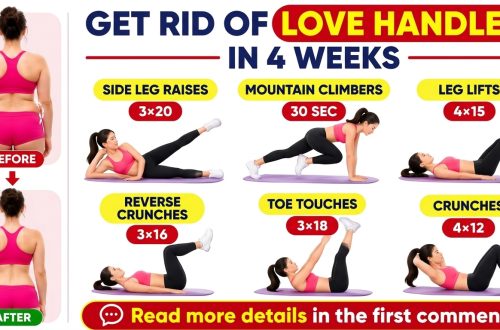
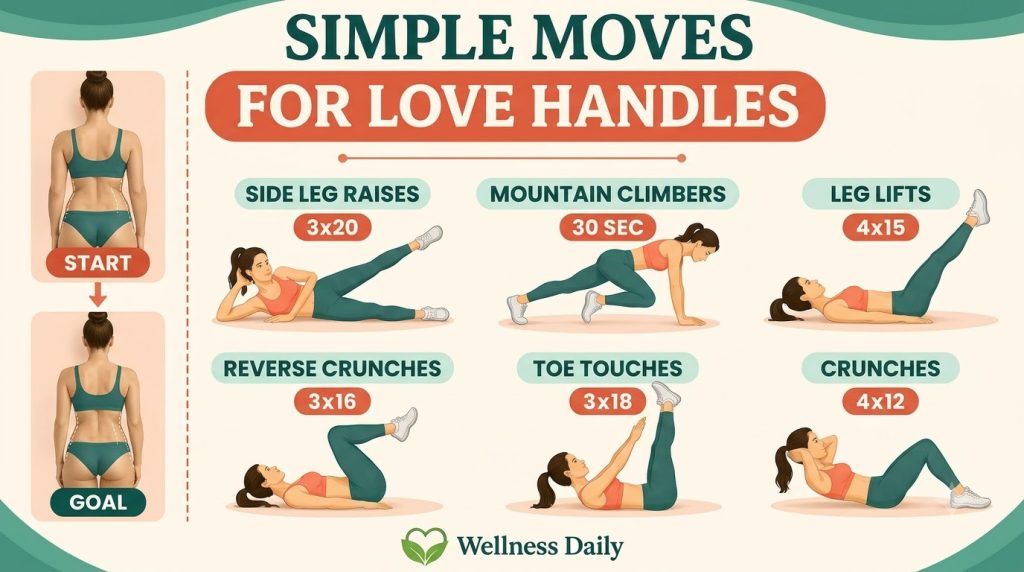
- Side leg raises work the hip and outer thigh muscles that support the pelvis.
- Leg lifts engage the lower abdominals and hip flexors.
- Mountain climbers combine core stability with cardiovascular effort.
- Toe touches train the upper and lower abdominals while encouraging flexibility.
- Reverse crunches focus on the lower abs and control of the pelvis.
- Crunches are a classic way to train the front of the core.
Beginners may start with fewer repetitions, rest between sets, and focus on slow, controlled movement rather than speed. Stop any exercise that causes sharp pain, and listen to your body.
Why Consistency and Balance Matter
Small, steady changes tend to add up more than short bursts of effort. Research on physical activity suggests that regular movement across the week is linked to better overall health. The World Health Organization recommends that adults aim for at least 150 to 300 minutes of moderate aerobic activity per week, along with muscle-strengthening activities on two or more days. You can read more in the WHO physical activity fact sheet.
Nutrition plays an equally important role. A pattern built around vegetables, fruits, whole grains, lean proteins and healthy fats is commonly associated with healthier body composition. Adequate sleep and stress management may also support your efforts, since both influence appetite and recovery.
Simple Habits to Build Around Your Routine
- Plan two or three short core sessions each week, and gradually increase difficulty.
- Add a brisk walk after meals to support daily movement.
- Fill half your plate with vegetables at lunch and dinner.
- Choose water or herbal tea in place of sugary drinks.
- Aim for consistent sleep and take breaks from sitting every hour.
Setting Realistic Expectations
Changes in body shape take time, and progress varies from person to person. Rather than focusing on a fixed deadline, consider tracking how you feel: improved stamina, better posture, or more confidence in your daily activities are all meaningful signs of progress. Taking photos or measurements every few weeks can also help you see gradual changes more clearly.
Important Note
This article is for educational and reference purposes only. It is not a substitute for medical advice, diagnosis or treatment. If you have a medical condition, back pain, abdominal concerns, or are pregnant or recovering from surgery, please speak with a qualified healthcare professional before starting a new exercise program. Information about the Centers for Disease Control and Prevention on physical activity can be found at cdc.gov.
Keep Exploring on Wellness Daily
If you want to build healthier routines from the ground up, explore our guides on healthy habits and balanced eating. Small, consistent steps are often the most sustainable path to feeling your best, and every step you take is a meaningful one.