Quick Morning Workout Routine: A Beginner-Friendly Guide to Starting Your Day Strong
Many people look for a simple way to feel more energized in the morning. A short, consistent workout can be one practical step toward that goal. This guide explains how a quick morning routine works, which exercises are commonly included, and how to build a habit that fits your schedule.
Why a Morning Workout Can Be Helpful
Morning movement is commonly associated with a sense of alertness and a more active start to the day. Gentle activity can also help wake up the muscles and joints after a night of rest. Research suggests that regular physical activity is linked with many aspects of overall wellness, including heart health, mood and daily energy levels, according to the World Health Organization.
Exercises Commonly Included in a Quick Routine
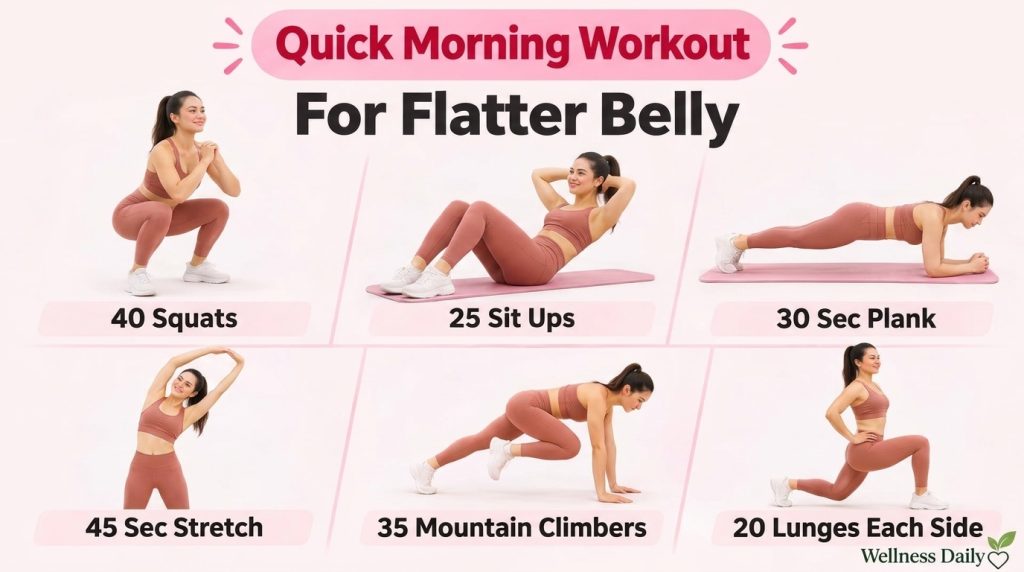
A short routine usually combines movements that work several large muscle groups. Here are six common exercises you may see in beginner-friendly plans:
- Squats (about 40 repetitions): Squats work the legs, hips and glutes. Keep your chest lifted and your knees aligned with your toes.
- Sit Ups or Crunches (about 25 repetitions): These movements engage the abdominal muscles. Move slowly and avoid pulling on your neck.
- Plank (about 30 seconds): A forearm plank builds core stability. Keep your body in a straight line from head to heels.
- Standing Side Stretch (about 45 seconds): Stretching the sides of the body may support flexibility and a comfortable range of motion.
- Mountain Climbers (about 35 repetitions): This dynamic move raises the heart rate while engaging the core and shoulders.
- Lunges (about 20 repetitions per side): Lunges support leg strength and balance. Step forward gently and keep your front knee stable.
How to Get Started Safely
If you are new to exercise, it is helpful to begin with fewer repetitions and shorter holds. Focus on controlled form rather than speed. You can rest between movements and gradually build up as your body adapts. Stop if you feel sharp pain, dizziness or unusual discomfort.
A Simple Starter Structure
- Warm up with 2 to 3 minutes of light marching or arm circles.
- Complete each exercise once, resting 20 to 30 seconds between them.
- Repeat the full circuit once or twice as your comfort improves.
- Finish with a few slow breaths and a gentle stretch.
Setting Realistic Expectations
Exercise is one part of a balanced lifestyle. Body shape and body composition are influenced by genetics, age, sleep, stress and nutrition, so a short routine should not be expected to produce a specific look on its own. Many people find that consistency, rather than intensity, helps them feel better over time. Pairing movement with vegetables, fruits, whole grains, lean proteins and adequate water may also support overall wellness.
Making the Habit Stick
Choosing a consistent time, laying out your mat the night before, and tracking completed sessions can make it easier to stay on track. Even a 15-minute routine a few times each week is a practical starting point. Small, steady steps often lead to the most lasting habits.
This article is for general educational purposes only and is not a substitute for professional medical advice, diagnosis or treatment. If you have a medical condition, injury or concerns about physical activity, please speak with a qualified healthcare professional before starting a new exercise routine.
If you would like a beginner workout guide with step-by-step instructions, leave a comment with the word Plan and our team will share more resources. Thank you for reading, and enjoy building a positive morning routine that works for you!