Want a stronger core without leaving home? Building strong abdominal muscles does not always require a gym or specialized equipment. A simple, consistent routine done in your living room can be a practical way to support core strength, posture, and everyday movement.

Why Your Core Matters
Your core is a group of muscles that includes the abdominals, obliques, lower back, and pelvic floor. Together, these muscles help stabilize your spine and pelvis during everyday activities such as lifting, bending, and walking. Research suggests that regular core training is associated with better stability and balance, which may help support overall physical function.
Key Principles for a Home Abs Routine
- Prioritize form over speed: Slow, controlled movements usually engage your core more effectively than rushed repetitions.
- Breathe steadily: Exhale during the effort phase of each exercise and avoid holding your breath.
- Start gradually: Choose a level that feels challenging but manageable, and increase difficulty over time.
- Allow recovery: Rest days give your muscles time to adapt and recover between sessions.
- Focus on consistency: Short, regular sessions are commonly associated with more sustainable habits than occasional intense workouts.
A Beginner-Friendly Core Routine
The following exercises require only a mat or a soft surface. Aim for two to three rounds, with 8 to 12 repetitions or a 20 to 30 second hold for each move.
- Dead bug: Lie on your back with arms reaching toward the ceiling and knees bent at 90 degrees. Slowly extend opposite arm and leg while keeping your lower back gently pressed to the floor.
- Bird dog: Start on your hands and knees. Extend one arm forward and the opposite leg back, hold briefly, then switch sides.
- Glute bridge: Lie on your back with knees bent and feet flat. Lift your hips until your body forms a straight line from shoulders to knees, then lower with control.
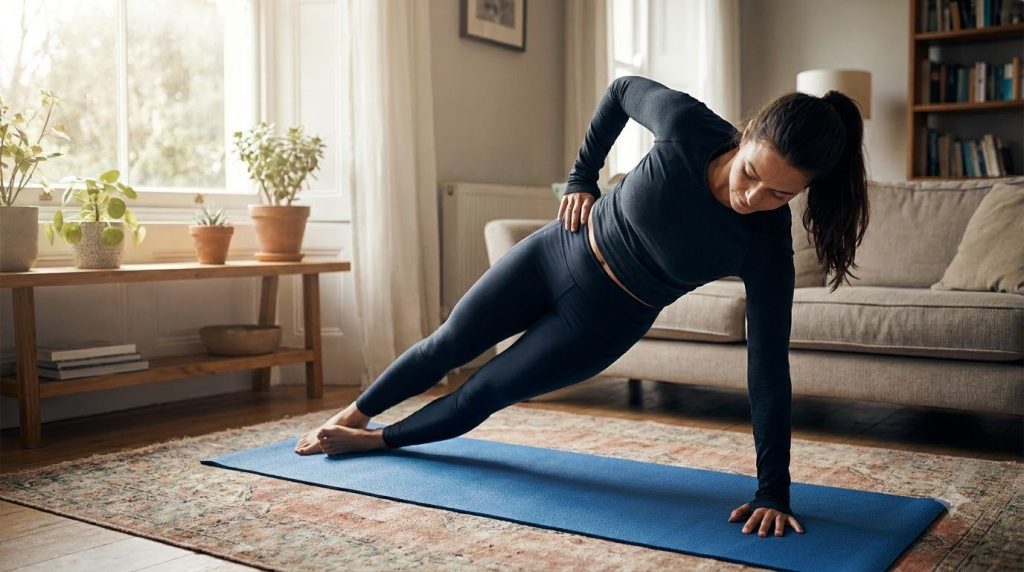
- Modified plank: Rest on your forearms and knees with your body in a straight line. Hold while breathing steadily.
- Slow bicycle crunch: Lie on your back, bring opposite elbow and knee together while the other leg extends, and move with a deliberate pace.
- Reverse crunch: Lie on your back with knees bent, then gently curl your hips toward your chest without swinging your legs.
Building Consistency Over Time
Progress in core training tends to come from steady practice rather than a single intense session. You might schedule three short workouts per week, track how many repetitions you complete, and notice when movements begin to feel easier. Pairing your core routine with daily movement, such as walking or stretching, can also support a more active lifestyle. For general guidance on weekly activity, the CDC physical activity recommendations offer reputable information for adults.
Safety Tips to Keep in Mind
- Warm up with a few minutes of light movement, such as marching in place or gentle arm circles.
- Stop any exercise that causes sharp pain, dizziness, or unusual discomfort.
- Avoid forcing your neck forward during crunches, and keep the movement controlled.
- Speak with a qualified healthcare professional before starting if you are pregnant, recovering from surgery or injury, or managing a medical condition.
Continue Your Wellness Journey
If you enjoy building healthy routines, you may also find it helpful to explore our guides on healthy habits and daily wellness tips on the Wellness Daily blog. Small, sustainable changes across sleep, nutrition, and movement often work together to support long-term well-being.
This article is for educational purposes only and is not a substitute for medical advice, diagnosis, or treatment. Please consult a qualified healthcare professional before beginning any new exercise program.
Would you like a beginner-friendly guide to get started? Leave a comment below and let us know, and we will be happy to share more resources.