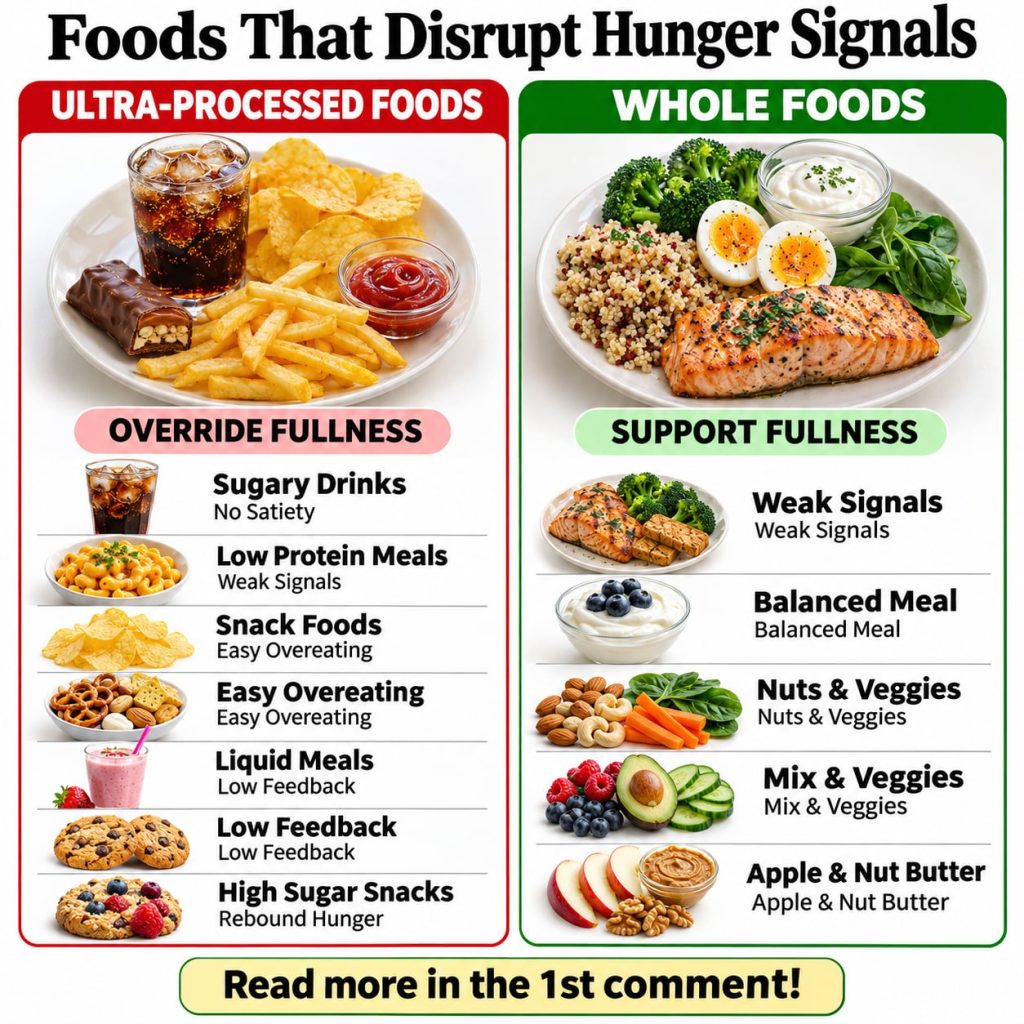
 Ultra-processed foods and whole foods can affect hunger in very different ways.
Foods that disrupt hunger signals are easy to overlook, yet they quietly shape how full you feel after a meal and how soon you want to eat again. Some foods seem to satisfy you for a moment and then leave you reaching for more. Others help you feel settled and steady for longer.
Understanding what truly satisfies your hunger can change the way you approach everyday eating. The comparison below breaks down two groups of foods and explains how each one may influence your body’s natural fullness cues.
Why Some Foods Leave You Hungry Again
Your body uses signals from your stomach, your blood sugar, and your brain to tell you when you have had enough. When a food gives you little of that feedback, you may keep eating without realizing you are past the point of comfortable fullness. The infographic describes this pattern as foods that override fullness.
Ultra-Processed Foods That Override Fullness
The first group in the infographic includes ultra-processed foods that are commonly eaten as snacks or sides. These items appear in the infographic as french fries, soda, a chocolate bar, potato chips, macaroni and cheese, pretzels, a milkshake, and cookies.
Each food is labeled with how it affects satiety. The labels include:
- No Satiety: these foods may not give your body a clear sense of being full.
- Weak Signals: fullness cues may be faint, so it can be harder to notice when you have eaten enough.
- Easy Overeating: these foods are simple to eat quickly and in large amounts.
- Low Feedback: they may offer little of the feedback that usually helps you stop.
- Rebound Hunger: you may feel hungry again sooner than expected after eating them.
Snacks like these are not automatically off-limits. The point is to notice how they make you feel and to avoid relying on them as your main source of satisfaction.
Whole Foods That Support Fullness
The second group in the infographic focuses on whole foods that are often associated with a more lasting feeling of fullness. These foods include:
- Salmon with quinoa, broccoli, spinach, and eggs: a balanced plate that combines protein with vegetables and a whole grain.
- Yogurt with blueberries: a simple combination that pairs a protein-rich base with fruit.
- Nuts and carrots: a crunchy snack that brings together fats, fiber, and vegetables.
- Berries, avocado, and cucumber: fresh produce that adds volume and texture to meals.
- Apple slices with nut butter: a snack that combines fiber from fruit with the staying power of nut butter.
The infographic highlights labels such as Balanced Meal and Nuts & Veggies to show how these foods support fullness. When a plate includes protein, fiber, and whole ingredients, it may help you feel satisfied for longer.
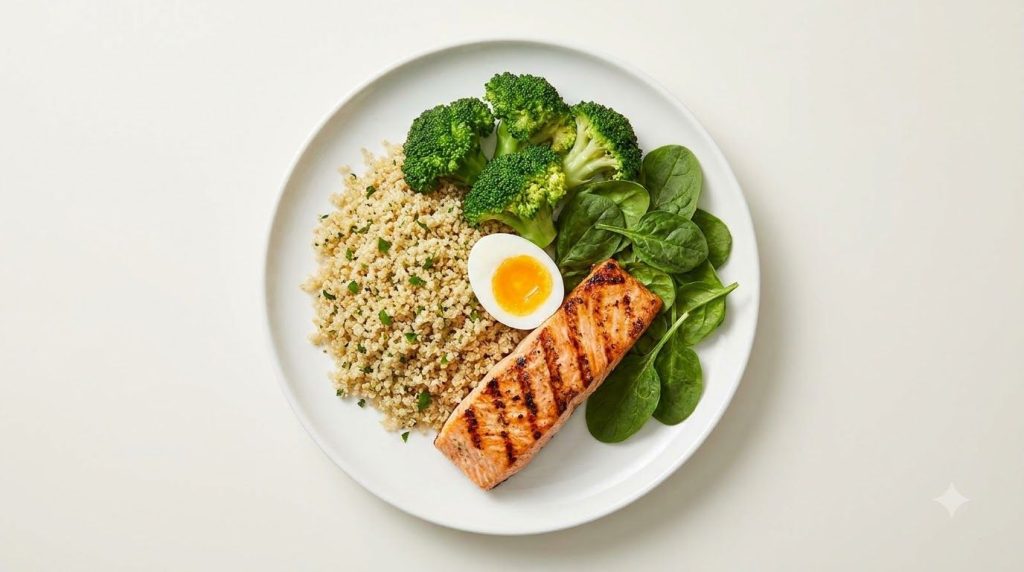 A balanced plate combines protein, vegetables and whole grains.
How to Use This Information at Home
You do not need to overhaul your entire diet to notice a difference. Small changes can help you build meals and snacks that feel more satisfying.
- Build meals around a protein source, vegetables, and a whole grain or fruit.
- When you crave a processed snack, try pairing a smaller portion with a whole food, such as apple slices with nut butter.
- Keep nuts, carrots, berries, or cucumber within reach for easy snacks between meals.
- Pause halfway through a meal and check in with your hunger before continuing.
Common Questions About Hunger and Food Choices
Does this mean ultra-processed foods should be avoided completely?
Not necessarily. The infographic compares how these foods affect fullness, and balance matters more than strict rules. Enjoying an occasional treat is a normal part of eating, especially when most of your meals are built around whole foods.
Why do I still feel hungry after a snack?
Hunger can depend on the balance of nutrients in what you eat, how quickly you eat, and how much feedback your body receives. Foods labeled as Rebound Hunger or Low Feedback in the infographic may leave you wanting more sooner than you expect.
Final Thoughts on Foods That Disrupt Hunger Signals
Foods that disrupt hunger signals can make it harder to know when you have had enough, while whole foods may help you feel satisfied for longer. Paying attention to how different foods make you feel is a practical first step toward more balanced eating. Start with one small swap this week and notice how your fullness changes.
Medical disclaimer: This article is for general education and does not replace advice from a qualified healthcare professional. If you have concerns about your appetite, weight, or eating habits, speak with your doctor or a registered dietitian.