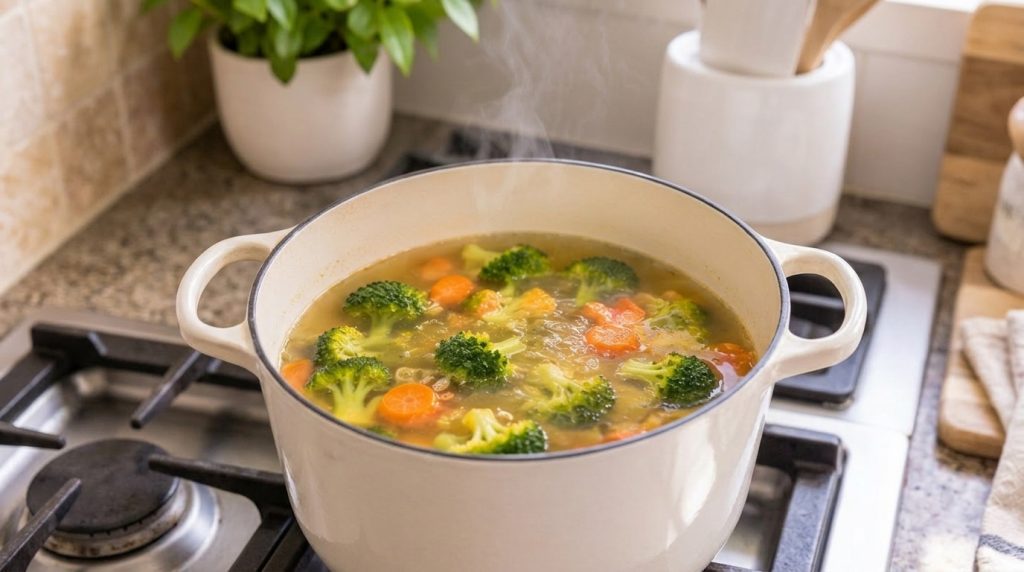
Creamy broccoli cheddar soup is one of those comforting bowls that feels like a full meal on a chilly evening. Tender broccoli and carrots simmer in a smooth, lightly thickened broth, then get finished with sharp cheddar for a rich, savory flavor. This version is easy enough for a weeknight and cozy enough for a weekend lunch.
Why You’ll Love This Recipe
- Simple ingredients: Broccoli, carrots, onion, broth, milk, and cheddar are all easy to find at a regular grocery store.
- Built-in vegetables: Broccoli and carrots add color, texture, and a fresh flavor that balances the cheese.
- Quick to make: Most of the cooking happens on the stovetop in about 30 to 40 minutes.
- Customizable: You can make it thicker or thinner, spicier, or topped with extra cheese and crispy bacon.
- Good for leftovers: It reheats well for lunches over a few days.
Ingredients
- 1 large head broccoli (about 1.5 lb / 680 g), cut into small florets with the tender stems chopped
- 2 medium carrots (about 8 oz / 225 g), peeled and diced
- 1 small yellow onion (about 6 oz / 170 g), finely chopped
- 2 cloves garlic, minced
- 3 tbsp (45 g) unsalted butter
- 3 tbsp (24 g) all-purpose flour
- 3 cups (720 ml) low-sodium vegetable or chicken broth
- 2 cups (480 ml) whole milk, warmed
- 2 cups (225 g) freshly shredded sharp cheddar cheese
- 1/2 tsp (2.5 g) salt, plus more to taste
- 1/4 tsp (0.5 g) black pepper
- Pinch of ground nutmeg (optional)
Ingredient Notes
Sharp cheddar: Sharp cheddar gives the soup its signature flavor. Shredding your own block cheese helps it melt smoothly, since pre-shredded cheese often contains anti-caking agents that can make the soup slightly grainy.
Warm milk: Warming the milk before adding it helps prevent the soup from cooling down and keeps the texture smooth. Whole milk makes the richest result, but 2% milk works if that is what you have.
Broth: Low-sodium broth lets you control the saltiness, especially since cheddar is already salty. Vegetable broth keeps the soup fully vegetarian.
Flour: The butter and flour make a roux that thickens the soup. If you need a gluten-free option, a 1:1 gluten-free flour blend works in similar amounts.
Equipment You’ll Need
- Large heavy-bottomed pot or Dutch oven
- Wooden spoon or whisk
- Immersion blender or regular countertop blender
- Cutting board and sharp knife
- Grater or food processor for the cheese
How to Make Creamy Broccoli Cheddar Soup
- Prep the vegetables. Cut the broccoli into small florets and peel the stems. Chop the stems into small pieces, dice the carrots, and finely chop the onion. Small, even pieces cook at the same rate and blend more smoothly.
- Sauté the aromatics. Melt the butter in a large pot over medium heat. Add the onion and carrots and cook for about 5 to 7 minutes, stirring occasionally, until the onion turns translucent and the carrots begin to soften. Add the garlic and cook for another 30 seconds until fragrant.
- Make the roux. Sprinkle the flour over the vegetables and stir constantly for about 1 minute. The mixture should look like a thick, pale paste with no dry flour visible.
- Add the broth. Slowly pour in the broth while whisking, scraping the bottom of the pot to lift any browned bits. Whisk until smooth, with no lumps of flour remaining.
- Simmer the soup. Add the broccoli, salt, and pepper. Bring the soup to a gentle simmer over medium heat, then reduce the heat to medium-low and cover partly. Cook for about 12 to 15 minutes, until the broccoli and carrots are very tender when pierced with a fork.
- Blend the soup. Use an immersion blender to puree the soup until mostly smooth, leaving a few small pieces for texture if you like. If using a countertop blender, work in batches, leaving the lid vent open and covering it with a towel to let steam escape.
- Add the milk. Stir in the warm milk. Keep the heat at low so the soup warms gently without boiling. The soup should look creamy and slightly thick, like heavy cream.
- Melt the cheese. Remove the pot from the heat or turn the burner to the lowest setting. Add the shredded cheddar a handful at a time, stirring after each addition until fully melted and smooth. Boiling cheese can make it grainy or oily, so keep the soup warm but not bubbling.
- Season and serve. Taste the soup and adjust the salt and pepper as needed. If it is too thick, stir in a splash of warm broth or milk. If it is too thin, simmer gently on low for a few minutes, stirring often.
Pro Tips for the Best Results
- Keep some broccoli florets whole. Reserve a small handful of florets and add them after blending for a more rustic texture.
- Use block cheese. Shredding your own cheese gives a smoother melt than pre-shredded bags.
- Warm the milk first. Cold milk can cool the soup and make it harder to keep smooth.
- Add cheese off the heat. This is the single most important step for a silky finish.
- Season at the end. Cheese and broth both contain salt, so taste before adding more.
- Adjust thickness gradually. A little broth or milk goes a long way once the soup is blended.
Common Mistakes to Avoid
Boiling after adding cheese: High heat can cause the cheese to separate. Keep the soup on low or off the heat during this step.
Using pre-shredded cheese: The anti-caking coating can make the soup gritty. Grate a block of sharp cheddar for the smoothest texture.
Overcooking the broccoli: Overcooked broccoli can turn the soup grayish-green and muddy in flavor. Simmer only until tender.
Adding cold milk: Cold milk can cool the pot and cause the soup to stall in texture. Warm it gently before adding.
Skipping the seasoning check: Soups often need more salt at the end. Taste once the cheese is fully melted.
Variations and Substitutions
- Extra-cheesy: Add an extra 1/2 cup (55 g) of cheddar for a richer soup.
- Lighter version: Use 2% milk and reduce the cheese to 1 1/2 cups (170 g).
- Vegetarian: Use vegetable broth, which this recipe already calls for in its base version.
- Add a little heat: Stir in a pinch of cayenne or a dash of hot sauce at the end.
- Different cheese: Monterey Jack or a mild white cheddar can replace some of the sharp cheddar for a milder flavor.
- Potato addition: Add one small diced russet potato with the carrots for a thicker, heartier soup.
Serving Suggestions
Serve the soup hot in bowls with extra shredded cheddar and a few broccoli florets on top. Crusty bread, a grilled cheese sandwich, or a simple green salad pairs nicely with it. Crispy bacon bits or toasted croutons add a satisfying crunch.
Storage and Reheating
Cool the soup to room temperature within about two hours, then transfer it to an airtight container and refrigerate. It is best eaten within three to four days. Reheat gently on the stovetop over low to medium-low heat, stirring often, and add a splash of milk or broth if it has thickened. Avoid bringing it to a hard boil. Freezing is possible, but the texture of the dairy may change slightly after thawing, so whisk well when reheating.
Frequently Asked Questions
Can I make broccoli cheddar soup ahead of time?
Yes. Make the soup through the blending step, then cool and refrigerate it. Add the milk and cheese when reheating so the texture stays smooth.
Can I freeze this soup?
You can freeze it in an airtight container, but the cheese and milk may separate after thawing. Whisk over low heat to recombine it.
Why did my soup turn grainy?
Graininess usually comes from boiling the soup after adding cheese or from using pre-shredded cheese. Add the cheese off the heat and grate your own block for the smoothest result.
How do I know when the broccoli is done?
The broccoli is ready when a fork slides easily through the largest florets and stems, usually after about 12 to 15 minutes of simmering. Cooking times vary with the size of the pieces.
Can I use frozen broccoli?
Yes. Add frozen florets directly to the pot and simmer a few minutes longer until very tender. The texture will be slightly softer than fresh broccoli.
How can I make the soup thicker?
Simmer it gently for a few extra minutes before adding the cheese, or add a small amount of cooked potato when blending. Avoid adding more flour at the end, which can make the texture pasty.
Nutrition information is an estimate and may vary depending on the ingredients and brands used.