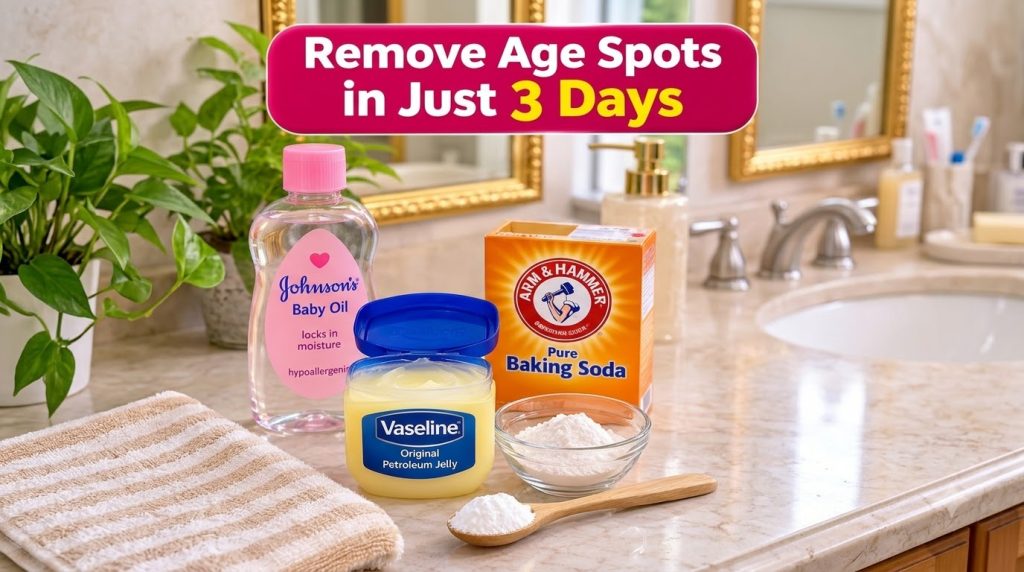
If you have noticed flat, brown patches appearing on your face, hands, or shoulders, you are not alone. Those spots are often called age spots or sun spots, and they show up for many people over time. Scrolling through social media, you may have come across a DIY mix of petroleum jelly, baby oil, and baking soda promising to clear them in just three days. Let us take a friendly, honest look at what is really going on, what is safe to try, and what to skip.
What Are Age Spots?
Age spots, also known as solar lentigines, are small flat areas of darker skin. They usually appear on areas that get the most sun exposure, such as the face, the backs of the hands, the chest, and the arms. They are caused mainly by years of sun exposure, which triggers extra pigment production in the skin. They are generally harmless, but many people prefer to even out their skin tone for confidence and a fresher look.
Why the 3-Day Promise Needs a Closer Look
Skin changes take time. Pigment sits in the deeper layers of the skin, and the natural renewal cycle takes weeks, not days. No simple kitchen mix can safely erase an existing spot overnight. Quick-fix promises often lead to disappointment, and sometimes to irritation.
Why baking soda can be too harsh
Baking soda is alkaline and slightly abrasive. Used on the face, it can disrupt the skin barrier, leading to redness, dryness, stinging, or even a worse-looking patch of skin. Sensitive skin is especially vulnerable. If you enjoy natural ingredients, it is wise to keep baking soda out of your facial routine and stick with gentler options.
What about petroleum jelly and baby oil?
Petroleum jelly is a well-known skin protectant. It helps lock in moisture and supports a healthy barrier, which is lovely for dry patches or chapped hands. However, it does not fade dark spots on its own. Baby oil is mainly a moisturizing and emollient product for the body. Both can be part of a gentle routine, but neither is a proven spot remover.

Gentle Habits That Support a More Even Skin Tone
- Wear a broad-spectrum sunscreen every day, even on cloudy days, and reapply when you spend time outdoors.
- Choose a wide-brimmed hat and sunglasses to protect the face and delicate areas around the eyes.
- Use a gentle cleanser twice a day to remove buildup without stripping your skin.
- Add a moisturizer to keep the skin barrier comfortable and resilient.
- Look for skincare ingredients often used for tone support, such as vitamin C serums or niacinamide, and introduce them slowly.
- Be patient. Visible changes usually take several weeks of consistent care.
When to See a Professional
Any spot that changes in size, shape, or color, bleeds, itches, or looks different from the rest of your skin should be checked by a dermatologist. A quick professional exam gives you peace of mind and helps rule out anything that needs attention. Your doctor or skin specialist can also discuss safe treatment options that match your skin type.
The Bottom Line
Glowing, even-looking skin is a wonderful goal, and a steady routine with daily sun protection, gentle cleansing, and good moisture is a kind place to start. Skip the overnight promises and harsh home mixes, and give your skin the gentle care it deserves. Your skin will thank you for the patience.