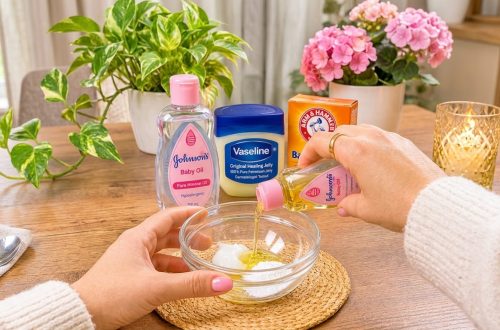
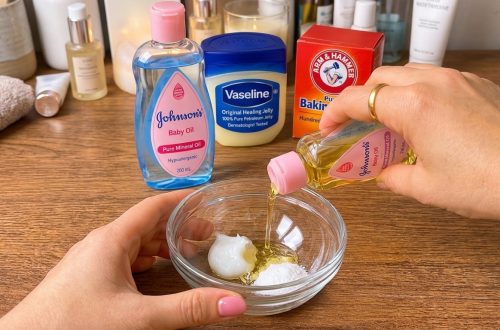
Looking for an easy way to give your skin a little extra glow? Many popular home beauty tricks start with ingredients you may already have in your bathroom or kitchen. In this guide, we take a closer look at a simple DIY skincare mix built around baby oil, explain what each ingredient does, and share practical safety tips so you can decide whether it suits your skin.
What Is This Simple Skincare Mix?
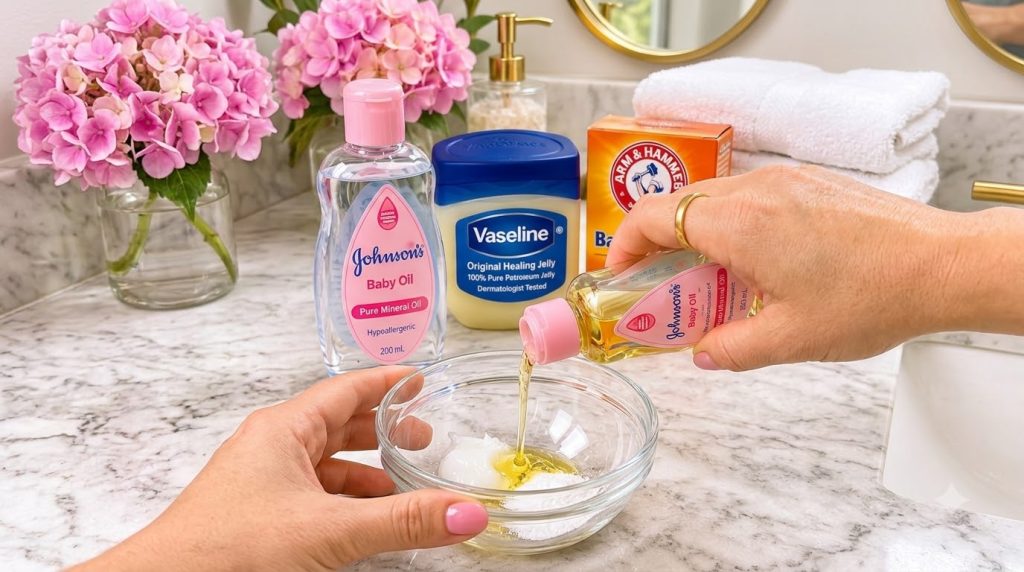
This type of mix is a home-blended moisturizing treatment that combines a gentle oil base with a few everyday add-ins. Baby oil is usually mineral oil with a light fragrance. It works as an occlusive, meaning it sits on the surface of the skin and helps reduce water loss, so skin can feel softer and more hydrated for longer.
Common Ingredients and What They Do
- Baby oil: an affordable, lightweight base that helps seal in moisture.
- Petroleum jelly: a rich protective layer often used on dry, rough patches.
- Baking soda: a mild abrasive sometimes added for gentle exfoliation, though it needs to be used with real caution.
- Other pantry staples: some home versions add a few drops of plant oil for extra comfort and slip.
How to Prepare It Safely
Recipes like this are shared informally, so measurements vary widely from one video to the next. A good rule is to start with a very small amount. Use a clean glass bowl and clean utensils, mix only what you plan to use right away, and avoid storing leftovers for later.
Safety Tips Before You Start
- Always do a patch test on a small area of skin, such as the inner arm, and wait at least 24 to 48 hours before using it more widely.
- Avoid broken, sunburned or irritated skin, and keep the mixture away from your eyes.
- Baking soda raises the pH of the skin and can irritate sensitive skin. If you use it at all, keep it very gentle and occasional, and skip it entirely around the delicate eye area.
- Occlusive oils can feel heavy and may contribute to clogged pores for acne-prone skin, so pay attention to how your skin responds.
- Stop using the mix right away if you notice redness, burning, itching or swelling, and speak with a healthcare professional if irritation continues.
Who Might Enjoy a Routine Like This?
A simple oil-based treatment is often most appealing for dry skin, winter weather, or a nighttime routine when you want extra softness. It can also be a practical option for rougher areas such as elbows, heels and hands, where a rich, protective layer is especially welcome.
Gentler Alternatives to Consider
If you want the benefits of hydration without the uncertainty of mixing your own products, consider a few gentle options. A plain facial oil, a fragrance-free moisturizer, or a pure aloe vera gel can add comfort to your routine. For exfoliation, a soft cloth or a mild, store-tested scrub is often a safer choice than harsh home abrasives.
Final Thoughts
Simple DIY skincare can be a fun, budget-friendly way to explore natural beauty, but it works best when it is approached with care. Start small, patch test every time, and choose gentle methods that your skin tolerates well. Your skin will thank you for a routine that feels comfortable and consistent.