Mashed potatoes are one of the most versatile side dishes you can make. Once you learn a basic creamy method, you can change the flavor completely with cheese, herbs, spices, or gravy. This guide covers eight delicious ways to make mashed potatoes, from a classic creamy base to loaded, cheesy, spicy, and gravy-topped versions.
Why You’ll Love These Mashed Potatoes
- Simple ingredients: Most versions start with potatoes, butter, milk, and salt.
- Easy to customize: One base recipe works with many toppings and mix-ins.
- Great for busy dinners: The cooking method is straightforward and can be done in about 30 to 40 minutes.
- Family-friendly: Mild versions appeal to kids, while spicier options suit adults who like more flavor.
- Pairs with almost anything: Mashed potatoes work alongside roasted meats, grilled vegetables, and saucy main dishes.
The Basic Method for Creamy Mashed Potatoes
Every variation below starts with the same creamy base. Here is what you will need.
- 2 pounds (about 900 g) russet or Yukon Gold potatoes
- 4 tablespoons (57 g) unsalted butter, softened
- 1/2 cup (120 ml) whole milk, warmed
- 1 teaspoon kosher salt, plus more to taste
- 1/4 teaspoon black pepper
- Peel the potatoes and cut them into even 1 to 2 inch (2.5 to 5 cm) chunks so they cook at the same rate.
- Place the potatoes in a large pot and cover with cold water by about 1 inch (2.5 cm). Add a generous pinch of salt to the water.
- Bring the water to a boil over medium-high heat, then reduce the heat to a steady simmer. Cook for about 12 to 15 minutes, until a fork slides easily into the largest piece with no resistance.
- Drain the potatoes well and return them to the dry pot for 1 to 2 minutes so excess moisture evaporates.
- Mash the potatoes with a potato masher or ricer. Add the butter and mash until it melts in.
- Pour in the warm milk a little at a time, stirring after each addition, until the potatoes reach a smooth, spoonable texture. Season with salt and pepper.
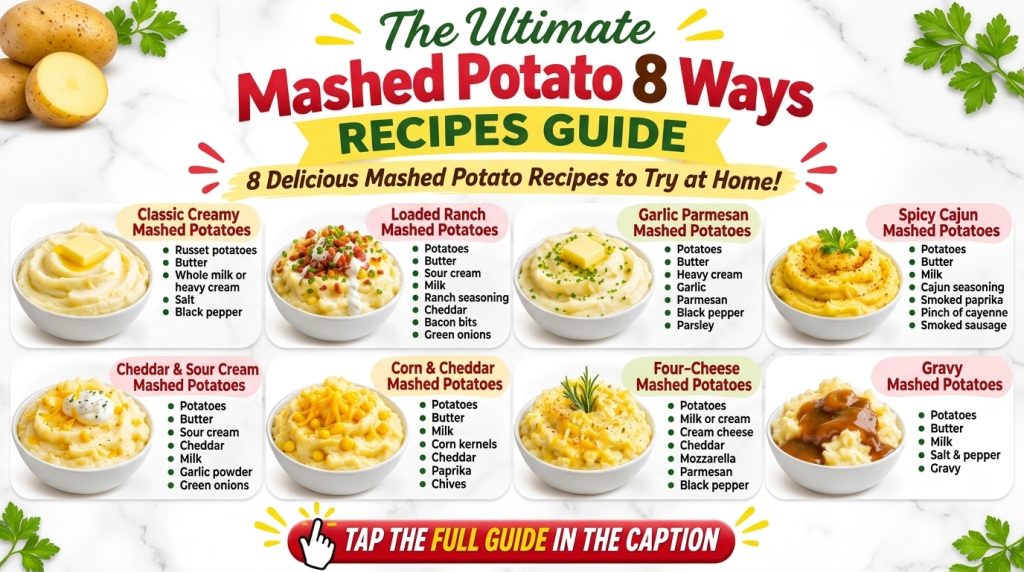
8 Delicious Mashed Potato Variations
1. Classic Creamy Mashed Potatoes
This is the base recipe above. Serve it plain with a little extra butter on top, or use it as the foundation for the other seven versions.
2. Loaded Ranch Mashed Potatoes
Stir 1/3 cup (80 g) sour cream and 1 tablespoon of dry ranch seasoning into the finished base. Top with crumbled cooked bacon, shredded cheddar, and sliced chives.
3. Garlic Parmesan Mashed Potatoes
Sauté 3 minced garlic cloves in a little butter for about 1 minute, until fragrant but not browned. Mash them into the potatoes with 1/2 cup (50 g) finely grated Parmesan. Finish with chopped parsley.
4. Spicy Cajun Mashed Potatoes
Add 1 to 2 teaspoons of Cajun seasoning to the potatoes, adjusting to your heat preference. A small pinch of cayenne pepper adds extra kick. Garnish with thinly sliced green onions.
5. Cheddar and Sour Cream Mashed Potatoes
Fold 1 cup (115 g) shredded sharp cheddar and 1/2 cup (120 g) sour cream into the hot potatoes. Stir until the cheese melts. The sour cream adds a bright tang that balances the richness.
6. Corn and Cheddar Mashed Potatoes
Stir 1 cup (150 g) cooked corn kernels and 3/4 cup (85 g) shredded cheddar into the base. Fresh or thawed frozen corn both work well. Top with green onions before serving.
7. Four-Cheese Mashed Potatoes
Combine about 1 1/2 cups (170 g) total of four cheeses, such as sharp cheddar, mozzarella, Parmesan, and Gruyere or Fontina. Stir them into the potatoes while they are hot so they melt smoothly.
8. Gravy-Topped Mashed Potatoes
Keep the base simple and serve it with warm gravy spooned over the top. Homemade or store-bought gravy both work. Warm the gravy gently in a small saucepan before serving so it spreads easily.
Pro Tips for the Best Results
- Choose Yukon Gold potatoes for a naturally buttery texture, or russets for a lighter, fluffier mash.
- Warm the milk and butter before adding them. Cold dairy cools the potatoes and can make them gluey.
- Use a ricer or food mill for the smoothest texture. A hand masher leaves a more rustic finish.
- Add cheese and sour cream after the potatoes are mashed, while they are still hot, so they blend in evenly.
- Season in stages. Taste after the butter and milk are mixed in, then adjust salt before serving.
- Keep the finished potatoes warm in a covered pot over very low heat, stirring occasionally, if you need to hold them before serving.
Common Mistakes to Avoid
- Using a food processor: Overprocessing releases too much starch and makes the potatoes gummy. Mash by hand or with a ricer instead.
- Adding cold milk: Cold liquid chills the potatoes and makes them stiff. Warm milk blends in more smoothly.
- Cutting pieces unevenly: Mixed sizes cook unevenly, leaving some pieces hard and others mushy.
- Overseasoning early: Cheese, bacon, and Cajun seasoning add salt. Taste before adding extra salt.
Serving Suggestions
Mashed potatoes pair well with roast chicken, meatloaf, pork chops, steak, and baked salmon. Loaded and cheesy versions can also work as a main dish with a green salad. Lighter versions, such as garlic Parmesan or classic creamy, go well with roasted vegetables and green beans.
Storage and Reheating
Store leftover mashed potatoes in an airtight container in the refrigerator and use them within a few days. Freezing is possible, but texture can change, so cheese-heavy or dairy-heavy versions may not freeze as well. To reheat, place the potatoes in a saucepan over low heat and add a splash of milk, stirring until warm and creamy. You can also microwave them in short bursts, stirring between each one.
Frequently Asked Questions
Can I make mashed potatoes ahead of time?
Yes. Make them up to a day ahead, refrigerate them, and reheat gently with a little warm milk or butter. Stir well until they are smooth again.
Which potatoes are best for mashed potatoes?
Yukon Gold potatoes are creamy and buttery, while russet potatoes produce a lighter, fluffier texture. Both work well for every version in this guide.
Why are my mashed potatoes gluey?
Gluey potatoes are usually caused by overmixing or using a food processor. Mash gently and stop as soon as the potatoes are smooth.
How do I know when the potatoes are cooked?
A fork or paring knife should slide into the largest piece with no resistance. If you feel any firmness in the center, let them simmer a few more minutes and check again.
Can I use margarine instead of butter?
You can, but butter gives a richer flavor. If you use margarine, choose a stick variety and reduce the added salt slightly.
Can I make these dairy-free?
Yes. Use plant-based butter and unsweetened plant milk, and skip the cheese or use a dairy-free shredded cheese. The texture will be a little lighter, but the flavor still works well.