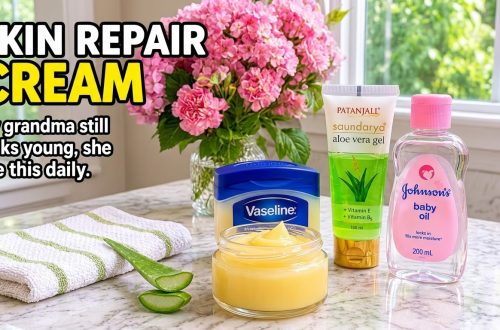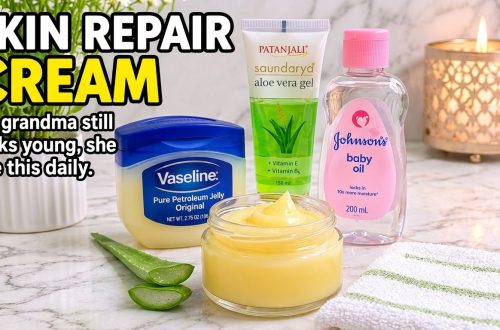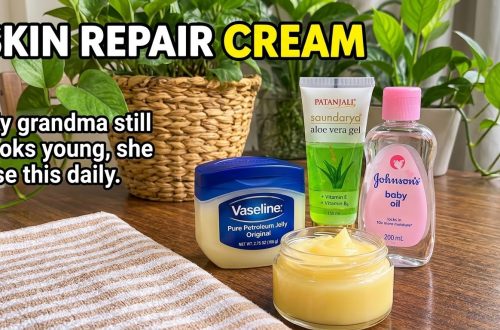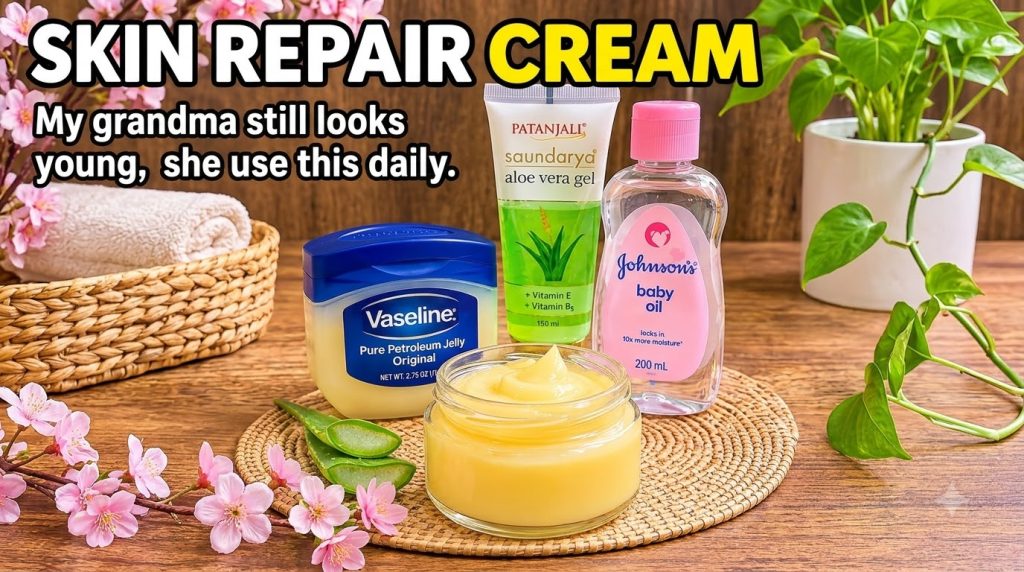
Many of us grew up hearing that grandma had a special secret for soft, glowing skin. Often that secret was nothing fancy at all. It was a jar of something simple sitting on the bathroom shelf, used every night before bed. Today, the idea of a homemade skin repair cream is catching fresh attention on social media, and it is easy to see why. It promises gentle hydration, everyday ingredients, and a budget-friendly routine.
What Makes This Cream Feel So Comforting
The idea behind this style of DIY cream is built on basic moisture science. Petroleum jelly, often sold as Vaseline, is an occlusive. It forms a light protective layer on the skin that helps reduce water loss, which is why it has been a staple for dry, rough, or irritated areas for generations. Baby oil, which is typically mineral oil with fragrance, works in a similar way by sealing in moisture. Aloe vera gel adds a cooling, lightweight feel and is often valued for its soothing qualities.
Together, these ingredients create a rich, protective balm that can make skin feel softer and more comfortable, especially during dry weather or after a long day.
Simple Ingredients You Might Already Have
- Petroleum jelly, for a protective, moisture-locking base
- Baby oil or another light mineral oil, for a silky, smooth feel
- Pure aloe vera gel, for a soothing, cooling layer
- A clean jar with a tight lid, for storage
Before using any homemade product, check the labels, choose pure and fragrance-free options where possible, and always use clean hands and clean containers. Freshly made mixtures are best stored in small amounts and replaced regularly.
How to Use It Safely
- Do a patch test on a small area of skin, such as the inner arm, and wait 24 hours before using it on your face.
- Apply a small amount to clean, slightly damp skin, ideally in the evening.
- Gently massage it in and avoid sensitive areas such as the eyes.
- Stop using it right away if you notice redness, itching, burning, or swelling.
Because petroleum-based products can feel heavy on oily or acne-prone skin, it is wise to start with a light layer and see how your skin responds. People with existing skin conditions should speak with a dermatologist before trying new homemade remedies.
Realistic Expectations for Youthful-Looking Skin
It is important to be honest about what a simple moisturizing cream can do. Hydrated skin often looks plumper, smoother, and more even, which can make fine lines appear less noticeable. However, no kitchen or bathroom ingredient can erase deep wrinkles or reverse aging on its own. Real results usually come from consistent habits such as daily sunscreen, gentle cleansing, good sleep, and a balanced diet, combined with a moisturizer that suits your skin type.
Making the Most of a Grandma-Inspired Routine
The real appeal of this approach is its simplicity. It encourages slowing down, taking a few quiet minutes for yourself, and caring for your skin with ingredients you already trust. If you enjoy DIY beauty, you can keep notes on what works well for your skin, from texture and scent to how comfortable your face feels the next morning.
Whether you see this as a nostalgic family tradition or a fun new experiment, a warm, hydrating nighttime ritual can be a lovely part of everyday self-care. Start small, listen to your skin, and enjoy the process of finding what feels right for you.