Did you know that a thriving gut is at the core of overall well-being? If you’re looking for simple yet effective ways to boost your gut health, look no further than your kitchen. Making easy homemade pickles is not only a delightful culinary adventure but also a fantastic way to introduce beneficial probiotics into your diet. These fermented delights are far more than just a tangy side dish; they are a powerhouse of gut-friendly bacteria that can aid digestion, enhance nutrient absorption, and even support your immune system.
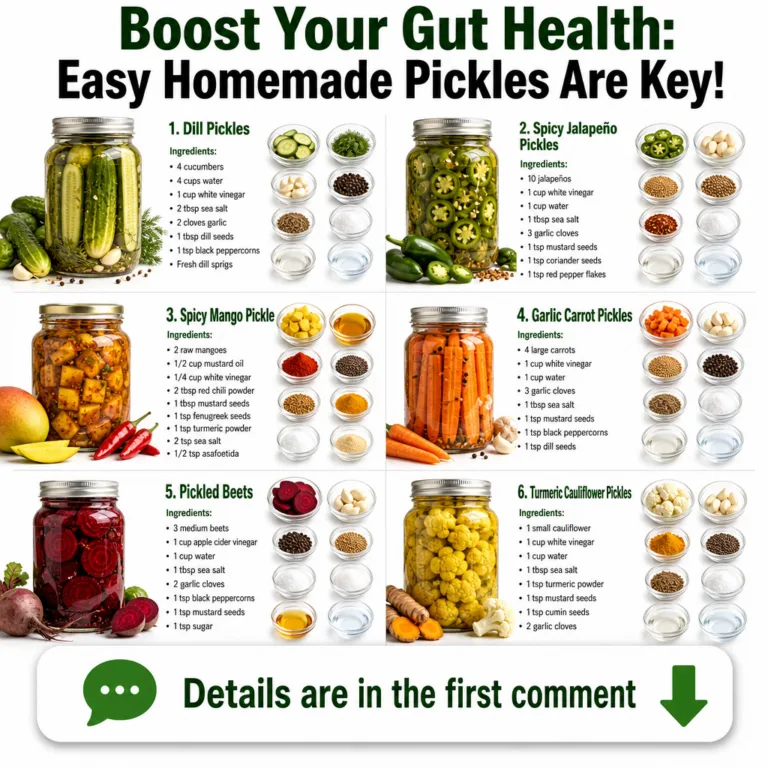
Forget complicated recipes or expensive supplements. This guide will walk you through six vibrant and delicious homemade pickle recipes, straight from our infographic, that are surprisingly simple to prepare. From classic dill to exotic spicy mango, you’ll discover how easy it is to create probiotic-rich foods that will make your gut sing. Get ready to transform everyday ingredients into gut-boosting treasures!
Why Homemade Pickles are a Game Changer for Your Gut
Before diving into the recipes, let’s explore why incorporating homemade pickles into your diet can be incredibly beneficial for your gut health. Unlike store-bought varieties that are often pasteurized (which kills beneficial bacteria), homemade pickles, especially those made through fermentation or quick pickling with a focus on fresh ingredients, retain their probiotic potency.
- Rich in Probiotics: Fermented pickles are teeming with live bacteria that can help balance your gut microbiome, improving digestion and nutrient absorption.
- Enhance Digestion: The enzymes and beneficial acids in pickles can assist your body in breaking down food more efficiently.
- Support Immune Function: A healthy gut is closely linked to a strong immune system, as a significant portion of immune cells reside in the digestive tract.
- Packed with Nutrients: Pickling preserves many of the vitamins and minerals in vegetables, making them a nutritious addition to any meal.
- Easy & Affordable: Making pickles at home is a cost-effective way to enjoy probiotic-rich foods and control the ingredients you consume.
Ready to try them out? Here are six easy recipes to get you started on your gut-health journey.
General Guide to Quick Pickling
Most of these recipes follow a similar quick-pickling method, which involves submerging vegetables in a heated brine of vinegar, water, and salt. While not a true fermentation (which takes longer and relies on natural bacteria), quick pickles still offer some gut benefits from the raw vegetables and the acidic environment. For optimal probiotic benefits, consider using a starter culture or allowing for a longer, traditional fermentation process after you master quick pickling.
Basic Brine Recipe (Adjust as needed for each recipe)
- 1 cup water
- 1 cup distilled white vinegar (or apple cider vinegar for a milder taste)
- 1 tablespoon pickling salt (non-iodized)
- 1 teaspoon sugar (optional, for balance)
Instructions for Brine:
- Combine water, vinegar, salt, and optional sugar in a saucepan.
- Heat over medium-high heat, stirring until salt and sugar are fully dissolved.
- Bring to a boil, then remove from heat and let cool slightly before pouring over vegetables.
6 Easy & Delicious Homemade Pickle Recipes for Gut Health
Here are the detailed recipes for each of the gut-friendly pickles highlighted in our infographic.
1. Classic Dill Pickles
A timeless favorite, dill pickles offer a refreshing crunch and a distinctive herbaceous flavor, perfect for sandwiches or as a standalone snack.
Yields: 1-2 pint jars
Prep Time: 15 minutes
Chill Time: 24-48 hours (for best flavor)
Ingredients:
- 2-3 medium pickling cucumbers, sliced into spears or rounds
- 2-3 fresh dill sprigs
- 2-3 cloves garlic, peeled and sliced
- 1 teaspoon black peppercorns
- 1 cup water
- 1 cup distilled white vinegar
- 1 tablespoon pickling salt
Instructions:
- Wash and slice cucumbers as desired. Sterilize your pint jars.
- Into each clean pint jar, place 1-2 dill sprigs, 1-2 sliced garlic cloves, and ½ teaspoon of black peppercorns.
- Pack the cucumber slices tightly into the jars, leaving about ½ inch of headspace.
- Prepare the brine: In a saucepan, combine water, vinegar, and pickling salt. Heat over medium-high heat, stirring until the salt dissolves. Bring to a boil, then remove from heat.
- Carefully pour the hot brine over the cucumbers in the jars, ensuring they are fully submerged. Tap the jars gently to release any air bubbles.
- Seal the jars with lids. Once cooled to room temperature, transfer to the refrigerator.
- Allow to chill for at least 24-48 hours before enjoying for optimal flavor.
2. Spicy Jalapeño Pickles
For those who love a little kick, these spicy jalapeño pickles are incredibly versatile. Add them to tacos, nachos, or simply enjoy them straight from the jar.
Yields: 1-2 pint jars
Prep Time: 15 minutes
Chill Time: 24-48 hours
Ingredients:
- 4-5 fresh jalapeños, sliced into rounds (remove seeds for less heat)
- 2-3 cloves garlic, peeled and sliced
- 1 teaspoon black peppercorns
- 1 cup water
- 1 cup distilled white vinegar
- 1 tablespoon pickling salt
- ½ teaspoon sugar (optional, to balance heat)
Instructions:
- Wash jalapeños and slice into rounds. Sterilize your pint jars.
- Into each clean pint jar, place 1-2 sliced garlic cloves and ½ teaspoon of black peppercorns.
- Carefully pack the jalapeño slices tightly into the jars, leaving about ½ inch of headspace.
- Prepare the brine: In a saucepan, combine water, vinegar, pickling salt, and optional sugar. Heat over medium-high heat, stirring until dissolved. Bring to a boil, then remove from heat.
- Pour the hot brine over the jalapeños, ensuring they are fully submerged. Tap jars to release air bubbles.
- Seal and refrigerate once cooled.
- Chill for at least 24-48 hours before serving.
3. Spicy Mango Pickles
An exotic and vibrant pickle, spicy mango pickles bring a unique sweet, sour, and spicy flavor profile. They pair wonderfully with grilled meats or as a chutney alternative.
Yields: 1-2 pint jars
Prep Time: 20 minutes
Chill Time: 3-5 days
Ingredients:
- 1-2 unripe (firm, green) mangoes, peeled and diced into 1-inch cubes
- 1-2 fresh red chilies (e.g., bird’s eye), thinly sliced
- 2 cloves garlic, minced
- 1-inch piece fresh ginger, grated
- ½ teaspoon cumin seeds (lightly toasted for deeper flavor)
- 1 cup water
- 1 cup apple cider vinegar (for a slightly sweeter tang)
- 1 tablespoon pickling salt
- 1 teaspoon sugar
Instructions:
- Peel and dice mangoes. Prepare chilies, garlic, and ginger. Sterilize your pint jars.
- Into each clean pint jar, add the mango cubes, sliced chilies, minced garlic, grated ginger, and cumin seeds.
- Prepare the brine: In a saucepan, combine water, apple cider vinegar, pickling salt, and sugar. Heat over medium-high heat, stirring until dissolved. Bring to a boil, then remove from heat.
- Pour the hot brine over the mango and spices, ensuring everything is submerged. Tap jars to release air bubbles.
- Seal and refrigerate once cooled.
- Allow to chill for at least 3-5 days for the flavors to meld beautifully.
4. Garlic Carrot Pickles
Sweet, earthy carrots get a delightful tang and garlicky punch when pickled. These are fantastic in salads, alongside a main meal, or as a healthy snack.
Yields: 1-2 pint jars
Prep Time: 15 minutes
Chill Time: 24-48 hours
Ingredients:
- 3-4 medium carrots, peeled and cut into sticks or rounds
- 3-4 cloves garlic, peeled and sliced
- 2-3 fresh dill sprigs
- 1 cup water
- 1 cup distilled white vinegar
- 1 tablespoon pickling salt
Instructions:
- Wash, peel, and cut carrots. Sterilize your pint jars.
- Into each clean pint jar, place 1-2 sliced garlic cloves and 1-2 dill sprigs.
- Pack the carrot sticks or rounds tightly into the jars, leaving about ½ inch of headspace.
- Prepare the brine: In a saucepan, combine water, vinegar, and pickling salt. Heat over medium-high heat, stirring until dissolved. Bring to a boil, then remove from heat.
- Pour the hot brine over the carrots, ensuring they are fully submerged. Tap jars to release air bubbles.
- Seal and refrigerate once cooled.
- Chill for at least 24-48 hours before serving.
5. Pickled Beets
With their vibrant color and sweet-and-sour taste, pickled beets are a stunning and healthy addition to any plate. They are perfect for salads or as a side dish.
Yields: 1-2 pint jars
Prep Time: 20 minutes (plus cooking beets)
Chill Time: 3-5 days
Ingredients:
- 2-3 medium beets, cooked, peeled, and sliced into rounds or wedges
- ½ small red onion, thinly sliced
- 1 teaspoon black peppercorns
- 1 bay leaf
- 1 cup water
- 1 cup apple cider vinegar
- 1 tablespoon pickling salt
- 2 tablespoons sugar (adjust to taste)
Instructions:
- Pre-cook beets by boiling or roasting until tender. Allow to cool, then peel and slice. Sterilize your pint jars.
- Into each clean pint jar, place the sliced red onion, ½ teaspoon of black peppercorns, and ½ bay leaf.
- Pack the cooked and sliced beets into the jars, leaving about ½ inch of headspace.
- Prepare the brine: In a saucepan, combine water, apple cider vinegar, pickling salt, and sugar. Heat over medium-high heat, stirring until dissolved. Bring to a boil, then remove from heat.
- Pour the hot brine over the beets and seasonings, ensuring they are fully submerged. Tap jars to release air bubbles.
- Seal and refrigerate once cooled.
- For the best flavor, chill for 3-5 days before enjoying.
6. Turmeric Cauliflower Pickles
These bright yellow pickles are not only visually appealing but also offer the anti-inflammatory benefits of turmeric. A unique and healthy twist on pickled vegetables.
Yields: 1-2 pint jars
Prep Time: 15 minutes
Chill Time: 24-48 hours
Ingredients:
- 1 small head cauliflower, cut into small florets
- 1 teaspoon ground turmeric
- 1 teaspoon mustard seeds
- 1-2 cloves garlic, peeled and sliced (optional)
- 1 cup water
- 1 cup distilled white vinegar
- 1 tablespoon pickling salt
- ½ teaspoon sugar (optional)
Instructions:
- Wash and cut cauliflower into small florets. Sterilize your pint jars.
- Into each clean pint jar, place ½ teaspoon of ground turmeric, ½ teaspoon of mustard seeds, and optional garlic slices.
- Pack the cauliflower florets tightly into the jars, leaving about ½ inch of headspace.
- Prepare the brine: In a saucepan, combine water, vinegar, pickling salt, and optional sugar. Heat over medium-high heat, stirring until dissolved. Bring to a boil, then remove from heat.
- Pour the hot brine over the cauliflower and spices, ensuring they are fully submerged. Tap jars to release air bubbles.
- Seal and refrigerate once cooled.
- Chill for at least 24-48 hours before serving.
Tips for Successful Pickling
- Sterilize Your Jars: Always start with clean, sterilized glass jars to prevent spoilage.
- Fresh, Quality Produce: Use fresh, crisp vegetables for the best texture and flavor.
- Pickling Salt: Use non-iodized pickling salt to avoid cloudiness and off-flavors.
- Headspace: Leave about ½ inch of space between the brine and the lid to allow for expansion.
- Submerge Vegetables: Ensure all vegetables are fully submerged in the brine to prevent mold.
- Patience is Key: While quick pickles can be eaten sooner, their flavors deepen over a few days in the refrigerator.
- Storage: Homemade quick pickles should always be stored in the refrigerator and typically last for 2-4 weeks.
Frequently Asked Questions About Homemade Pickles
Q: Are homemade pickles truly probiotic?
A: Quick pickles made with vinegar brine are generally not considered probiotic-rich because the vinegar inhibits the growth of beneficial bacteria. However, traditional fermented pickles, which rely on salt and time to encourage beneficial bacterial growth, are excellent sources of probiotics. Both types offer valuable nutrients and flavor, but for a true probiotic boost, look into fermentation methods.
Q: What kind of vinegar is best for pickling?
A: Distilled white vinegar is a popular choice for its clean, neutral flavor and high acidity. Apple cider vinegar can also be used for a fruitier, milder tang, especially in recipes like pickled beets or mango. Ensure the vinegar has at least 5% acidity for safe pickling.
Q: Can I reuse the pickling brine?
A: It’s generally not recommended to reuse pickling brine for safety reasons, as its acidity and salt concentration can change, and it may contain residual bacteria from the previous batch.
Q: How long do homemade pickles last?
A: Quick pickles stored in the refrigerator typically last for 2-4 weeks. Fermented pickles can last longer, often for several months, when properly stored in a cool, dark place or refrigerator.
Q: Can I use other vegetables for pickling?
A: Absolutely! The world of pickling is vast. You can pickle almost any firm vegetable, such as green beans, radishes, bell peppers, or even asparagus. Experiment with different spices and herbs to find your favorite combinations.
Final Thoughts
Making your own gut-friendly pickles at home is a rewarding experience that combines culinary creativity with significant health benefits. By following these easy recipes, you’re not just preparing food; you’re actively contributing to a healthier gut microbiome, which can have ripple effects on your entire well-being. So, grab your jars, pick your favorite vegetables, and start pickling your way to improved gut health today! Which one will you try first?
Medical Disclaimer
The information provided in this article is for general informational purposes only and does not constitute medical advice. Always consult with a qualified healthcare professional before making any decisions about your health or treatment. The benefits of probiotics and fermented foods may vary by individual.