Looking for a bread that is gluten-free, vegan, and surprisingly easy to make at home? This fermented buckwheat loaf fits the bill. Buckwheat is not a grain and contains no gluten, so it makes a hearty, nutty loaf that works well for sandwiches and toast.
The catchy name says “one ingredient,” and buckwheat flour does do most of the work. In practice, you will also need water, a little salt, and a small amount of starter to get the fermentation going. Those simple pieces come together into a dense, flavorful loaf with a lightly tangy taste. It is a great weekend baking project when you want something wholesome to slice for the week.

Recipe Overview
- Recipe Category: Gluten-free bread
- Diet Type: Vegan (no animal ingredients)
- Prep Time: 15 minutes, plus 12 to 24 hours of fermenting
- Cook Time: 60 minutes
- Cooling Time: 2 hours
- Total Active Time: About 1 hour 15 minutes
- Servings: 1 loaf (about 12 slices)
- Difficulty Level: Easy
- Main Cooking Method: Fermenting, then baking
Why You’ll Love This Recipe
- Only a few basic ingredients are needed.
- It is naturally gluten-free, so it suits many people who avoid gluten.
- The fermentation adds a mild, pleasantly tangy flavor.
- It slices well and toasts nicely for breakfast.
- It is budget-friendly and easy to make in a standard loaf pan.
Ingredients
For a 9 x 5-inch loaf (about 12 slices):
- 2 cups (240 g) raw buckwheat flour, light or dark
- 1 1/4 cups (300 ml) lukewarm water, about 95°F (35°C)
- 2 tablespoons active gluten-free or buckwheat starter (see tip below)
- 1 1/2 teaspoons fine sea salt
- 1 teaspoon olive oil, for greasing the pan (optional substitute: coconut oil)
Equipment
- Large mixing bowl
- Rubber spatula
- Measuring cups and spoons
- 9 x 5-inch loaf pan
- Parchment paper
- Plastic wrap or a clean kitchen towel
- Wire cooling rack
- Instant-read thermometer (optional but helpful)
Step-by-Step Instructions
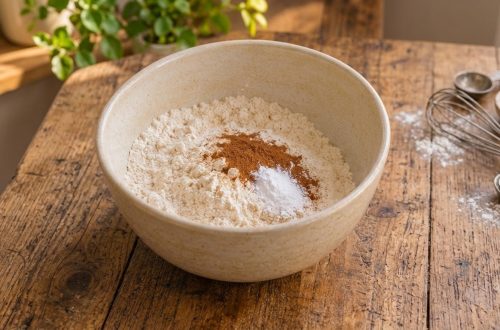
- Mix the batter. In a large bowl, whisk the buckwheat flour and lukewarm water until no dry pockets remain. The mixture should look like a thick, smooth paste, similar to thick pancake batter.
- Add the starter. Stir in the starter until evenly blended. The starter is what kicks off the fermentation, so make sure it is spread through the batter.
- Ferment the batter. Cover the bowl with plastic wrap or a towel and leave it at room temperature, around 70 to 75°F (21 to 24°C), for 12 to 24 hours. It is ready when it is bubbly, smells pleasantly sour and slightly yeasty, and has risen a little. Warmer kitchens ferment faster, so start checking after 12 hours.
- Add the salt. Sprinkle the salt over the fermented batter and stir well for about 1 minute until it is fully mixed in. The dough will feel thick and slightly sticky.
- Prepare the pan. Preheat your oven to 350°F (175°C). Grease the loaf pan with olive oil, then line the bottom and two long sides with parchment paper so the loaf lifts out easily.
- Shape the loaf. Scrape the dough into the pan. Wet your hands or a spatula with a little water and smooth the top. The dough will not spread like wheat dough, so press it gently into the corners.
- Bake. Bake for 55 to 65 minutes, until the top is deep golden brown and firm when pressed. If using a thermometer, the center should reach about 205°F (96°C). If the top browns too quickly, cover it loosely with foil for the last 15 minutes.
- Cool completely. Let the loaf sit in the pan for 10 minutes, then lift it out using the parchment and set it on a wire rack. Let it cool for at least 2 hours before slicing. Cutting too soon can leave the center gummy.
- Serve. Slice with a sharp serrated knife, using a gentle sawing motion. Toast slices for the best texture, or spread them with vegan butter, avocado, or hummus.
Nutrition Highlights
Buckwheat flour is a good source of plant-based protein and dietary fiber for a flour. It also contains minerals such as magnesium, manganese, and iron. Fermentation can make the loaf easier to digest for some people, though results vary.
Because this loaf is made mainly from one plant ingredient, it is best paired with other foods, such as beans, leafy greens, nuts, or seeds, to round out a meal. Vegans should also keep vitamin B12, iodine, calcium, and omega-3 fats in mind as part of a balanced plant-based diet.
Nutritional Information
Reliable per-slice values depend on the exact brand of flour and starter, so this article does not list specific numbers. Use a nutrition calculator with your own ingredients if you need exact figures.
Expert Tips
- Use a reliable starter. A bubbly gluten-free sourdough starter or a spoonful of previous buckwheat batter gives the most consistent rise and flavor.
- Watch the temperature. Cooler rooms need more time to ferment. Find a warm spot, such as near the oven with the light on, if your kitchen is chilly.
- Keep the dough moist. Buckwheat absorbs water quickly, so adjust by a tablespoon at a time if the batter seems too stiff.
- Let it cool fully. Slicing a warm loaf is the most common reason for a gummy texture.
- Toast before serving. Toasting brings out the nutty flavor and firms up the crumb.
Recipe Variations
- Seeded version: Stir in 3 tablespoons of sunflower seeds or chia seeds with the salt for extra crunch and healthy fats.
- Herb version: Add 1 tablespoon of dried rosemary or thyme with the salt for a savory loaf that pairs well with soups.
- Higher-protein version: Replace 1/4 cup of buckwheat flour with the same amount of chickpea flour for a slightly denser, more protein-rich crumb.
Storage Instructions
- Room temperature: Wrap the cooled loaf in a clean towel or store it in a bread box for up to 2 days.
- Refrigerator: Store wrapped slices in an airtight container for up to 5 days. Chilling dries bread out, so toast slices before eating.
- Freezer: Slice the cooled loaf, place parchment between slices, and freeze in a sealed bag for up to 3 months.
- Reheating: Toast slices straight from the freezer, or warm them in a dry skillet for a few minutes per side.
Common Mistakes
- Cutting too soon: The loaf looks done but the center is still moist. This happens because the crumb sets as it cools. Wait at least 2 hours before slicing.
- Skipping the starter: Without it, the batter may not ferment well and the loaf can turn out flat and heavy. Use an active starter for reliable results.
- Over-fermenting: Leaving the batter for too long can make it taste very sour and collapse. Check it after 12 hours and bake once it is bubbly.
- Baking without a thermometer check: A pale center leads to a gummy texture. Bake until the top is deep golden and the center reaches about 205°F (96°C).
Frequently Asked Questions
Is this bread really made with only one ingredient?
Buckwheat flour is the main ingredient, but you also need water, salt, and a starter to ferment the batter. Those small additions are what make the loaf rise and taste good.
Is this recipe vegan?
Yes, as long as your starter is made only from plant ingredients. Check any store-bought starter label to confirm it contains no honey or dairy.
Can I make the batter the night before?
Yes. Let it ferment overnight, then add the salt and bake in the morning. Just make sure your kitchen stays warm enough for the batter to develop.
Can I use buckwheat flour from a different brand?
Yes, but results vary. Some flours absorb more water, so adjust the liquid a tablespoon at a time to get a thick, smooth batter.
Why is my loaf dense?
Dense loaves usually mean the batter did not ferment long enough, the starter was not active, or the loaf was cut before it cooled. Review the fermenting and cooling steps.
Conclusion
This fermented buckwheat loaf is a simple, gluten-free, vegan bread that comes together with basic pantry ingredients and a little patience. The tangy flavor and sturdy crumb make it a good everyday choice for toast and sandwiches.
Plan ahead for the fermentation, let the loaf cool fully, and enjoy it fresh or freeze slices for later. Your homemade buckwheat bread will be ready whenever you need a wholesome slice.