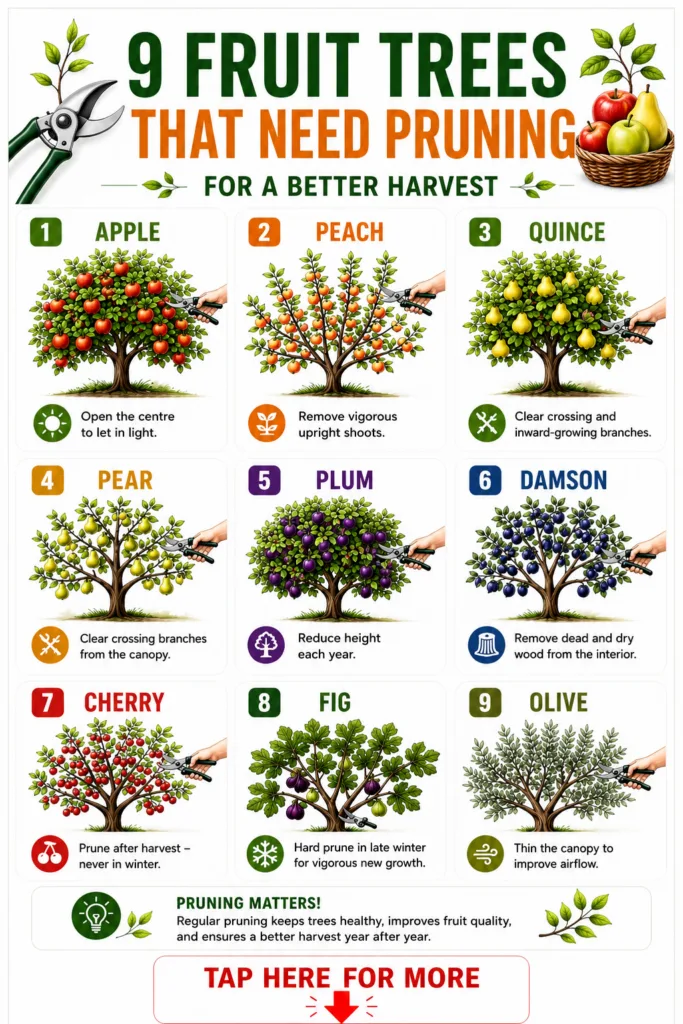
Pruning is one of the most valuable gardening practices you can learn. While it may seem like simply cutting off branches, proper pruning improves air circulation, allows more sunlight to reach the canopy, encourages stronger growth, and helps fruit trees produce larger, healthier harvests.
Each fruit tree has its own growth habit, which means the pruning technique should be tailored to the species. Knowing when and how to prune can make the difference between a struggling tree and one that produces abundant fruit year after year.
Let’s explore nine popular fruit trees and the best pruning approach for each.
1. Apple Trees 🍎
Apple trees benefit greatly from annual pruning because they tend to develop dense canopies.
The goal is to create an open center that allows sunlight and fresh air to reach every branch.
Focus on removing:
- Dead or diseased wood
- Water sprouts
- Crossing branches
- Inward-growing shoots
An open canopy improves fruit color, sweetness, and disease resistance.
2. Peach Trees 🍑
Peach trees are vigorous growers and produce fruit on one-year-old wood.
To maintain productivity:
- Remove upright water shoots.
- Thin overcrowded branches.
- Keep the center of the tree open.
- Encourage new fruiting wood every season.
Without regular pruning, peach trees quickly become overcrowded and produce smaller fruit.
3. Quince Trees 🍐
Quince trees naturally develop dense branching.
Prune to remove:
- Crossing branches
- Inward-growing limbs
- Weak shoots
- Damaged wood
Improving airflow reduces fungal diseases while helping fruit mature evenly.
4. Pear Trees 🍐
Pear trees often produce many vertical shoots that compete for sunlight.
Regular pruning should focus on:
- Removing crossing branches
- Maintaining a balanced framework
- Opening the canopy
- Eliminating crowded growth
This helps produce larger, healthier pears while preventing disease.
5. Plum Trees 🍇
Plum trees respond well to light annual pruning.
Avoid removing too much at once.
Instead:
- Reduce excessive height
- Remove dead wood
- Thin crowded branches
- Maintain a balanced shape
Consistent yearly pruning encourages stronger fruit production and healthier growth.
6. Damson Trees
Damsons are closely related to plums but grow more densely.
The priority is removing:
- Dead branches
- Dry wood
- Diseased limbs
- Congested interior growth
Better airflow helps prevent fungal infections and improves fruit quality.
7. Cherry Trees 🍒
Unlike many fruit trees, cherries should not be heavily pruned during winter.
The best time is:
- Immediately after harvest
- During dry weather
Remove:
- Dead branches
- Damaged wood
- Weak shoots
Summer pruning greatly reduces the risk of bacterial canker and silver leaf disease.
8. Fig Trees 🌿
Fig trees are vigorous growers and can become overly dense if left unmanaged.
Late winter is usually the ideal time for pruning.
Remove:
- Weak branches
- Crossing limbs
- Older wood
- Excess interior growth
This encourages vigorous new shoots that produce the following season’s figs.
9. Olive Trees 🫒
Olive trees thrive with an open, airy canopy.
Pruning should focus on:
- Thinning crowded branches
- Removing suckers
- Eliminating weak growth
- Improving sunlight penetration
Good airflow reduces humidity inside the canopy, helping prevent pests and fungal diseases while improving fruit quality.
Why Pruning Matters
Pruning isn’t just about keeping trees neat—it directly impacts their health and productivity.
Proper pruning helps:
- Increase sunlight exposure
- Improve airflow
- Reduce pests and diseases
- Produce larger, sweeter fruit
- Strengthen branch structure
- Encourage vigorous new growth
- Extend the life of your trees
A well-pruned tree is healthier, easier to maintain, and far more productive than one left unmanaged.
Best Time to Prune
Although each species is different, here are some general guidelines:
- Late winter: Apples, pears, figs, and many deciduous fruit trees.
- After harvest: Cherries and some plums.
- Light summer pruning: To remove water sprouts and improve airflow when necessary.
Always use clean, sharp pruning tools and avoid heavy pruning during extremely hot or freezing weather.
Final Thoughts
Regular pruning is one of the simplest ways to improve the health and productivity of your fruit trees. By understanding the unique needs of each species—from apples and peaches to figs and olives—you’ll enjoy stronger growth, fewer diseases, and bigger harvests season after season.
A few careful cuts each year can reward you with healthier trees and baskets full of delicious, homegrown fruit for many years to come. 🌳🍎🍒🍐