Dinner doesn’t get much simpler than this. Salmon and asparagus cook together in the slow cooker with a little lemon, garlic, and butter, so you can set it up in a few minutes and let the appliance do the work. The result is moist, tender salmon with bright citrus flavor and crisp-tender vegetables, which makes it a practical choice for a weeknight meal.
Why You’ll Love This Slow Cooker Salmon
- Minimal hands-on time. Most of the work is layering the ingredients in the pot.
- Simple ingredients. You likely have most of them on hand, and the seasonings are basic pantry staples.
- Gentle, moist cooking. The slow cooker helps keep the salmon tender rather than dry.
- One-pot dinner. The salmon and asparagus cook together, so there’s less to wash.
- Easy to adapt. You can swap in other vegetables or herbs based on what you have.
Ingredients
- 1 1/2 lb (680 g) salmon fillets, about 4 fillets (skin on or off)
- 1 lb (450 g) asparagus, woody ends trimmed
- 3 tbsp (45 g) unsalted butter, cut into small pieces
- 3 cloves garlic, minced
- 1 lemon, half sliced into rounds and half juiced
- 1/4 cup (60 ml) low-sodium chicken broth or water
- 1/2 tsp salt
- 1/4 tsp black pepper
- 1/2 tsp dried dill or Italian seasoning (optional)
Ingredient Notes
Salmon fillets of similar thickness cook most evenly. Thicker center-cut pieces hold up better in a slow cooker than thin tail pieces. Butter adds richness and helps the lemon and garlic coat the fish. The broth or water creates a small amount of steam so the salmon doesn’t stick or dry out. Asparagus can be swapped for green beans or broccoli florets, though cooking times will change.
Equipment You’ll Need
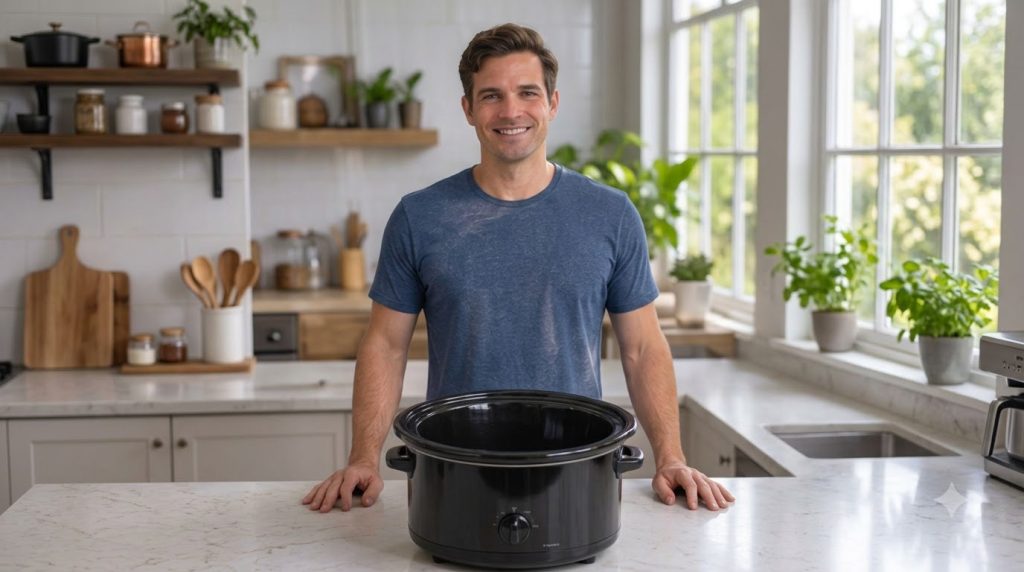
- A 5 to 6 quart slow cooker
- A cutting board and sharp knife
- A small bowl for the seasonings
- A meat thermometer (recommended)
How to Make Slow Cooker Salmon and Asparagus
- Prep the slow cooker. Lightly grease the inside of the pot with cooking spray or a little butter, or use a slow cooker liner. This makes cleanup easier.
- Add the broth and lemon. Pour the broth or water into the bottom of the pot. Add the lemon rounds in an even layer, which keeps the fish from sitting directly on the base.
- Season the salmon. Pat the fillets dry with a paper towel. Sprinkle both sides with salt, pepper, and dried dill or Italian seasoning if using.
- Add the garlic and butter. Mix the minced garlic with the lemon juice and melted or softened butter. Spoon half over the salmon, then dot the rest on top of the fillets.
- Cook the salmon. Cover and cook on LOW for about 1 to 1 1/2 hours. Check at around 1 hour. The salmon is done when it flakes easily with a fork and reaches 145 degrees F (63 degrees C) in the thickest part. Cooking times vary by slow cooker, so start checking early.
- Add the asparagus. In the last 20 to 30 minutes, arrange the asparagus around the salmon and spoon some of the buttery liquid over it. Cover and continue cooking until the spears are bright green and crisp-tender. They should bend slightly without feeling raw or mushy.
- Serve. Lift the salmon and asparagus out with a spatula. Spoon the warm lemon garlic butter from the pot over the top and add a squeeze of fresh lemon.
Pro Tips for the Best Results
- Check the salmon early. Slow cookers vary a lot, and fish can overcook quickly.
- Trim the asparagus ends and cut very thick spears in half so they cook evenly.
- Use a thermometer if you’re unsure. A reading of 145 degrees F confirms the salmon is safely cooked.
- Pat the salmon dry before seasoning so the spices stick.
- Don’t lift the lid often. Each peek adds heat and extends cooking time.
Common Mistakes to Avoid
- Overcooking the salmon. Salmon dries out fast. Start checking at the lower end of the time range.
- Adding asparagus too early. Added at the start, it turns soft and olive-colored. Add it in the last half hour.
- Skipping the liquid. A splash of broth or water helps prevent sticking and dryness.
- Using frozen salmon without thawing. Thaw the fish in the refrigerator first so it cooks evenly and stays out of the danger zone for too long.
Variations and Substitutions
- Herb version: Add fresh parsley, dill, or chives at the end.
- Different vegetables: Try baby potatoes added at the start (they need more time) or green beans added with the asparagus.
- Spicy version: Add a pinch of red pepper flakes with the garlic.
- Dairy-free option: Use olive oil in place of butter. The flavor will be lighter.
Serving Suggestions
Serve the salmon and asparagus with steamed rice, quinoa, or crusty bread to soak up the lemon garlic butter. A simple green salad or roasted potatoes also make a balanced meal. Sparkling water with lemon or a crisp white wine pairs nicely.
Storage and Reheating
Store leftovers in an airtight container in the refrigerator and eat within 3 to 4 days. Reheat gently in the microwave at low power or in a covered pan over low heat with a splash of water. Salmon is best eaten fresh, and the texture may be softer after reheating. Freezing is not recommended, since the asparagus becomes limp when thawed.
Frequently Asked Questions
Can I use frozen salmon?
It’s best to thaw salmon in the refrigerator before cooking. Frozen fillets cook unevenly in a slow cooker and may take longer to reach a safe internal temperature.
How do I know when the salmon is done?
The salmon should flake easily with a fork and reach 145 degrees F (63 degrees C) in the thickest part. Cooking times are estimates, so check early.
Can I make this with a different fish?
Yes. Firm white fish such as cod or halibut works well, though thinner fillets will cook faster, so check them sooner.
Why is my asparagus mushy?
Asparagus was likely added too early. Add it during the last 20 to 30 minutes of cooking and check for crisp-tender spears.
Can I make this ahead of time?
You can prep the garlic butter and lemon slices in advance and refrigerate them. Assemble and cook the dish when you’re ready to eat for the best texture.
Have you tried making salmon in your slow cooker before? Share your favorite tips in the comments below.