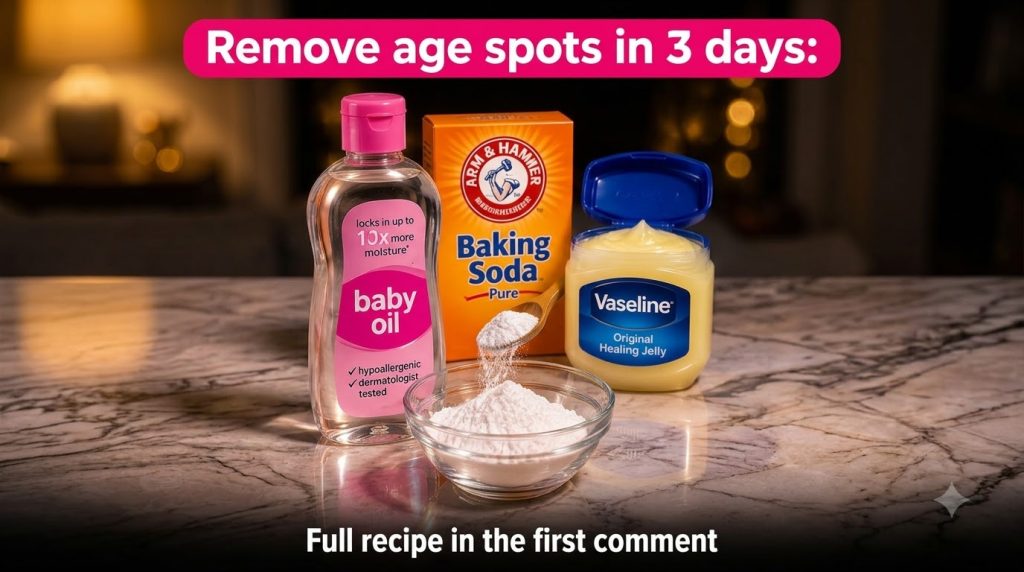
Dark spots, also called age spots, are a common part of life. They often show up as flat, tan or brown patches on the face, hands, and shoulders as the skin changes over the years. Many of us would love to see a more even, glowing complexion, and a simple homemade routine can be a friendly way to start caring for your skin.
In this guide, we will walk through a easy DIY idea using everyday kitchen items, along with honest tips on what to expect and how to keep your skin safe while you try it.
Why Home Remedies Appeal to So Many People
Homemade beauty ideas are popular because they are affordable, simple, and easy to customize. Many people enjoy knowing exactly what goes onto their skin. Still, natural does not always mean gentle, so it is smart to approach any DIY treatment with patience and care.
What You May Need
- A small amount of baking soda
- A few drops of a gentle, unscented moisturizer or plain aloe vera gel
- A clean glass bowl and a small spoon
- A soft cotton pad or clean fingertips
Simple Steps for a Gentle DIY Routine
- Wash your face with a mild cleanser and pat it dry.
- Mix a tiny amount of baking soda with a few drops of aloe vera or moisturizer until you get a soft paste. Start with less than you think you need.
- Test first. Apply a small dab to your inner arm and wait 24 hours. Skip the mixture if you notice redness, itching, or stinging.
- Apply lightly to the area you want to focus on, avoiding the eyes and lips. Leave it on for only a short time, such as one to two minutes.
- Rinse gently with lukewarm water and follow with your regular moisturizer.
Tips for Better Results
- Use the mixture no more than a few times a week, and let your skin rest in between.
- Stop right away if your skin feels tight, burns, or looks irritated.
- Choose a broad-spectrum sunscreen every morning, since sun exposure can make dark spots more noticeable.
- Be consistent and patient. Gentle skincare usually shows gradual changes over several weeks rather than overnight.
Common Beauty Mistakes to Avoid
One of the most common mistakes is scrubbing too hard. Baking soda is mildly abrasive, so a light touch is key. Another mistake is skipping the patch test or using the mixture on broken or sensitive skin. Keeping your routine simple and mild is often the best approach.
When to Check with a Professional
If a spot changes in size, shape, or color, bleeds, itches constantly, or appears suddenly, please book an appointment with a dermatologist. A professional can tell you what the spot really is and recommend the safest treatment for your skin.
Building a Glowing Skin Routine
A radiant complexion comes from the everyday basics: gentle cleansing, daily sun protection, good hydration, restful sleep, and a balanced diet. A homemade treatment can be a fun addition to that foundation, but it works best alongside consistent habits.
Have you tried a DIY skincare idea before? Share your favorite simple tip in the comments and let us know what helped your skin feel its best!