Tractor Tire Challenge: Which Tread Pattern Gives the Best Grip in Mud?
Have you ever wondered why tractors use such large tires with deep, aggressive tread patterns? Unlike ordinary car tires, agricultural tractor tires are designed to handle difficult terrain, including wet soil, slippery fields, and thick mud.
Choosing the right tractor tire can make a significant difference in traction, fuel efficiency, and overall farming performance.
Today’s farming trivia challenge features three tractor tires with different tread designs.
The question is simple: Which tractor tire is best for muddy conditions — A, B, or C?
Let’s reveal the most likely answer and explore the science behind tractor tire traction!
The Tractor Tire Quiz: A, B, or C?
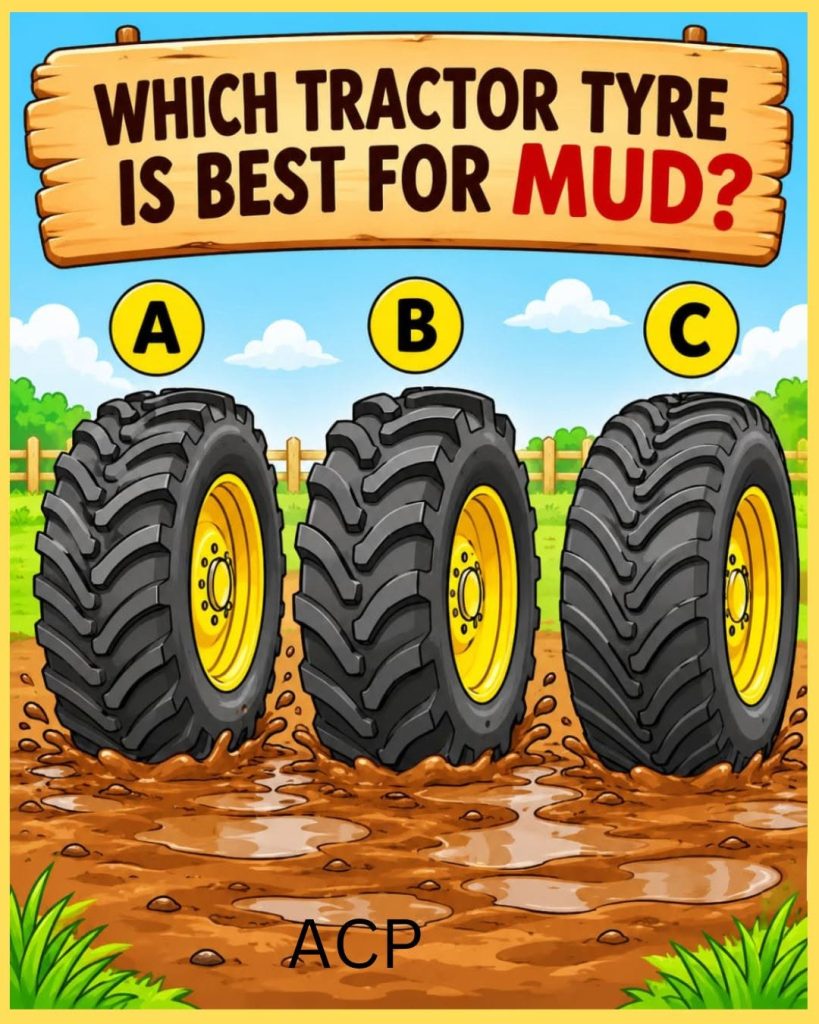
The image presents three different tractor tire designs.
Option A: A tire with closely spaced, aggressive diagonal tread blocks.
Option B: A tire with large, deep, widely spaced V-shaped lugs.
Option C: A tire with broad, curved tread patterns that appear more closely spaced.
At first glance, all three tires look strong enough to handle rough agricultural terrain.
However, when working in thick mud, tread design becomes especially important.
The spacing, depth, and shape of the lugs determine how effectively a tire can grip soft ground and release accumulated mud.
So, which one should you choose?
The Best Answer Is B – The Deep, Widely Spaced Tread!
For this illustrated quiz, Option B is the strongest choice for muddy conditions.
Its large, widely spaced V-shaped lugs are designed to provide strong traction in soft soil while allowing mud to escape between the tread blocks.
This is particularly important when tractors operate in wet agricultural fields.
However, actual tire performance also depends on tire construction, soil conditions, inflation pressure, tractor weight, and tread depth. The illustration alone cannot establish a universal winner.
Let’s understand why Option B is the most reasonable answer for this challenge.
Why Is Option B Better for Mud?
1. Deep Tread Lugs Improve Traction
One of the most important features of a tractor tire is its tread depth.
Deep lugs can penetrate soft soil and generate traction by pushing against the ground.
In muddy conditions, shallow tread patterns may struggle to provide sufficient grip.
Option B features prominent, aggressive lugs that appear suitable for soft agricultural terrain.
These lugs help the tractor move forward by transferring engine power into usable pulling force.
2. Wider Spacing Helps Release Mud
Mud can easily accumulate between tire tread blocks.
When the spaces become completely packed, the tire may lose its ability to grip the ground effectively.
This is where widely spaced tread patterns offer an advantage.
Option B has relatively large gaps between its lugs, which can help mud escape as the tire rotates.
This self-cleaning action helps maintain traction during muddy fieldwork.
3. V-Shaped Treads Support Agricultural Performance
Many agricultural tractor tires use angled or V-shaped tread patterns.
These designs are commonly associated with agricultural drive tires because they help generate traction during field operations.
The angled lugs can also support mud evacuation as the tire rotates.
Option B displays a pronounced V-shaped pattern, making it a logical choice for this muddy-terrain challenge.
Why Not Option A?
Option A also features aggressive tread blocks and could perform well in certain off-road conditions.
However, its tread blocks appear more closely spaced than those of Option B.
In particularly sticky mud, smaller gaps between lugs may become packed with soil more easily.
This can reduce the tire’s ability to clean itself and maintain traction.
That doesn’t mean Option A is a poor tractor tire.
It may still work effectively on mixed terrain, depending on its actual construction and intended application.
But for the specific muddy conditions suggested by the quiz, Option B has the more promising tread design.
Why Not Option C?
Option C features broad, curved tread blocks with a somewhat smoother overall appearance.
This type of pattern may provide useful traction in certain conditions, but its relatively narrow tread gaps could be less effective at clearing thick, sticky mud.
If mud accumulates between the lugs, the tire may begin to slip.
For tractors operating in extremely wet fields, effective mud evacuation is particularly important.
Option C may be suitable for other agricultural applications, but its illustrated design is not the strongest choice for this challenge.
What Makes a Good Tractor Tire for Mud?
The ideal tractor tire depends on several important factors.
Tread Depth: Deep lugs help the tire engage soft soil and generate pulling force.
Tread Spacing: Wider gaps can improve mud release and reduce tread clogging.
Tire Width: Wider tires can distribute the tractor’s weight over a larger area, potentially reducing soil compaction and sinking.
Inflation Pressure: Correct tire pressure is essential for traction, stability, and soil protection.
Tire Construction: Radial agricultural tires can provide advantages in footprint and traction under suitable operating conditions.
Soil Type: Wet clay, loose soil, and sandy mud behave differently, so the same tire may not perform equally well everywhere.
Understanding these factors helps farmers select tires that match their equipment and working environment.
Why Tractor Tire Selection Matters
Choosing the wrong tire can create several problems during agricultural operations.
Excessive wheel slip wastes energy and can increase fuel consumption.
Poor traction may also make it difficult for tractors to pull heavy equipment or operate efficiently in wet fields.
In addition, excessive tire pressure and heavy machinery can contribute to soil compaction.
Compacted soil can restrict root growth, reduce water infiltration, and negatively affect crop development.
Choosing appropriate agricultural tires and operating them correctly can help improve efficiency while protecting soil health.
For farmers, tractor tires are more than just wheels. They are an essential part of the machine’s overall performance.
Final Answer: Which Tractor Tire Is Best for Mud?
Let’s reveal the answer one final time!
Correct Answer: B – The Deep, Widely Spaced V-Shaped Tread
Option B is the best choice based on the visible tread designs because it offers:
- Deep, aggressive lugs for soft-soil traction.
- Wide tread gaps that help release mud.
- A pronounced V-shaped pattern commonly used on agricultural drive tires.
- A design suited to generating pulling force in muddy fields.
Remember that this answer is based on the illustrated patterns. Real-world performance requires considering the tire’s specifications, soil conditions, and tractor setup.
Did You Choose the Right Tractor Tire?
At first glance, all three tractor tires may appear capable of handling muddy terrain.
But a closer look at their tread patterns reveals important differences.
The next time you see a tractor working in a muddy field, take a moment to examine its tires. You’ll notice how much engineering goes into helping heavy agricultural machines move through difficult ground.
Now it’s your turn!
Did you choose A, B, or C before reading the answer?
Have you ever driven a tractor through deep mud?
Which tire design do you think would perform best on your farm?
Share your answer in the comments and challenge your friends to test their farming knowledge!
Stay tuned for more farming quizzes, tractor challenges, agricultural tips, and fascinating facts about the machines that keep farms running.
#TractorQuiz #FarmingTrivia #TractorTires #MudTraction #Agriculture #FarmEquipment #TractorLife #FarmingTips #FarmMachinery #AgriculturalTechnology #GuessTheAnswer #RuralLife #FarmKnowledge