Breakfast is often called the most important meal of the day, yet many of us reach for whatever is fastest and then find ourselves hungry or sluggish by mid-morning. If you are trying to manage your weight, you may have wondered whether a big bowl of oatmeal is the smarter choice, or whether a smaller portion with a protein source keeps you fuller for longer. Let us break down the science behind the question.
Why Fullness Matters More Than Volume
Hunger is not only about how much food is on your plate. It is shaped by how satisfied your body feels after eating, which depends on several factors working together: protein, fiber, healthy fats, and how quickly the meal is digested. A breakfast that leaves you feeling satisfied can help you avoid mid-morning snacking, steady your energy levels, and make it easier to stick to your nutrition goals throughout the day.
The Role of Protein in Satiety
Protein is one of the most effective nutrients for supporting fullness. It takes longer to digest than carbohydrates, and it helps regulate appetite hormones that signal hunger and satisfaction. Adding a protein source to a meal can make a smaller portion feel more complete.
- Eggs provide high-quality protein along with vitamins such as B12 and choline.
- Plain Greek yogurt, cottage cheese, or nut butter can add protein to oats without much extra preparation.
- Protein-rich breakfasts are often associated with a more stable energy level in the hours that follow.
What Oats Bring to the Table
Oats are a whole grain that offers beta-glucan, a soluble fiber linked to heart health and a feeling of fullness. Oatmeal is also versatile, affordable, and easy to prepare. The challenge is portion size. A very large bowl of plain oats can be high in carbohydrates, and without a protein or fat source, it may leave some people hungry again sooner than expected.
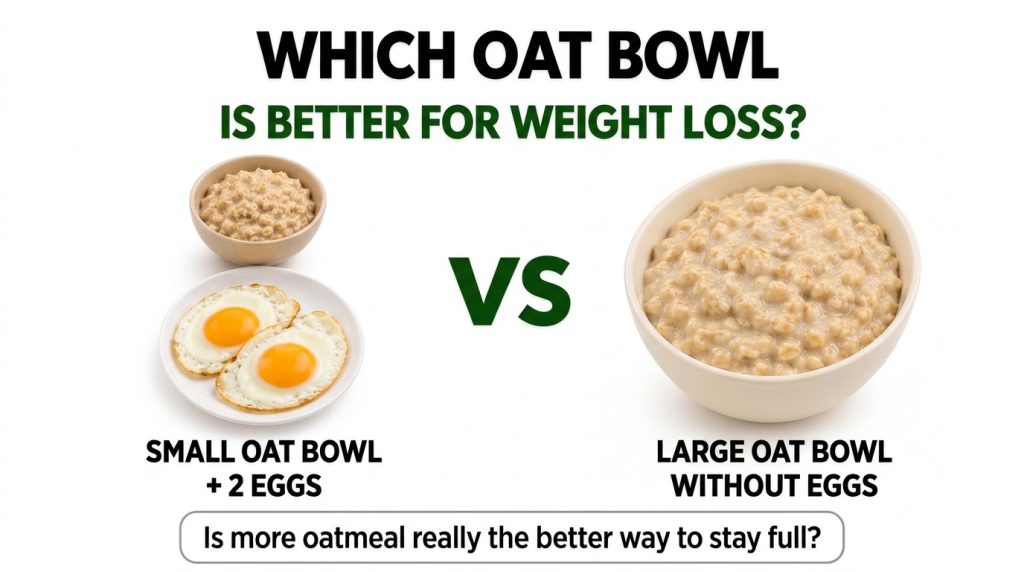
Small Bowl with Protein or Large Bowl Alone?
For most adults aiming to manage their weight, a moderate portion of oats paired with a protein source is often the more practical choice. The combination can help you feel satisfied on fewer calories than a large, plain bowl, while also supporting muscle maintenance. This does not mean eggs are required. Any protein-rich addition can work, as long as it fits your overall eating pattern and preferences.
Practical Tips for a Satisfying Oat Breakfast
- Measure your oats at first to learn what a moderate portion looks like.
- Add a protein source such as eggs, Greek yogurt, milk alternatives with added protein, or a spoonful of nut butter.
- Include fruit or vegetables for fiber, vitamins, and natural sweetness.
- Add a small amount of healthy fat, such as chia seeds, walnuts, or flaxseed, to extend fullness.
- Pay attention to hunger cues mid-morning and adjust your portion if needed.
The Bottom Line
When it comes to weight loss, the best oat bowl is usually not the biggest one. A balanced breakfast with a sensible portion of oats, a good source of protein, and plenty of fiber is more likely to keep you full and energized. Try a balanced version for a week and notice how you feel at mid-morning. Which combination works best for your routine? Share your favorite breakfast ideas in the comments below.