Easy Potato Bread Rolls
Easy potato bread rolls are soft, lightly sweet, and made with a short list of pantry staples. Blending a cooked potato into the dough gives these rolls a tender crumb that stays soft longer than many basic homemade rolls. They work well for weekend baking, family dinners, or as a side for soups and stews.
Why You’ll Love These Potato Bread Rolls
- Simple ingredients: You need flour, yeast, potato, milk, butter, sugar, egg, and salt.
- Soft texture: The cooked potato adds moisture, which helps keep the crumb tender.
- Blender-friendly: The potato and milk blend into a smooth base in under a minute.
- Flexible timing: The dough rises in two stages, so you can fit the process around your weekend plans.
Ingredients
The video does not list exact amounts, so the quantities below are practical estimates tested for a soft, easy-to-handle dough.
- 1 medium russet potato (about 8 oz / 225 g), peeled and cut into chunks
- 3/4 cup (180 ml) whole milk, warm
- 2 1/4 tsp (7 g) active dry yeast (about 1 packet)
- 2 tbsp (25 g) granulated sugar
- 2 tbsp (28 g) unsalted butter, melted, plus extra for brushing
- 1 large egg, at room temperature
- 2 1/2 cups (300 g) all-purpose flour, plus more as needed
- 1 1/2 tsp (9 g) fine salt
Ingredient Notes
Potato: Russets are starchy and blend smoothly, which gives the rolls a soft crumb. Waxy potatoes work too, but the dough may be slightly denser.
Milk: Warm milk helps the yeast activate and blends easily with the potato. Whole milk adds richness, but 2% milk also works.
Yeast: Active dry yeast and instant yeast both work. If you use instant yeast, you can mix it directly into the flour.
Egg and butter: These add softness and help the rolls brown evenly. For a dairy-free version, you can swap the butter for a neutral oil, though the flavor will be a bit lighter.
Equipment You’ll Need
- Blender or food processor
- Medium saucepan
- Large mixing bowl
- Rimmed baking sheet lined with parchment paper
- Pastry brush
- Kitchen scale (optional but helpful)
How to Make Easy Potato Bread Rolls
- Cook the potato. Place the potato chunks in a saucepan, cover with salted water, and bring to a boil. Simmer for about 15 to 20 minutes, until a fork slides in easily. Drain well and let it cool until warm, not hot.
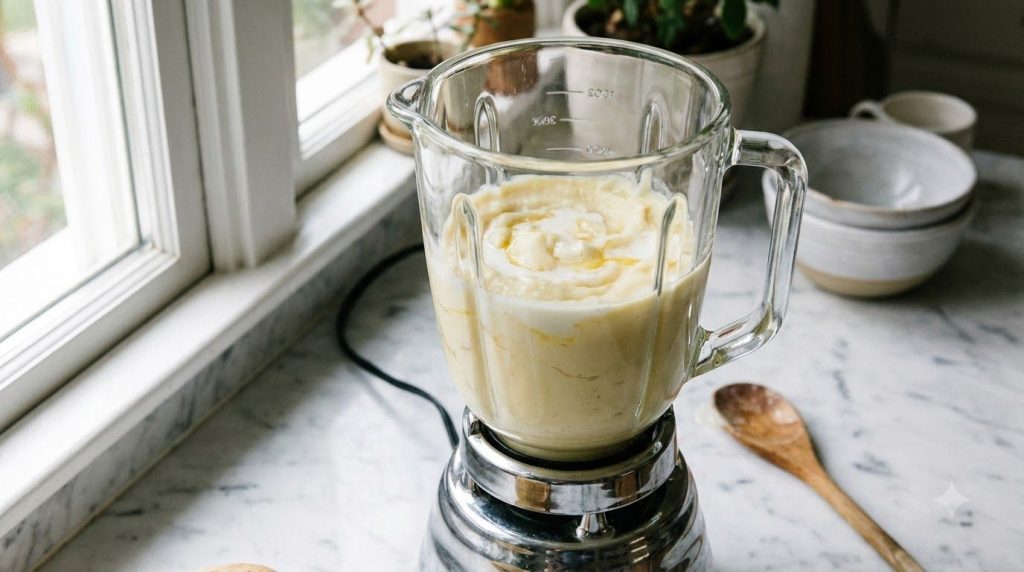
- Blend the potato base. Add the warm potato, warm milk, and melted butter to a blender. Blend until completely smooth, about 30 to 60 seconds. The mixture should look like a thin, creamy puree with no lumps.
- Activate the yeast. Pour the potato mixture into a large bowl. The mixture should feel warm, about 100 to 110°F (38 to 43°C), not hot. Whisk in the sugar and yeast, then rest for 5 to 10 minutes. The surface should look foamy. If nothing foams after 10 minutes, the yeast may be expired, so start again with fresh yeast.
- Make the dough. Stir in the egg, salt, and about 2 cups (240 g) of the flour. Add the remaining flour a little at a time until a soft, slightly sticky dough forms.
- Knead. Knead on a lightly floured surface for 6 to 8 minutes, or 4 to 5 minutes with a stand mixer fitted with a dough hook. The dough is ready when it feels smooth, springs back when pressed, and is only slightly tacky.
- First rise. Shape the dough into a ball, place it in a lightly oiled bowl, and cover. Let it rise in a warm spot for about 1 to 1 1/2 hours, until doubled in size. A gentle poke should leave a small dent that slowly springs back.
- Divide and shape. Punch the dough down gently and divide it into 8 to 10 equal pieces, about 60 to 70 g each. Shape each piece into a smooth ball by pulling the edges under and pinching them closed at the bottom.
- Second rise. Arrange the rolls on the lined baking sheet, leaving about 2 inches (5 cm) between them. Cover loosely and let them rise for 30 to 45 minutes, until puffy and nearly touching.
- Preheat and brush. Preheat the oven to 375°F (190°C) while the rolls rise. Brush the tops lightly with melted butter.
- Bake. Bake for about 15 to 20 minutes, until deep golden brown on top and hollow-sounding when tapped on the bottom. If using a thermometer, the center should reach about 190°F (88°C). These times are estimates and may vary by oven and roll size.
- Cool and finish. Move the rolls to a wire rack and brush the tops with more butter while they are still warm. Let them cool for 5 to 10 minutes before serving.
Pro Tips for the Softest Rolls
- Use warm potato, not hot. Very hot potato can stress the yeast and slow the rise.
- Blend the potato base completely before adding the flour. Small lumps can create uneven texture in the finished rolls.
- Add flour gradually. Potatoes and milk vary in moisture, so you may need a little more or less flour.
- Keep the dough slightly tacky. A dry dough makes firmer rolls.
- Rest the shaped rolls in a warm, draft-free spot. A cold kitchen can slow the second rise a lot.
- Brush the rolls with butter twice, once before baking and once after. This keeps the crust soft and adds shine.
Common Mistakes to Avoid
- Using a dead yeast packet: If the yeast does not foam, the rolls will not rise. Check the expiration date before you start.
- Overheating the milk: Milk that is too hot can damage the yeast. Warm it until it feels comfortably warm on your wrist.
- Adding too much flour: Extra flour makes the rolls dense. Add it only until the dough is manageable.
- Rolling the rolls too tightly: Tight shaping can limit how much they rise. Gentle shaping gives a softer result.
- Baking too early: Underproofed rolls can be dense and may collapse in the oven. Wait until they look puffy.
Variations and Substitutions
- Sweet rolls: Increase the sugar to 1/4 cup (50 g) for a softer, sweeter roll.
- Herb rolls: Brush the baked rolls with melted butter and sprinkle with chopped parsley or chives.
- Garlic butter rolls: Mix 1 minced garlic clove into the melted butter before brushing.
- Sesame or seed topping: Sprinkle sesame seeds or poppy seeds on the rolls before baking.
- Dairy-free: Use plant-based milk and oil instead of butter. The texture will be slightly different.
Serving Suggestions
These rolls are great with soup, chili, or a simple salad. They also make a good base for sandwiches, especially ham, turkey, or egg salad. For a simple breakfast, split one open and spread it with butter, jam, or honey.
Storage and Reheating
Store cooled rolls in an airtight container or bread bag at room temperature for up to 2 days. For longer storage, freeze them in a sealed bag for up to about 1 month. To reheat, warm them in a 300°F (150°C) oven for 5 to 8 minutes, or microwave for about 10 to 15 seconds. Covering them loosely with foil helps keep the crust from drying out.
Frequently Asked Questions
Can I make the dough ahead of time?
Yes. After the first rise, you can cover the dough and refrigerate it for up to 12 hours. Let it sit at room temperature for about 30 minutes before shaping, then continue with the recipe.
Can I freeze these rolls?
Yes. Let the rolls cool completely, wrap them tightly, and freeze for up to about 1 month. Thaw at room temperature and reheat as needed.
Why did my rolls turn out dense?
Dense rolls are usually caused by too much flour, an underproofed dough, or a yeast that was not active. Next time, measure the flour carefully and let the dough rise until clearly puffy.
Can I use sweet potato instead of regular potato?
Yes, but the rolls will be sweeter and may be a little more moist. Start with a slightly smaller amount of liquid and add flour gradually.
How do I know when the rolls are done?
The tops should be deep golden brown, and the rolls should sound hollow when tapped on the bottom. An instant-read thermometer reading of about 190°F (88°C) in the center is a reliable check.
Easy Potato Bread Rolls Recipe Card
Recipe Name: Easy Potato Bread Rolls
Short Description: Soft, lightly sweet homemade rolls made with a blended potato base.
Prep Time: About 30 minutes
Cook Time: About 15 to 20 minutes
Total Time: About 2 1/2 to 3 hours, including rising
Servings: 8 to 10 rolls
Course: Bread, Side Dish
Cuisine: American
Cooking Method: Baking
Ingredients:
- 1 medium russet potato (about 8 oz / 225 g), peeled and cut into chunks
- 3/4 cup (180 ml) whole milk, warm
- 2 1/4 tsp (7 g) active dry yeast
- 2 tbsp (25 g) granulated sugar
- 2 tbsp (28 g) unsalted butter, melted, plus extra for brushing
- 1 large egg
- 2 1/2 cups (300 g) all-purpose flour, plus more as needed
- 1 1/2 tsp (9 g) fine salt
Instructions: Cook, blend, activate yeast, mix and knead, rise, shape, proof, bake at 375°F (190°C) for about 15 to 20 minutes, then brush with butter and cool.
Notes: Quantities are estimates because the source video does not list exact amounts. Use warm, not hot, potato and milk.
Storage: Keep at room temperature in an airtight container for up to 2 days. Freeze for up to about 1 month.