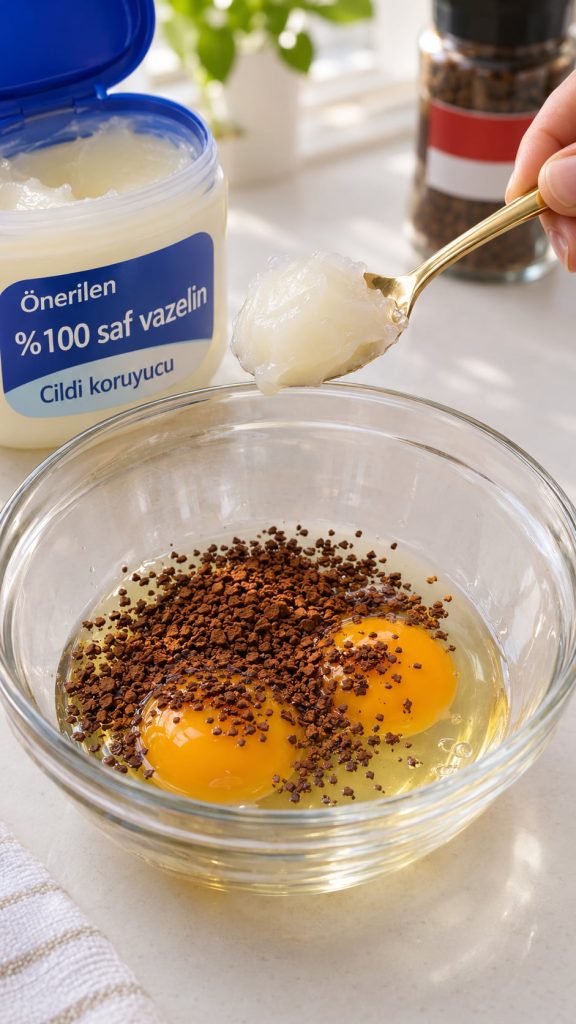
Have you seen the viral kitchen mix that promises a fresh, glowing face in minutes? Coffee, egg, and a spoon of petroleum jelly sound simple, and they are easy to find at home. The trend is appealing, but this particular combination has some real drawbacks that are worth knowing before you try it.
In this article, we will explain why raw egg and coffee grounds can be a poor match for facial skin, what petroleum jelly can and cannot do, and a gentler homemade alternative you can make in about ten minutes.
Why the Viral Coffee and Egg Mix Is Not Ideal
Coffee grounds are rough. Rubbing them on the face can irritate the skin, especially on thin or sensitive areas around the eyes and mouth. Even a gentle rub can cause redness for some people.
Raw egg is a bigger concern. Raw eggs may carry Salmonella bacteria, and a mask that stays on the skin can also trigger allergic reactions in some people. Because the mix is not preserved, it can spoil quickly, especially once it is exposed to air and warmth.
What Petroleum Jelly Can and Cannot Do
Petroleum jelly is an occlusive. This means it forms a thin layer that helps reduce water loss from the skin. It can help dry areas feel softer and more comfortable, such as dry elbows, heels, or cracked lips.
On the face, it should be used sparingly. It can feel greasy and may trap dirt or product on skin that is prone to clogged pores. It does not add a glow by itself, and it does not repair skin.
A Gentler Honey and Oat Glow Mask
This simple mask is a safer way to enjoy the idea of a kitchen treatment. It is intended for a gentle, occasional routine.
Ingredients
- 1 tablespoon plain rolled oats, finely ground
- 1 teaspoon plain raw honey
- 1 to 2 teaspoons lukewarm water, added slowly
Equipment
- Small clean mixing bowl
- Measuring spoons
- Clean spoon or spatula
- Soft washcloth
Preparation
- Wash your hands and clean your bowl and spoon.
- Place the ground oats in the bowl and add the honey. Stir until combined.
- Add lukewarm water a little at a time until the mixture is smooth and spreadable, like a thick paste.
- Use the mask within 10 minutes. Do not store leftovers.
How to Apply
- Cleanse your face with a gentle cleanser and pat it dry.
- Apply a thin layer to clean skin, avoiding the eye area and any broken or irritated skin.
- Leave it on for 5 to 10 minutes. Do not let it dry completely.
- Rinse with lukewarm water and pat dry. Follow with your usual moisturizer.
Ingredient Benefits
Oats contain compounds that can help skin feel softer and more comfortable for a short time. Honey is a humectant, which means it can help the skin hold some moisture. These benefits are modest and temporary, and they do not change skin structure.
Recommended Frequency
Use this mask no more than once a week. If your skin is sensitive, try it every two weeks instead. Skip it if your skin feels tight, stings, or is already irritated.
Expert Beauty Tips
- Use gentle pressure when rinsing and avoid scrubbing.
- Test a small area on your jawline or inner arm for 24 hours before using a new mixture.
- Choose plain, unflavored oats and honey without added fragrance.
- If you want extra moisture, apply a light moisturizer after the mask rather than adding petroleum jelly to the mix.
Storage and Shelf Life
Mix only what you need for one use. Homemade mixtures with water and food ingredients can grow bacteria quickly, so discard any leftovers. Do not store the mixture in the refrigerator or assume it will last because it has been chilled.
Safety Precautions
Stop using any mixture if you notice itching, burning, swelling, hives, or worsening redness. Oats and honey can still cause reactions in some people, so patch testing is important. A patch test can reduce risk but cannot rule out every reaction. Keep all masks away from your eyes and mouth. If you have a skin condition such as eczema, acne, or rosacea, speak with a doctor or dermatologist before trying new treatments.
Common Mistakes to Avoid
- Using raw egg or coffee grounds on the face. Choose gentler ingredients instead.
- Scrubbing too hard while rinsing. Use soft, light movements.
- Leaving a mask on too long. Ten minutes is enough.
- Storing leftovers. Make a fresh batch each time.
- Applying products to broken skin. Wait until the skin has healed.
Frequently Asked Questions
Can I use petroleum jelly on my face?
A very thin amount on dry areas may feel comfortable, but avoid applying it to acne-prone skin or under a mask.
Is the raw egg version safe?
Raw egg carries a risk of bacteria and allergic reaction, so it is best avoided on the face.
Can this mask make my skin glow instantly?
It may leave skin feeling softer and more comfortable for a short time. It does not produce permanent changes.
Can I refrigerate leftovers?
It is best to discard leftovers and make a fresh batch when needed.
What if my skin becomes irritated?
Rinse with lukewarm water, stop using the product, and contact a healthcare professional if symptoms persist.
Conclusion
The coffee, egg, and petroleum jelly mix is popular, but its rough texture, raw egg, and greasy finish make it a poor choice for most faces. A simple oat and honey mask offers a gentler way to pamper your skin at home.
Keep your routine gentle and consistent, and let your skin tell you what it likes. Share your experience in the comments, and enjoy your self-care time!