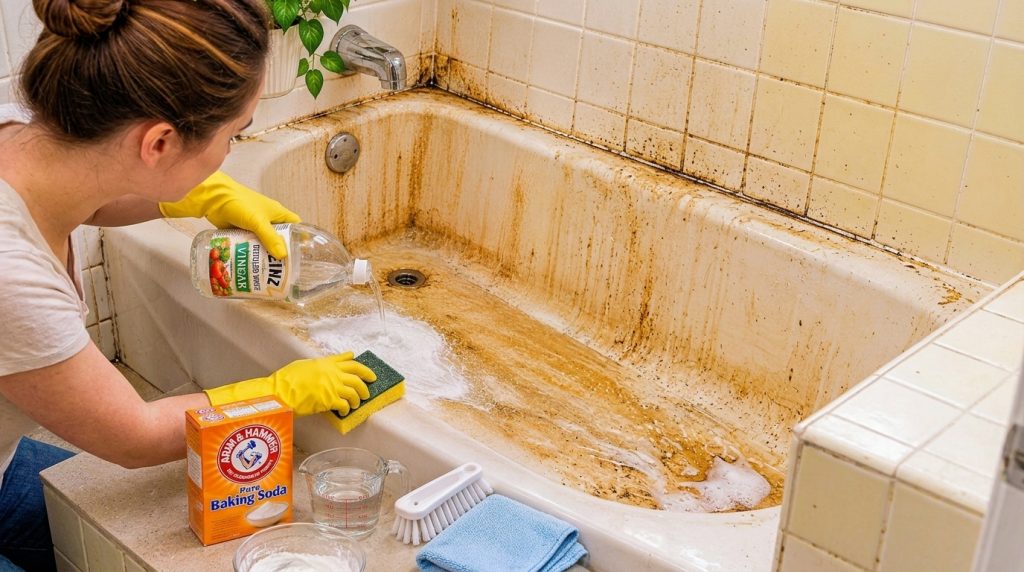
A rust-stained or grimy bathtub can make the whole bathroom look worn out. Soap scum, mineral deposits and light rust tend to build up along the rim and the floor of the tub, and they often resist a quick wipe with soap and water. This vinegar and baking soda method is a low-cost, low-fume option for lifting that buildup before you reach for stronger products.
It works in two stages. Baking soda is a mild abrasive, so it loosens grime when you scrub. Vinegar is mildly acidic, so it helps dissolve mineral residue and some rust staining. Applying them in sequence, with a paste first and vinegar second, gives you the fizzing action to lift residue before you scrub.
What You’ll Need
Cleaning ingredients
- White distilled vinegar, about 1 cup (240 ml)
- Baking soda, about 1/2 cup (100 g)
- Water, about 1 to 2 tablespoons, enough to make a spreadable paste
Tools
- Rubber cleaning gloves
- A glass bowl and a measuring cup
- A non-scratch sponge (yellow and green scrubbing sponges work well)
- A white scrub brush with stiff bristles for textured areas
- A clean microfiber cloth for wiping and buffing
Why This Method Can Help
Baking soda gives you a gentle abrasive that clings to vertical surfaces better than loose powder. Vinegar adds a mild acid that can break down hard water deposits and some surface stains. Because both are common household products, you can test the method without buying specialty cleaners. Keep in mind that this is a light-duty treatment. It is best for surface stains and soap scum, not for heavily corroded metal or deep, long-set rust.
How to Make It
- Put about 1/2 cup of baking soda into the glass bowl.
- Add water a little at a time, stirring until you have a thick paste that holds its shape without running. It should feel like wet sand or toothpaste.
- Pour the vinegar into the measuring cup so it is ready to pour. Do not mix the vinegar into the paste in the bowl. Keeping them separate lets you control the fizzing and where it lands.
- Put on your rubber gloves and wet the tub surface lightly with water so the paste spreads more easily.
How to Use It
- Spread the baking soda paste over the stained area, such as the rim, the floor of the tub or the spots where soap scum collects. Use a thick layer, about 1/8 inch (3 mm).
- Slowly pour vinegar over the paste. It will fizz and bubble. Let it sit for 10 to 15 minutes so the reaction can loosen the residue. Do not let the paste dry out. Add a small amount of water if it starts to crack.
- Scrub the area in small circles with the sponge or brush. Use light to moderate pressure and work in sections.
- Rinse the tub thoroughly with warm water to remove all the paste and residue.
- Dry the surface with the microfiber cloth to reduce water spots and check your progress.
- For stubborn stains, repeat the process once or twice rather than scrubbing harder. Heavy pressure can dull some surfaces.
What to Expect
This method is most effective on light rust stains, soap scum and mineral film. You should see a noticeable improvement in one application, especially along the rim and tub floor. Very deep, set-in rust or stains that have been there for years may only fade partially and may need several treatments or a product made for rust removal. Results also depend on the tub material, so treat this as a gentle try rather than a guaranteed fix.
Helpful Tips
- Clean the tub regularly, once a week, to keep buildup from becoming a stubborn stain.
- Work in small sections so the paste does not dry before you scrub it.
- Keep a spray bottle of plain water nearby to dampen the paste if it dries too quickly.
- Use the scrub brush for textured areas and the sponge for smooth surfaces.
Important Notes and Safety
- Patch test first. Try a small hidden spot to check how your tub finish responds. Acrylic and fiberglass tubs can scratch or dull with abrasive scrubbing, so use the lightest pressure that works.
- Never mix vinegar or baking soda with bleach or any other cleaning product. Mixing bleach with vinegar can release harmful gas.
- Rinse the tub well after cleaning to remove residue, and avoid leaving the paste on the surface for long periods.
- Wear rubber gloves to protect your skin from vinegar, and keep the bathroom ventilated by running the fan or opening a window.
- Store the vinegar and baking soda in sealed containers away from children, and mix only the amount you plan to use.