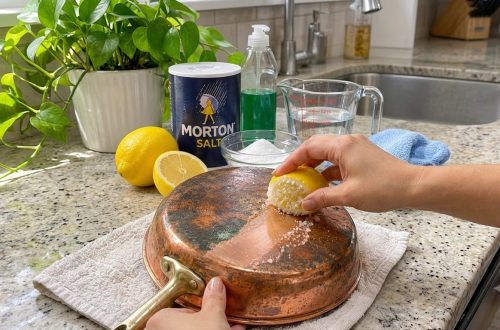
That dull, tarnished copper pan at the back of the cabinet often has more life left in it than you might expect. Heavy discoloration builds up over time from air, moisture, and regular cooking, and it can make even a good piece look neglected. Before you reach for a harsh commercial polish, a simple pantry combination of lemon and salt can lift light to moderate tarnish and bring back a warmer, brighter surface.
What You’ll Need
- 1 lemon, halved
- Coarse salt, such as kosher or sea salt, enough to coat the cut side of the lemon generously
- A small bowl for holding the salt
- A soft sponge or non-scratch cloth
- Warm water
- A clean, dry microfiber or cotton towel
Why This Method Can Be Useful
Lemon juice contains natural acidity, which helps loosen the thin layer of oxidation that causes copper to look dull or brownish. Coarse salt adds gentle grit, so when you rub the cut lemon across the surface, the salt helps lift the residue away from the metal. Because the combination relies on mild, familiar ingredients, it is a practical option for everyday tarnish on pans, bowls, and decorative pieces.
How to Make It
- Cut a lemon in half and set one half aside for later use.
- Pour a small amount of coarse salt into a bowl, or onto a plate, so it is easy to dip into.
- Check that the copper is clean and free of loose food or grease before you start. A quick wash with warm soapy water and a rinse will help.
- Dip the cut side of the lemon half into the salt so the flesh is evenly coated.
How to Use It
- Rub the salted lemon directly onto the tarnished copper in small circular motions. Work one section at a time so you can see the results clearly.
- Apply light to moderate pressure. The lemon and salt should do most of the work, so there is no need to press hard.
- Let the lemon juice and salt sit on the surface for a few minutes if the tarnish is stubborn. Do not let it dry out completely, and add more salt or fresh lemon as needed.
- Rinse the copper thoroughly with warm water to remove all the salt and lemon residue.
- Dry the piece right away with a clean, soft towel. Drying promptly helps prevent water spots and new discoloration.
What to Expect
Light tarnish usually lifts within one or two passes, and you should see a warmer, more even copper tone. Heavily oxidized areas may need several rounds of cleaning and a bit more patience. Copper is a soft metal, so the finish may look slightly different from a freshly polished piece, and that is normal. Results depend on how old the tarnish is and how the metal was originally finished.
Helpful Tips
- Work in small sections so the lemon juice does not dry on the surface and leave streaks.
- Use a fresh lemon half when the first one becomes dry or flattened.
- Rub gently along the grain or the natural direction of any brushed finish to reduce visible scratching.
- Clean the pan regularly with a mild soap and water to slow down the return of tarnish.
Important Notes and Safety
- Test the method on a small, hidden area first, especially on lacquered, coated, or antique copper.
- Avoid using this method on copper with a protective lacquer, as the salt may scratch or dull the coating.
- Do not use the lemon and salt mixture on the inside of a copper pan that is meant for cooking unless the interior is tin or stainless lined and you rinse it very thoroughly afterward.
- Wear gloves if you have sensitive skin or small cuts on your hands, since lemon juice and salt can cause stinging.
- Keep the salt and lemon out of your eyes and wash your hands after cleaning.