Pickling is one of the easiest ways to keep fresh vegetables tasting bright and crunchy for weeks. With a few jars, a simple brine, and some fresh produce, you can make tangy pickles at home that taste far better than most store-bought jars. This guide covers the basics, walks through a quick refrigerator dill pickle recipe, and shares ideas for other vegetables you can try.
Why Pickle at Home?
- You control the salt, sugar, and spices.
- Quick refrigerator pickles need little special equipment.
- It is a practical way to use extra cucumbers, carrots, or onions from the garden or market.
- Homemade jars make thoughtful gifts and tasty additions to sandwiches and grain bowls.
Basic Pickling Equipment
- Clean glass jars with tight-fitting lids, such as 16-ounce (about 480 ml) wide-mouth jars
- A medium saucepan for the brine
- A cutting board and sharp knife or mandoline
- A measuring cup and spoons
- Tongs for handling hot jars
Quick Refrigerator Dill Pickles
These pickles are not shelf-stable. They are made for the refrigerator and are best enjoyed within a few weeks.
Ingredients
- 1 lb (450 g) small pickling cucumbers, such as Kirby, cut into spears or rounds
- 1 cup (240 ml) white vinegar
- 1 cup (240 ml) water
- 1 tablespoon (15 g) kosher salt
- 2 teaspoons (10 g) sugar
- 3 garlic cloves, lightly smashed
- 1 small handful fresh dill
- 1 teaspoon black peppercorns
Instructions
-
Wash the cucumbers well and trim off the blossom ends, which can make pickles soft. Cut them into spears or rounds that fit your jar.
-
In a saucepan, combine the vinegar, water, salt, and sugar. Heat over medium heat, stirring, until the salt and sugar dissolve. The liquid should look clear, with no visible grains at the bottom.
-
Pack the cucumbers into a clean jar with the garlic, dill, and peppercorns. Pack them snugly but do not crush them.
-
Pour the warm brine over the cucumbers until fully covered, leaving about half an inch (1 cm) of headspace at the top.
-
Let the jar cool on the counter for about 30 minutes, then seal it and refrigerate. The pickles are usually ready to eat after about 24 hours, and they become more flavorful over the next few days.
Pro Tips for Crisp Pickles
- Use fresh, firm cucumbers. Soft or old produce will not stay crunchy.
- Keep the vegetables fully submerged in brine.
- Choose kosher or pickling salt. Table salt with anti-caking agents can make brine cloudy.
- Add a grape leaf or a small piece of horseradish to help keep the texture firm.
- Let pickles chill for at least one day before judging the flavor.
Common Mistakes to Avoid
- Soft pickles: Start with very fresh produce and trim the blossom end.
- Cloudy brine: Use the right salt and make sure the spices are fresh.
- Floating vegetables: Pack them tightly and weigh them down with a small clean jar or plate if needed.
- Storing at room temperature: These quick pickles belong in the refrigerator.
Variations to Try
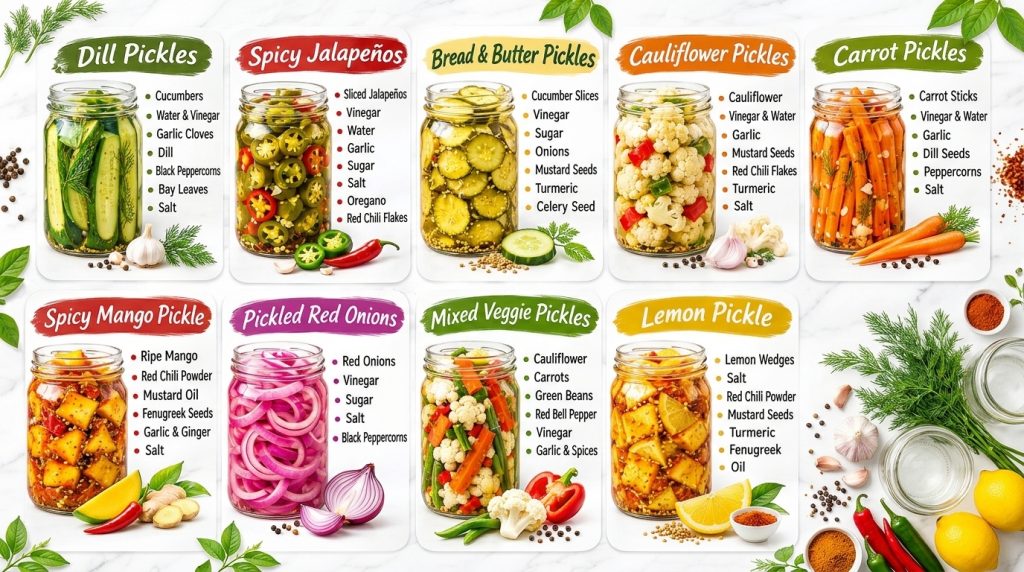
- Spicy pickles: Add sliced fresh chiles or red pepper flakes.
- Pickled onions: Thinly slice red onions and use the same brine for bright, sharp toppings.
- Pickled carrots: Cut carrots into sticks and add a little ground coriander or cumin.
- Sweet bread and butter style: Increase the sugar and add sliced onions and a pinch of turmeric.
- Green beans or radishes: Trim the vegetables and pack them the same way as cucumbers.
Serving Suggestions
Serve pickles on sandwiches and burgers, alongside grilled meats, or chopped into potato salad and egg salad. Pickled onions brighten tacos and grain bowls, and pickled carrots add crunch to rice dishes.
Storage Tips
Keep quick refrigerator pickles in clean, sealed glass jars in the refrigerator. Use clean utensils each time you take pickles out. Refrigerator pickles are generally best within a few weeks, and the texture softens over time. If you notice mold, a foul smell, or slimy vegetables, throw the batch away.
Frequently Asked Questions
Can I make pickles without a canner?
Yes, for refrigerator pickles. Shelf-stable canning requires tested recipes and proper processing, so follow a tested canning guide if you want jars to store at room temperature.
How long do homemade pickles last?
Refrigerator pickles are generally best within a few weeks. Keep them sealed and submerged in brine.
Why are my pickles soft?
Soft pickles often come from older produce, skipping the blossom-end trim, or brine that did not fully cover the vegetables.
Can I reuse pickle brine?
You can reuse brine once for a second batch of quick pickles if it still smells fresh and looks clear. Adding fresh spices can help the flavor.
Which Vegetable Would You Pickle First?
What is your favorite vegetable to pickle at home? Tell us in the comments, and share any tips that have worked well in your kitchen.