Most people walk past a pine cone without realizing that some species hide small, buttery seeds under those tight wooden scales. The trick is knowing which cones are worth collecting, how to coax them open, and how to shell the seeds without wasting half the batch.
This guide covers the practical steps: identifying edible pine cones, drying them, extracting the nuts, and storing them so they stay fresh.
What It Is
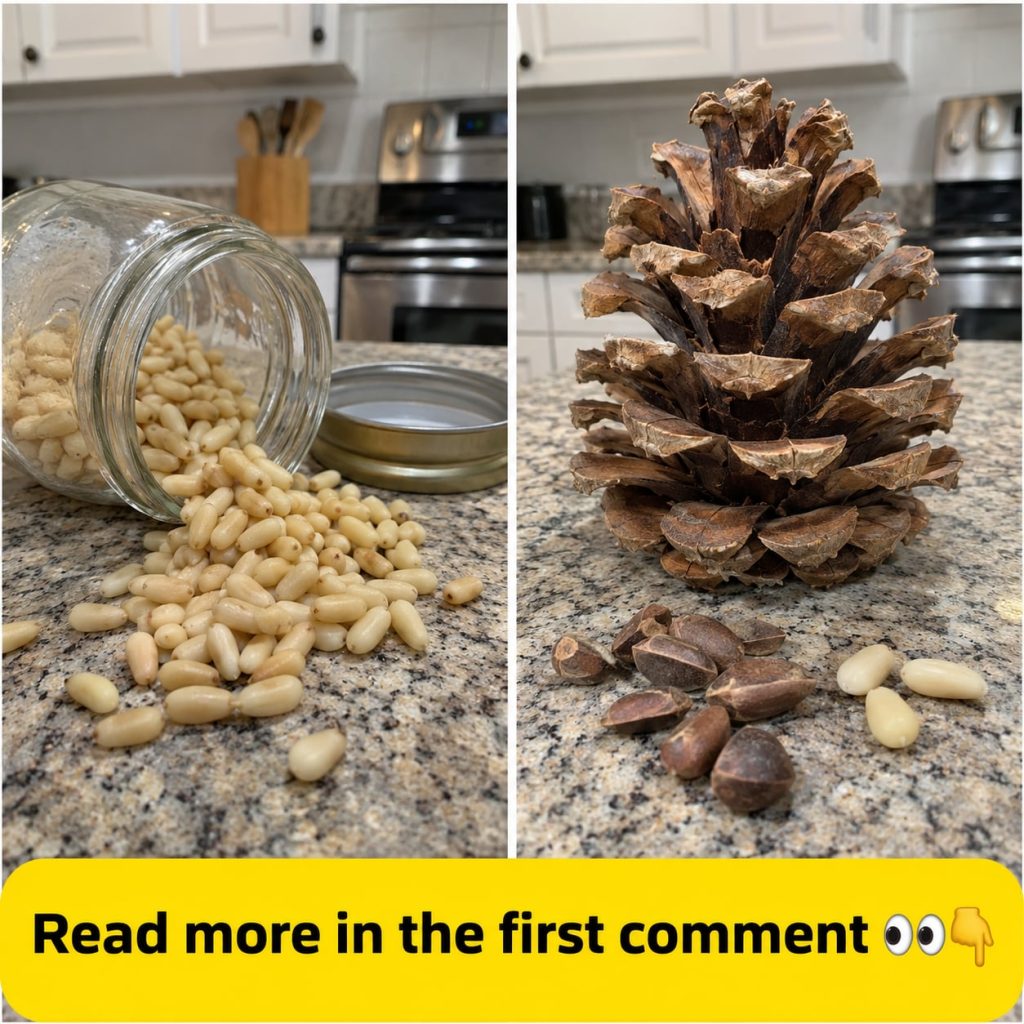
Pine nuts are the edible seeds of certain pine species. They are not found in every pine cone. Stone pines, Korean pines, piñon pines, and some related species produce cones with large, nutty seeds. Many common pines, such as the Scots pine, have tiny seeds that are not worth the effort for snacking.
Before you start, confirm the species. Cones from stone pines and Korean pines are often the largest and most rewarding. If you cannot identify the tree, leave the cones alone.
What You Need
- Mature, woody pine cones from a confirmed edible species
- A baking tray or large paper bag
- A sturdy towel or cloth
- A hammer or nutcracker for stubborn cones
- A small bowl for collecting seeds
- Airtight glass jars for storage
Approximate Measurements
A single medium cone may yield about 1 to 2 tablespoons of shelled seeds, depending on the species and how many scales have fully opened. A batch of 10 cones often gives roughly half a cup to one cup of nuts. Plan on about 20 to 30 minutes of hands-on shelling for a small batch.
Step-by-Step Method
- Collect cones that are brown and woody. Avoid green, sticky, or soft cones.
- Spread them on a tray in a warm, dry spot for 1 to 2 weeks. Turn them every day or two.
- Once the scales flare open, shake the cone gently over a bowl. Many seeds will fall out.
- For cones that stay closed, wrap them in a towel and tap them with a hammer until the scales crack.
- Pick out the seeds and remove any loose wing fragments.
- Spread the seeds on a clean tray and let them dry for 1 to 2 days before storing.
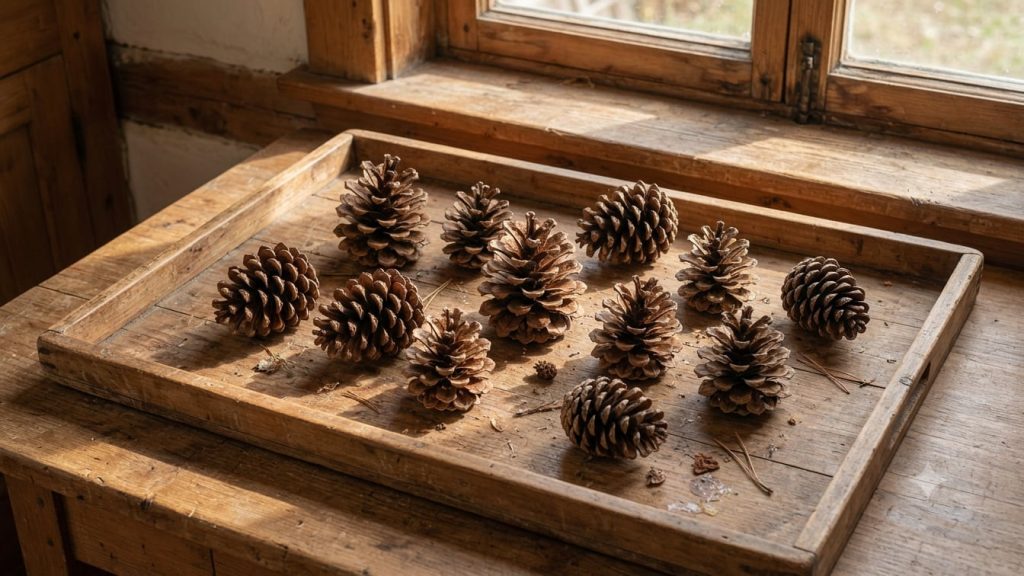
Quick Tip: Warm, dry air works better than direct heat. Do not put cones in an oven, because the resin can scorch and the seeds may turn bitter.
How to Use Them
Pine nuts work well raw, lightly toasted, or folded into simple dishes. Toast them in a dry pan over medium-low heat for 2 to 3 minutes, stirring constantly, until they turn golden. Add them to salads, pesto, oatmeal, roasted vegetables, or homemade granola.
How Often to Use Them
Because pine nuts are calorie-dense, a small handful, about one ounce, is a reasonable portion for most people in one sitting. Use them as an ingredient rather than a daily bulk snack.
How to Choose and Buy Quality Seeds
If you are not foraging, buy shelled pine nuts from a food retailer. Look for seeds that are uniform in color, pale cream to ivory, and smell faintly sweet. Avoid packs with a sharp, paint-like odor, since that often means the seeds have gone rancid.
Storage
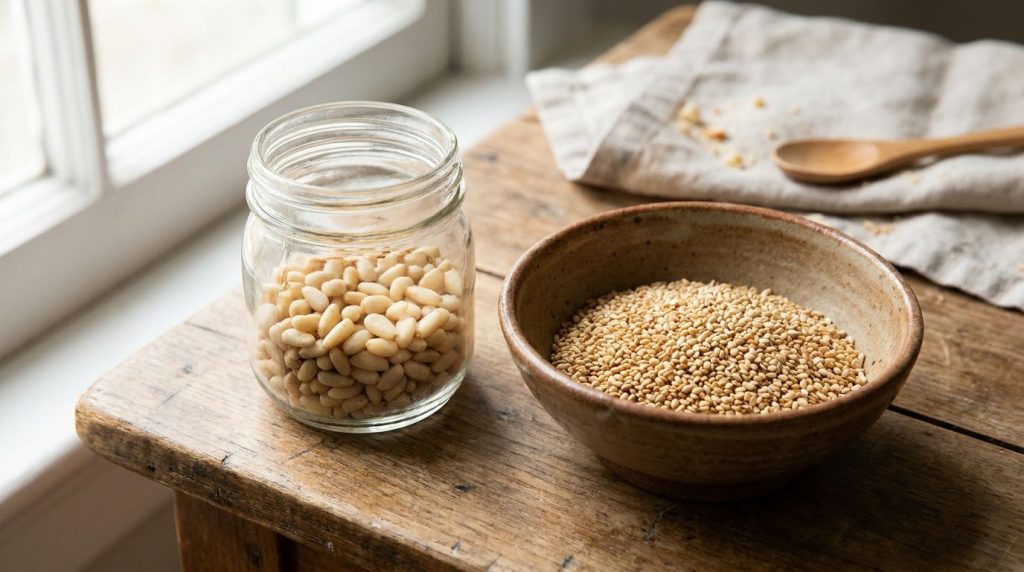
Store shelled seeds in an airtight glass jar in a cool, dark cupboard for up to two months. For longer storage, keep them in the freezer, where they can last several months. Fresh-shelled seeds spoil faster than store-bought seeds, so label your jars with the harvest date.
| Form | Best Use | Typical Storage |
|---|---|---|
| Raw shelled seeds | Snacking, baking | Up to 2 months in a cool jar |
| Lightly toasted seeds | Salads, pesto, garnish | Use within 1 to 2 weeks |
| Frozen seeds | Long-term storage | Several months in the freezer |
Practical Tips
- Wear gloves when handling sticky cones, since resin is hard to wash off.
- Shake cones inside a paper bag to catch seeds and reduce mess.
- Shell a small test batch first to see how much yield your species gives.
Common Mistakes
- Using green or damp cones that have not dried properly.
- Roasting cones in the oven, which can burn resin and spoil the seeds.
- Storing seeds in a warm or humid place, which causes rancidity.
- Gathering cones from roadside trees or sprayed areas.
- Assuming every pine cone is edible.
Cautions and Who Should Avoid Them
Do not eat pine nuts if you have a tree nut allergy. Only harvest from species you have positively identified, and never collect from protected land or areas where spraying may have occurred. Some people report a temporary metallic or bitter taste after eating pine nuts, sometimes called pine mouth. If you have a medical condition or take medication, check with a qualified professional before adding large amounts to your diet.
Quick Summary
- Best preparation: dry cones for 1 to 2 weeks, then shell raw seeds.
- Best use: toasted in salads, pesto, and baking.
- Storage: airtight jar in a cool cupboard, or freezer for longer.
- When to use: as a flavorful ingredient in small portions.
- What to avoid: green cones, oven drying, unidentified species, and sprayed trees.
Frequently Asked Questions
Can I use fresh or dried cones?
Use dried, mature cones. Fresh green cones are sticky and their seeds are not ready to shell.
How long do shelled seeds last?
Stored in an airtight jar in a cool, dark place, they last about two months. Frozen seeds keep much longer.
Can I refrigerate pine nuts?
Yes. The refrigerator works well for a few weeks, and the freezer is better for longer storage.
Can I freeze them?
Yes. Freeze them in a sealed bag or jar with as little air as possible.
Which part of the cone has the seeds?
The seeds sit at the base of each woody scale, tucked under the flat part of the scale.
Can I reuse the cones?
Once the seeds are removed, the cones can be used as fire starters or natural decorations, but they are no longer useful for nuts.
When should I avoid pine nuts?
Avoid them if you have a nut allergy or if the seeds smell sharp or rancid.
Are all pine cones safe to eat?
No. Only certain species produce edible seeds. Never eat unidentified cones or seeds.
Read More on Remedy
You may also like: Simple Ways to Toast Seeds and Nuts at Home.
Read more: Natural Foraging Safety Checklist.
See the full guide: Storing Nuts and Seeds for Long-Term Freshness.
Final Thoughts
Pine nuts are a rewarding find when you know which cones to collect and how to handle them. With patience, proper drying, and careful storage, a few cones can give you a small jar of fresh seeds for salads, baking, and simple homemade dishes.