Dry, rough heels are one of those everyday beauty concerns that can feel surprisingly stubborn. If you have ever noticed cracked edges or a dry, flaky feel after a long week in closed shoes, you are not alone. This simple homemade heel balm is a popular DIY skincare idea that uses just three easy-to-find ingredients, and it is worth learning about if you prefer a practical, budget-friendly routine.
What Is a Heel Rescue Balm?
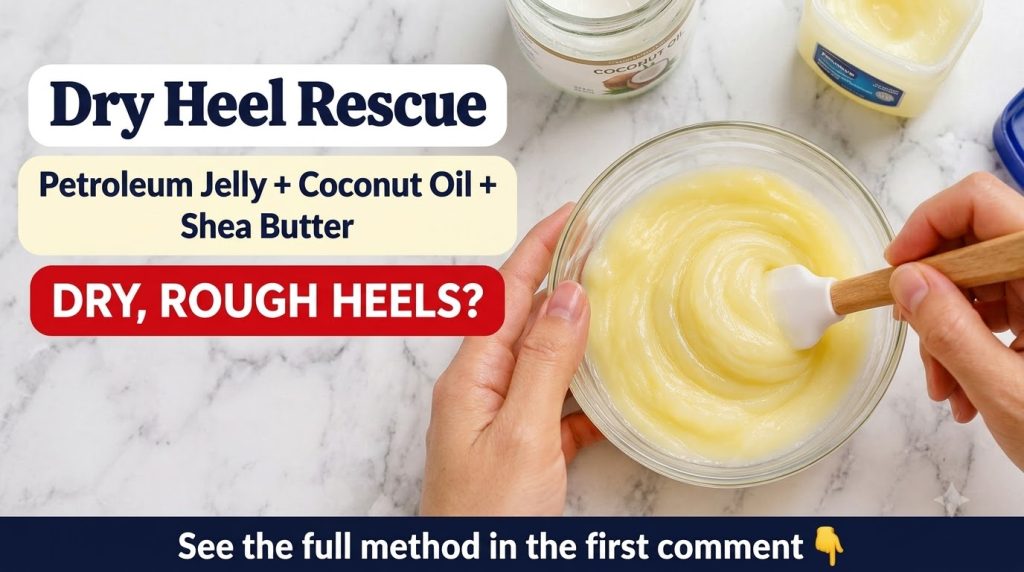
A heel rescue balm is a thick, moisturizing cream designed to help soften the look and feel of dry skin on the feet. Many people prefer a homemade version because they can control the ingredients and keep the routine simple. This recipe combines petroleum jelly, coconut oil, and shea butter, three popular staples in natural and DIY beauty routines.
The Three Ingredients
- Petroleum jelly (Vaseline): A classic occlusive that helps lock moisture into the skin’s surface.
- Coconut oil: A nourishing oil commonly used for a soft, smooth-feeling finish.
- Shea butter: A rich butter often chosen for its creamy texture and comforting feel on dry areas.
What You Will Need
- 2 tablespoons petroleum jelly
- 1 tablespoon virgin coconut oil
- 1 tablespoon shea butter
- A small glass mixing bowl
- A silicone spatula
- A clean, airtight jar for storage
How to Make It
- Wash and fully dry your hands and the bowl before you begin.
- Place the shea butter and coconut oil in the bowl. If they are firm, set the bowl over a pan of warm water until they just melt, then remove it from the heat.
- Add the petroleum jelly and stir gently until the mixture is smooth and evenly blended.
- Let it cool and thicken for 20 to 30 minutes at room temperature.
- Spoon the balm into a clean, airtight jar and label it with the date.
How People Use It
Many people apply a small amount to clean, dry heels at night, then cover their feet with cotton socks to keep the balm in place. In the morning, the skin often feels softer and more comfortable. For best results, gently pat away any extra balm and avoid sharing the jar, since fingers can introduce bacteria.
Before You Try This
- Do a small patch test on your inner arm first, especially if you have sensitive skin or known allergies to coconut or shea.
- Stop using the balm if you notice redness, itching, or irritation.
- Heels with deep cracks, bleeding, signs of infection, or persistent pain should be checked by a healthcare professional.
- Homemade balms are not a cure for skin conditions. Think of this as a gentle moisturizing step in your routine, not a medical treatment.
Tips for a Better Routine
Soaking your feet in warm water for a few minutes and gently exfoliating with a pumice stone before applying the balm can help the moisture feel more effective. Consistency matters more than intensity, so a nightly habit usually works better than a single heavy application.
Final Thoughts
This three-ingredient heel rescue balm is an easy, affordable way to explore DIY skincare at home. With a little patience and a gentle routine, you can enjoy a softer, more comfortable feel for your heels. Save this recipe for your next dry-skin day and share it with a friend who needs a simple foot care idea.