Easy Quick Pickling Guide: How to Quick-Pickle Vegetables at Home
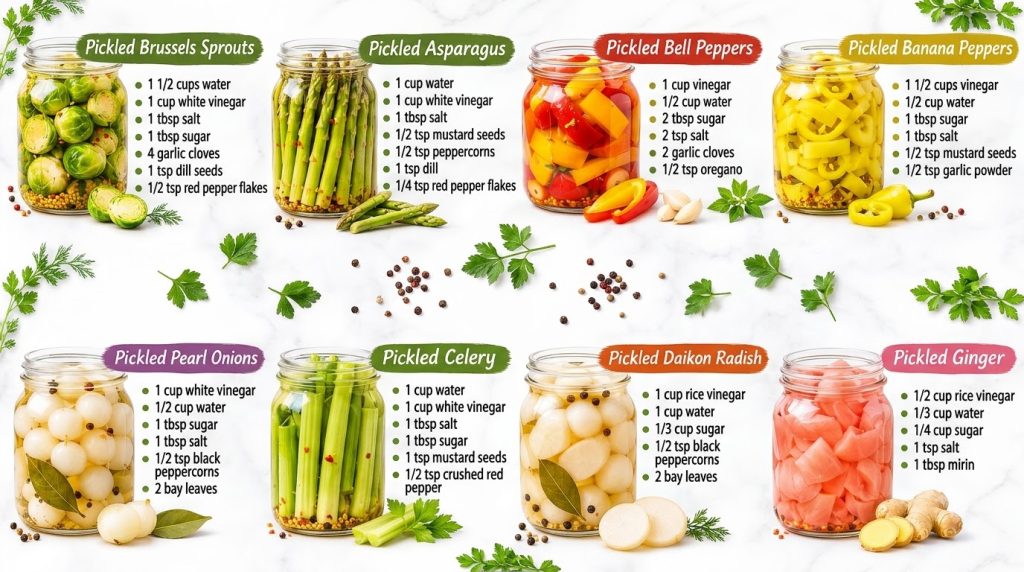
Quick pickles, sometimes called refrigerator pickles, are one of the easiest ways to add bright, tangy flavor to a meal. Unlike traditional canned pickles, they do not require a water bath or special canning equipment. You simply pour a warm brine over fresh vegetables, chill the jar, and let the flavors develop.
Why You’ll Love Quick Pickling
- Minimal equipment: a saucepan, a jar with a lid, and a cutting board are all you need.
- Fast results: many vegetables are ready to eat within a few hours, though the flavor improves over a day or two.
- Flexible: the same basic brine works for many vegetables, so you can mix and match.
- Crisp texture: quick pickles keep more of the fresh crunch of raw vegetables.
Basic Quick Pickle Brine
This simple brine works well for most firm vegetables. Adjust the sugar and spices to suit your taste.
- 1 cup (240 ml) white vinegar or apple cider vinegar
- 1 cup (240 ml) water
- 1 tbsp (15 g) kosher salt
- 1 tbsp (12 g) granulated sugar
- 1 to 2 garlic cloves, lightly smashed (optional)
- 1 tsp black peppercorns or mustard seeds (optional)
Quantities are a general starting point and can be scaled up or down depending on how many vegetables you are using. Make sure the vegetables are fully submerged in the brine.
Equipment You’ll Need
- A medium saucepan
- A clean glass jar with a tight-fitting lid, such as a wide-mouth pint jar
- A sharp knife and cutting board
- A measuring cup and spoons
How to Make Quick Pickles
- Prepare the vegetables. Wash the vegetables well. Cut them into thin slices, sticks, or small pieces so the brine can penetrate quickly. Thin pieces, such as sliced radish or pepper strips, pickle faster than thick chunks.
- Pack the jar. Place the vegetables and any optional garlic or spices into a clean jar. Pack them in firmly but leave a little room at the top.
- Make the brine. Combine the vinegar, water, salt, and sugar in the saucepan. Heat over medium heat, stirring occasionally, until the salt and sugar dissolve. The liquid should be hot and clear, but it does not need to boil for long.
- Pour the brine. Carefully pour the hot brine over the vegetables until they are completely covered. Tap the jar gently on the counter to release any trapped air bubbles.
- Cool and chill. Let the jar cool at room temperature for about 30 minutes, then seal it and refrigerate.
- Let them rest. Allow the pickles to rest in the refrigerator for at least a few hours. Most vegetables taste best after about 24 hours, when the flavor has fully developed.
Pro Tips for Better Quick Pickles
- Choose firm, fresh vegetables. Soft or bruised produce will turn mushy in the brine.
- Cut vegetables to a uniform size so they pickle evenly.
- Use a clean jar and clean utensils to reduce the chance of contamination.
- Taste the brine before pouring it and adjust the sugar or salt to your preference.
- Keep vegetables fully submerged. Any pieces poking above the liquid can spoil faster.
Common Mistakes to Avoid
- Using old or limp vegetables: Pickling does not restore crispness, so start with produce that is fresh and firm.
- Pouring brine over cold, crowded vegetables: Leave a little space so the brine can circulate.
- Skipping the rest time: Flavor needs time to develop, so taste after several hours or overnight.
- Storing pickles at room temperature: Quick pickles are not shelf-stable and should stay refrigerated.
Variations to Try
- Spicy: Add sliced fresh chili, red pepper flakes, or a few whole dried chilies.
- Herbal: Add fresh dill, thyme, or a bay leaf to the jar.
- Sweeter: Increase the sugar slightly for a sweet-and-sour profile that works well with bell peppers and onions.
- Ginger-spiced: Add thin slices of fresh ginger for a warm, bright flavor, especially with daikon or carrots.
Serving Suggestions
Quick pickles are a versatile addition to many meals. Try them on sandwiches and burgers, alongside grilled meats, in grain bowls, or on a simple cheese and cracker board. They also add crunch and acidity to tacos and salads.
Storage and Reheating
Keep quick pickles refrigerated in a sealed, clean jar. Most homemade quick pickles stay best within about two to three weeks, though texture gradually softens over time. Quick pickles are meant to be served cold, so there is no reheating step. Always use a clean fork or tongs to remove pickles from the jar to help keep them fresh.
Frequently Asked Questions
Do quick pickles need to be canned?
No. Quick pickles are kept in the refrigerator and eaten within a few weeks. Canning is only needed for shelf-stable pickles.
How long do I need to wait before eating them?
You can taste them after a few hours, but most vegetables develop better flavor after about 24 hours in the refrigerator.
Can I reuse the brine?
It is best to make fresh brine for each batch. Reusing brine can introduce bacteria from previous vegetables and may affect the texture and flavor.
Why did my pickles turn soft?
Softness usually comes from vegetables that were already past their prime or cut too thin for their type. Start with firm, fresh produce and check the texture after a day.
Which Vegetable Would You Quick-Pickle First?
Let us know in the comments which vegetable you would start with. Carrots, cucumbers, red onions, and radishes are popular first choices for beginners.