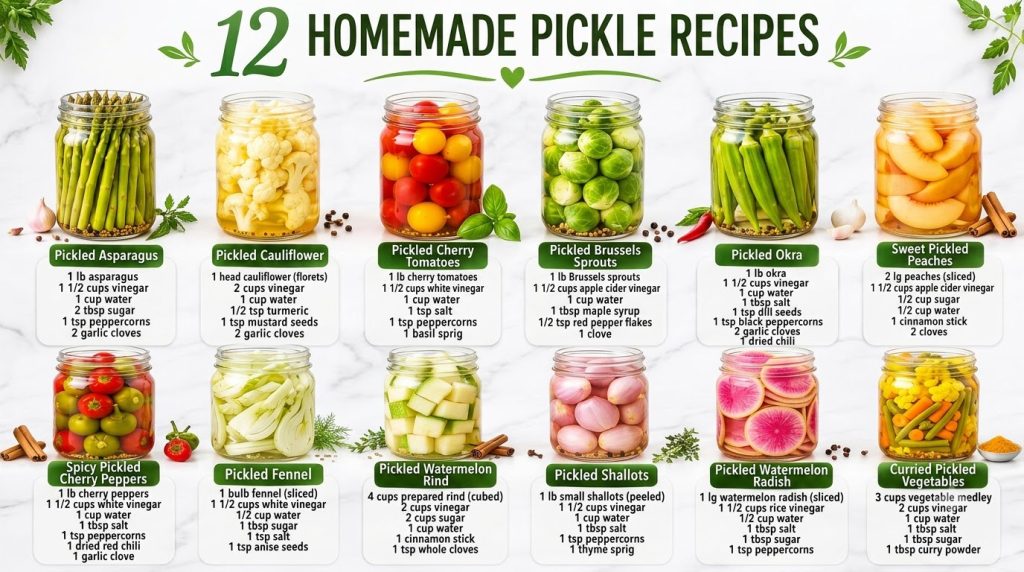
Homemade pickles are one of the easiest ways to keep fresh vegetables tasting bright and crunchy for weeks. This roundup brings together 12 homemade pickle ideas, from classic crisp vegetables to tangy cherry tomatoes and mild radishes, so you can choose a few favorites to start with.
Why You’ll Love These Homemade Pickles
- Simple ingredients: Most pickle brines rely on vinegar, water, salt and a few spices you may already have.
- Crunchy texture: Fresh vegetables like asparagus, cauliflower and radishes hold their crunch well in a properly made brine.
- Flexible flavors: You can mix garlic, dill, peppercorns or chili flakes to match your taste.
- Great for snacking and meals: Pickles work on sandwiches, grain bowls, charcuterie boards and alongside grilled dishes.
12 Homemade Pickle Ideas in This Collection
The recipes in this set feature a mix of vegetables and fruits. Look for these visible favorites:
- Pickled asparagus, which stays tender-crisp and works well as a cocktail garnish or salad topping.
- Pickled cauliflower, a sturdy vegetable that absorbs spices well.
- Pickled cherry tomatoes, which burst with a sweet and tangy flavor.
- Pickled water lily radishes, which add a mild peppery bite and a pretty color.
The remaining jars cover other vegetables and fruits, each with its own ingredient list and title. Read each recipe carefully, since brine ratios, spices and processing needs can differ from one pickle to the next.
Basic Pickling Tips for Beginners
Most quick pickles follow the same general method: pack fresh vegetables into clean jars, pour a hot or warm brine over them, and let them cool and chill. A common starting brine is about equal parts vinegar and water with a tablespoon or so of salt per cup of liquid, but always follow the specific recipe you choose.
- Wash your jars and lids in hot, soapy water and rinse well.
- Trim and slice the vegetables or fruit into even pieces so they pickle at the same rate.
- Pack the pieces into the jars, leaving about a half inch of headspace at the top.
- Add garlic, herbs or spices to each jar as the recipe directs.
- Heat the brine just until the salt and sugar dissolve, then pour it over the vegetables to cover them completely.
- Let the jars cool to room temperature, then seal and refrigerate.
Quick refrigerator pickles are best eaten within a few weeks and kept chilled at all times. If you plan to store pickles at room temperature for longer, use a tested canning recipe, because low-acid vegetables need specific processing to be safe.
Common Mistakes to Avoid
- Using soft produce: Choose firm, fresh vegetables. Limp produce will turn mushy in the brine.
- Skipping the cooling step: Pouring boiling brine over delicate items can soften them more than you want.
- Guessing on salt or vinegar: Measure carefully, since these ingredients control both flavor and preservation.
Serving Ideas
Serve pickles alongside sandwiches, burgers, tacos, rice bowls or cheese boards. The brine can also be used to make a quick dressing for salads, though you should taste it first to check the balance.
Frequently Asked Questions
Can I make these pickles without canning equipment?
Yes, many of these are quick refrigerator pickles that do not require canning. Store them in the refrigerator and enjoy them within a few weeks.
How long do homemade pickles last?
Refrigerator pickles typically stay good for several weeks when kept cold and handled with clean utensils. Check each recipe for specific guidance, and discard any jar that smells off, looks cloudy or shows mold.
Can I change the spices?
Yes. Garlic, dill, peppercorns and chili flakes are common options. Start with small amounts and adjust for your taste.
Pick two or three of these recipes to try first, then build your own favorite combinations.