Mastering your macros starts with knowing which whole foods supply carbohydrates, protein, and healthy fats. This visual guide groups everyday foods into three clear categories so you can build balanced meals with ingredients you already know.
Carbohydrates: Your Everyday Energy Sources
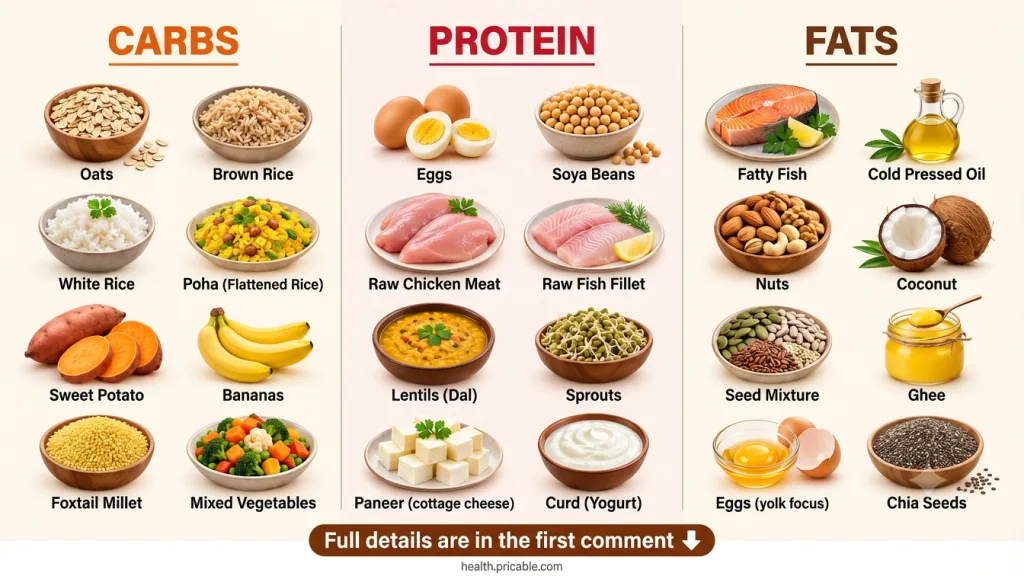
Carbohydrates are a primary fuel source for the body. The carb column highlights these whole food options:
- White Rice
- Sweet Potato
- Foxtail Millet
- Brown Rice
- Poha (Flattened Rice)
- Oats
- Bananas
- Mixed Vegetables
Choosing grains, starchy vegetables, and fruits alongside other foods can help create steady, satisfying meals.
Protein: Building Blocks for Your Body
Protein supports muscle maintenance and everyday body functions. The protein column includes both animal and plant sources:
- Eggs
- Raw Chicken meat
- Soya Beans
- Paneer (cottage cheese)
- Lentils (Dal)
- Raw Fish fillet
- Sprouts
- Curd (Yogurt)
Mixing plant and animal proteins across the week is a simple way to add variety to your plate.
Healthy Fats: Fuel for Balanced Eating
Fats are an important part of a balanced diet and help provide energy. The fats column features these foods:
- Nuts
- Seed Mixture
- Eggs (yolk focus)
- Cold Pressed Oil
- Coconut
- Ghee
- Fatty Fish
- Chia Seeds
Eggs appear in both the protein and fat columns because they provide both nutrients. Portion sizes matter, so use fats in moderate amounts.
Simple Ways to Balance Your Plate
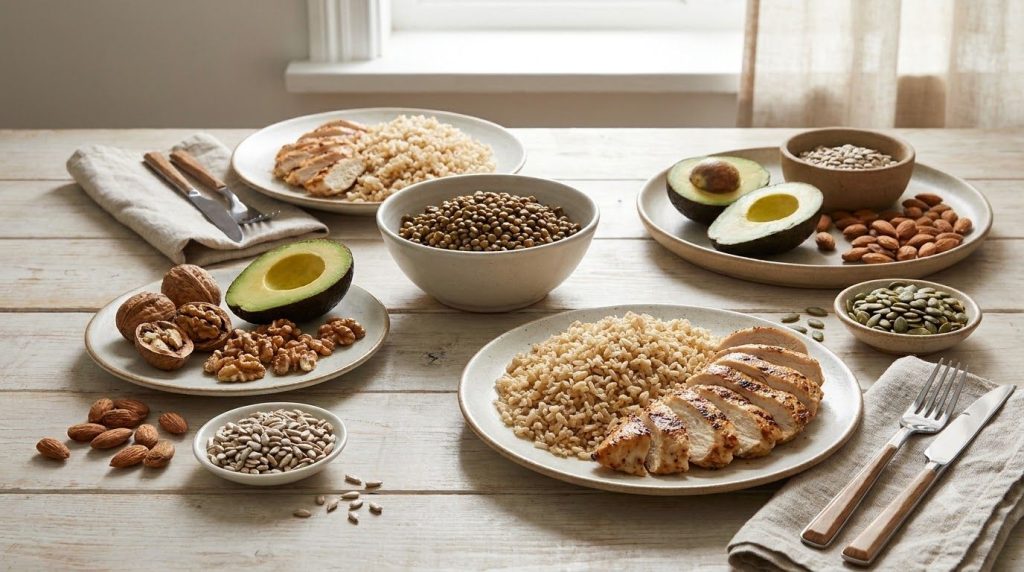
- Pick one food from each column for a simple balanced meal.
- Combine a carb, a protein, and a fat in every main meal.
- Add vegetables to boost fiber and variety.
- Rotate foods across the week to keep meals interesting.
FAQ
Do I need to eat foods from all three columns?
Most balanced eating patterns include carbohydrates, protein, and fats together. Each macronutrient plays a different role in your daily routine.
Can I swap foods within a column?
Yes. Foods within the same column can often be swapped based on taste, budget, and availability.
How do I know my portion sizes?
Portion needs vary by age, activity level, and health goals. A registered dietitian can help you find the right balance for you.
Final Thoughts
Mastering your macros becomes easier when you focus on whole foods from each group. Use this chart as a practical reference to plan balanced meals that support your daily energy and wellness goals.
Medical Disclaimer: This article is for general educational purposes only and does not replace advice from a qualified healthcare professional or registered dietitian, especially if you have a medical condition, allergies, or dietary restrictions.