Rice water is one of the most popular home hair rinses, and it works well as a base for simple blends with onion, seeds, and aloe. This guide gives you a basic rice water recipe, three easy variations matched to common hair goals, and clear steps for using them safely.
Primary keyword: rice water hair treatment. Rice water hair treatment is a traditional DIY rinse that many people use to help hair feel softer, look shinier, and feel stronger after washing.

Quick Recipe
Prep time: 10 minutes, plus 1 to 2 days for fermented rice water or 30 minutes for fresh rice water.
Best for: hair that feels dry, weak, or dull, and scalps that need a gentle rinse.
Use type: rinse
Main ingredients:
- 1/2 cup uncooked rice or 1 cup soaking water from rice
- 2 cups filtered water
- Optional: 1 tablespoon aloe vera gel
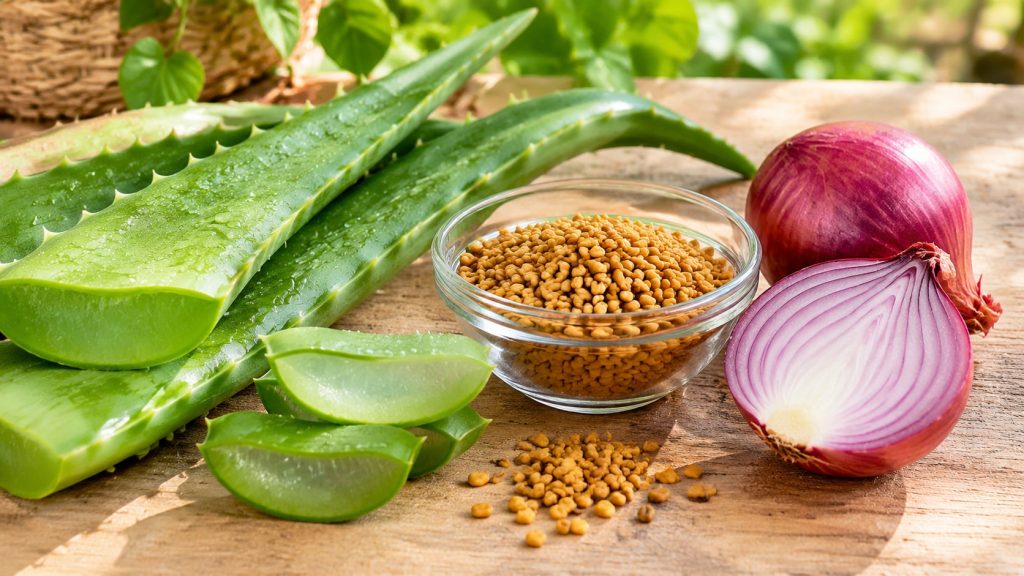
- Optional: 1 tablespoon fenugreek seeds soaked overnight
Ingredients
- 1/2 cup uncooked white or brown rice, rinsed
- 2 cups filtered or lukewarm water
- 1 tablespoon pure aloe vera gel (optional, for a softening blend)
- 1 teaspoon fenugreek seeds, soaked overnight (optional, for a seed infusion)
- A few drops of onion juice from 1 small red onion (optional, for a scalp-focused blend, see safety notes)
How to Make It
- Rinse the rice two or three times until the water runs mostly clear. Drain it.
- Place the rice in a clean glass jar and add 2 cups of filtered water. Let it soak for 30 minutes for a fresh rinse, or up to 24 hours for a slightly stronger fermented rinse.
- Strain the cloudy liquid into a clean glass jar and discard the rice, or save it for a face mask or cooking. Store the rinse in the refrigerator and use it within 2 to 3 days.
- To make a seed blend, soak 1 teaspoon of fenugreek seeds in 1/2 cup of water overnight. Strain the seeds and stir the liquid into 1 cup of rice water.
- To make an aloe blend, whisk 1 tablespoon of pure aloe vera gel into 1 cup of rice water until smooth. Use it within 2 days.
How to Use It
- Wash your hair with a mild shampoo and gently squeeze out the excess water.
- Pour the rice water over your hair and scalp slowly, or apply it with a clean spray bottle. Massage the scalp gently with your fingertips for 2 to 3 minutes.
- Leave the rinse on for 5 to 10 minutes, then rinse with lukewarm water. Pat the hair dry with a towel and style as usual.

How Often to Use It
Most people use a rice water rinse once or twice a week after shampooing. Start with once a week for the first two weeks and see how your hair feels. If your hair becomes stiff or feels heavy, reduce the frequency or dilute the rinse with more water.
Why These Ingredients Are Used
Rice water
Rice water is traditionally used in home hair routines to help hair feel softer and easier to comb. It contains starches and proteins that many people associate with smoother-feeling strands.
Fenugreek seeds
Fenugreek seeds are often included in traditional hair blends. Soaking them creates a slippery liquid that can help hair feel conditioned after rinsing.
Aloe vera gel
Aloe vera gel is known for its moisturizing feel. Adding it to rice water can help hair look more hydrated and less frizzy.
Red onion juice
Red onion is a traditional ingredient in some hair routines. It has a strong smell and may irritate sensitive scalps, so use it only in small amounts and rinse well.
What Results to Expect
A rice water rinse can help hair feel softer, look smoother, and appear shinier after a few uses. Many people notice easier detangling and a fresher-looking scalp. Hair growth and reduced hair fall depend on many factors, including genetics, diet, stress, and overall health, so this rinse should be seen as a gentle care step rather than a guaranteed fix. For ongoing hair fall, speak with a doctor or dermatologist.
Where and How to Buy the Ingredients
- Rice: Choose plain, unflavored white or brown rice from a grocery store. Organic rice is a good option if you prefer it.
- Fenugreek seeds: Buy whole seeds from a spice shop, Asian or Indian grocery store, or a trusted online retailer. Look for seeds that are dry, clean, and free of mold.
- Aloe vera gel: Choose pure aloe vera gel with few or no additives. Fresh aloe leaves from a plant are also an option, but scoop only the clear inner gel and wash it well.
- Red onion: Buy a fresh, firm red onion from any produce section. Use it sparingly.
- Storage tip: Keep dry seeds and rice in airtight containers away from heat and moisture.
Safety Notes
- Patch test first for topical remedies. Apply a small amount behind the ear or on the inner forearm and wait 24 hours.
- Use gently. Massage the scalp softly and avoid scratching.
- Avoid irritated or broken skin on the scalp.
- Stop using it if discomfort, itching, redness, or burning occurs.
- Onion can irritate sensitive scalps and may cause a strong smell. Use only a few drops and rinse thoroughly.
- Fenugreek can cause allergic reactions in some people, especially those sensitive to chickpeas or peanuts. Stop use if you notice swelling or rash.
- Rice water that smells sour or looks slimy should be thrown away. Do not store it at room temperature for more than a few hours.
FAQ
Can rice water stop hair fall completely?
No single rinse can guarantee that hair fall stops. A rice water rinse may help hair feel stronger and look fuller, but persistent hair loss should be checked by a healthcare professional.
Should I rinse my hair after using rice water?
Yes. Rinse with lukewarm water after the treatment time to remove the starch and avoid a stiff or sticky feel.
Can I leave the rinse in overnight?
It is better not to leave it overnight. Overnight contact can encourage bacterial growth and may leave hair feeling heavy. Stick to 5 to 10 minutes.
Final Thoughts
Rice water is an affordable, simple base for a natural hair routine. Start with the plain rinse, then try one blend at a time to see what your hair likes best. If you want more hair care ideas and step-by-step guides, explore more articles on our website and save this recipe for your next wash day.