Most people walk past a guava tree and only think about the fruit. The leaves, however, are what many home herbalists keep on hand for simple, everyday brews. If you have ever wondered what to do with a few clean guava leaves from the yard or a market bunch, this guide walks you through a practical method from start to finish.
What Is Guava Leaf Tea?
Guava leaf tea is a simple infusion made by steeping guava leaves in hot water. It is one of the most common home preparations for the plant, and it is valued for its mild, slightly grassy flavor. Most home versions use fresh or dried leaves, and the method is quick enough to fit into a morning or evening routine.
Ingredients
- 6 to 8 fresh guava leaves, or 2 teaspoons of dried guava leaves
- 2 cups (about 500 ml) of filtered water
- Optional: a thin slice of fresh ginger or a few mint leaves
- Optional: a small squeeze of lemon after brewing
Approximate Measurements
For one standard mug, use about 3 to 4 fresh leaves or 1 teaspoon of dried leaves. For a small teapot serving two people, use 6 to 8 fresh leaves or 2 teaspoons dried. Adjust the amount to taste, but avoid stacking large quantities of leaves into a small cup, since the flavor becomes harsh quickly.
Formula and Simple Recipe
The basic formula is one handful of clean leaves to two cups of water, simmered gently for a short time. Keep it simple at first so you can taste the base flavor before adding anything else.
Step-by-Step Method
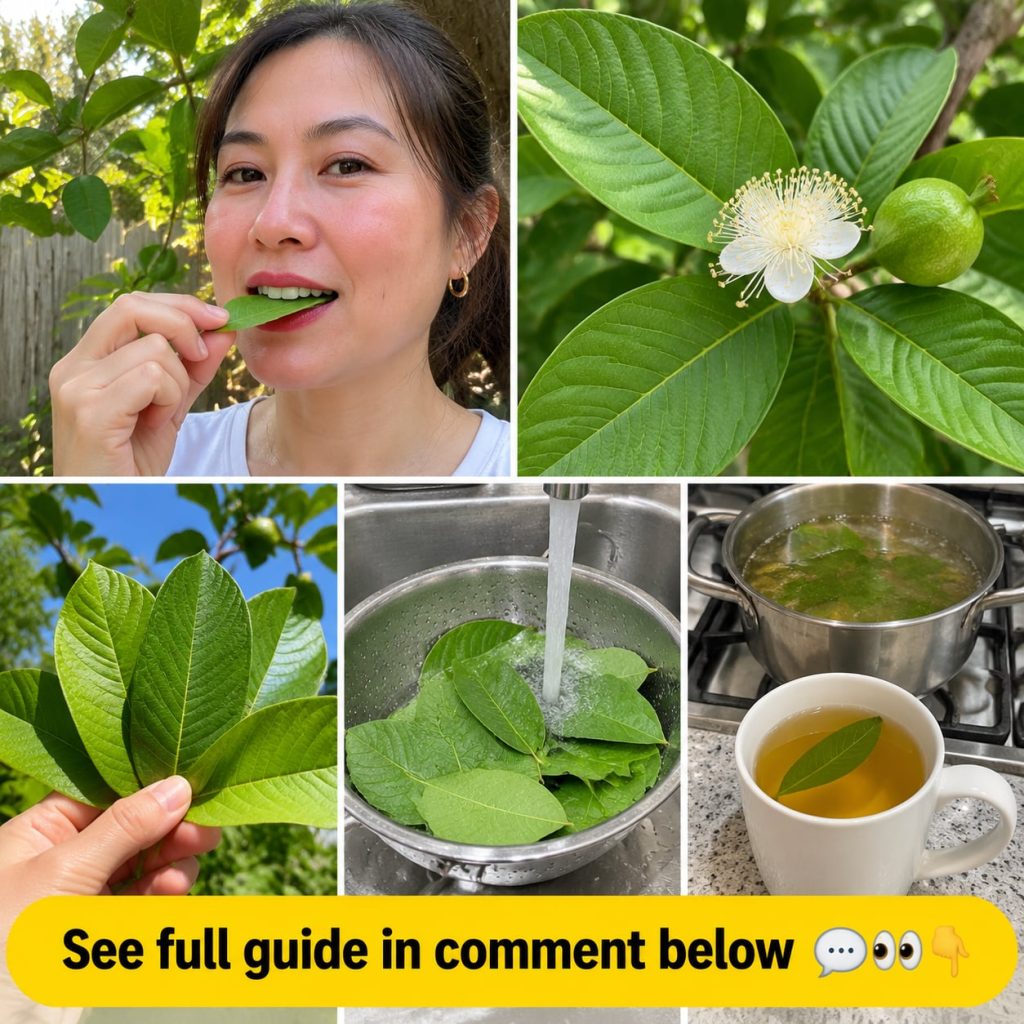
- Choose healthy leaves that are green, firm, and free of spots or insect damage.
- Rinse the leaves under cool running water to remove dust and debris.
- Lightly crush or tear the leaves to help release flavor.
- Bring the water to a boil, then reduce the heat to low.
- Add the leaves and simmer for 5 to 8 minutes. Do not boil hard for longer.
- Turn off the heat, cover the pot, and let it steep for 3 more minutes.
- Strain into a cup and drink warm, or cool it for later use.
Quick Tip: Covering the pot while it steeps keeps the aromatic compounds in the liquid instead of letting them escape with the steam.
How to Use It
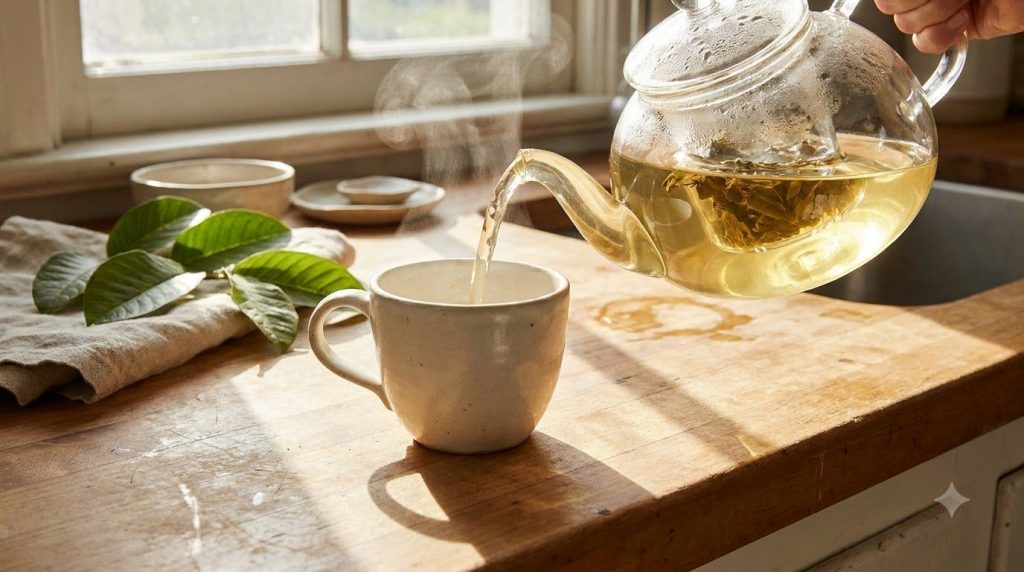
Drink the tea warm or at room temperature. Many people prefer it without sugar, because the natural flavor is mild and pleasant. If you want a lighter taste, add a few mint leaves during the steeping stage.
How Often to Use It
Most home drinkers keep it simple: one cup a day is a common routine, and some people prefer to skip a few days each week. Start with a small amount, pay attention to how your body responds, and avoid turning a single preparation into a heavy daily habit without a reason.
Fresh vs Dried Guava Leaves
| Version | Amount per Cup | Flavor | Best Use | Shelf Life |
|---|---|---|---|---|
| Fresh leaves | 3 to 4 leaves | Bright, grassy | Same-day brewing | Use within 2 to 3 days refrigerated |
| Dried leaves | 1 teaspoon | Mellow, slightly earthy | Pantry storage | Up to 6 months in a sealed jar |
| Brewed tea | 1 cup | Light, fresh | Drink within the day | Refrigerate and use within 24 hours |
How to Choose Good Leaves
Pick leaves from a tree you know has not been sprayed with pesticides. Market leaves are fine if they look clean and unbruised. Avoid yellowing, black-spotted, or wilted leaves, because they lose flavor and can carry mold.
Storage Tips
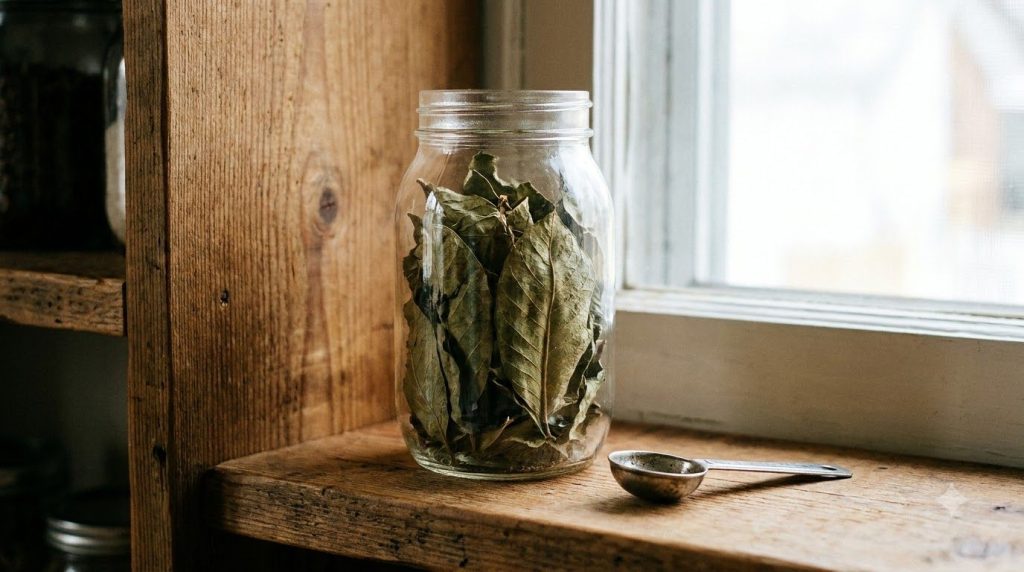
Fresh leaves should be kept dry and wrapped in a paper towel inside a loose bag in the refrigerator. Use them within two to three days. For dried leaves, air-dry them fully in a shaded, airy place, then store them in a clean, dry glass jar away from light and moisture. Brewed tea should be refrigerated in a sealed bottle and finished within one day.
Here is the part most people skip: dry the leaves completely before storing. Any trace of moisture can lead to mold in the jar.
Practical Tips
- Use a fine strainer or a tea infuser to keep small leaf fragments out of the cup.
- Brew a small test batch first to find your preferred strength.
- Label jars with the date you dried or purchased the leaves.
- Keep your teapot and utensils clean to avoid stale flavors.
Common Mistakes
- Using damaged, yellow, or sprayed leaves.
- Boiling the leaves hard for a long time, which makes the tea bitter.
- Storing leaves in a damp container or leaving them in a humid kitchen.
- Skipping the drying step before storing dried leaves.
- Overusing the leaves in one cup, expecting a stronger result.
Cautions and Who Should Avoid It
Guava leaf tea is a home preparation, not a medical treatment, and it should not replace advice from a qualified health professional. People who are pregnant or breastfeeding, those with ongoing medical conditions, and anyone taking prescription medication should check with a doctor before adding it to their routine. Stop using it if you notice any unusual reaction.
Quick Summary
- Best preparation: Simmer 6 to 8 fresh leaves or 2 teaspoons dried in 2 cups of water for 5 to 8 minutes.
- Best use case: A warm, simple home tea for a calm daily routine.
- Storage: Fresh leaves refrigerated for 2 to 3 days, dried leaves in a sealed jar for up to 6 months.
- When to use: Morning or evening, one cup at a time.
- What to avoid: Sprayed leaves, boiling too hard, wet storage, and skipping medical advice when needed.
You may also like: how to dry herbs at home
Read more: simple herbal tea basics
See the full guide: natural remedy storage tips
Frequently Asked Questions
Can I use fresh or dried guava leaves?
Yes. Fresh leaves give a brighter flavor, while dried leaves are more convenient and last much longer.
How long does guava leaf tea last?
Brewed tea should be refrigerated and finished within 24 hours for the best flavor and freshness.
Can I refrigerate the tea?
Yes, store it in a sealed bottle in the refrigerator and drink it within one day.
Can I freeze the leaves?
Freezing is possible for fresh leaves in a sealed bag, but dried leaves store better for everyday use.
Which part of the plant is best?
The leaves are the part most often used in home tea preparations. Fruit and bark are prepared differently and are outside the scope of this guide.
Can I reuse the leaves?
Reusing leaves is not recommended, because most of the flavor is released during the first steeping.
How often should I drink it?
Many people keep it to one cup a day and take breaks, but check with a healthcare professional if you have any health concerns.
When should I avoid it?
Avoid it if you are pregnant, breastfeeding, managing a medical condition, or taking medication without first checking with a doctor.
Final Thoughts
Guava leaves are a practical, low-cost ingredient for simple home brews. With clean leaves, a gentle simmer, and proper storage, you can build a small, reliable routine that fits easily into your kitchen. Start with one cup, keep notes on how you feel, and treat it as a simple habit rather than a cure-all.