Rust on an old wrench or socket can make a perfectly good tool look neglected, and it can make the metal feel rough in your hand. The good news is that light surface rust often comes off with a simple paste, a soft brush, and a little patience. This DIY is aimed at tools with small rust spots rather than deep pitting, and it works well for weekend restorations and garage clean-ups.
What You’ll Need
- A small bowl or cup
- Baking soda, about 2 tablespoons
- Water, a few drops at a time
- An old soft-bristled toothbrush
- Fine steel wool (grade 0000) or a fine abrasive pad, optional for stubborn spots
- Clean microfiber or cotton rags
- Dish soap and warm water
- A light machine oil or mineral oil for the finish
- Gloves and eye protection
Why This DIY Can Be Useful
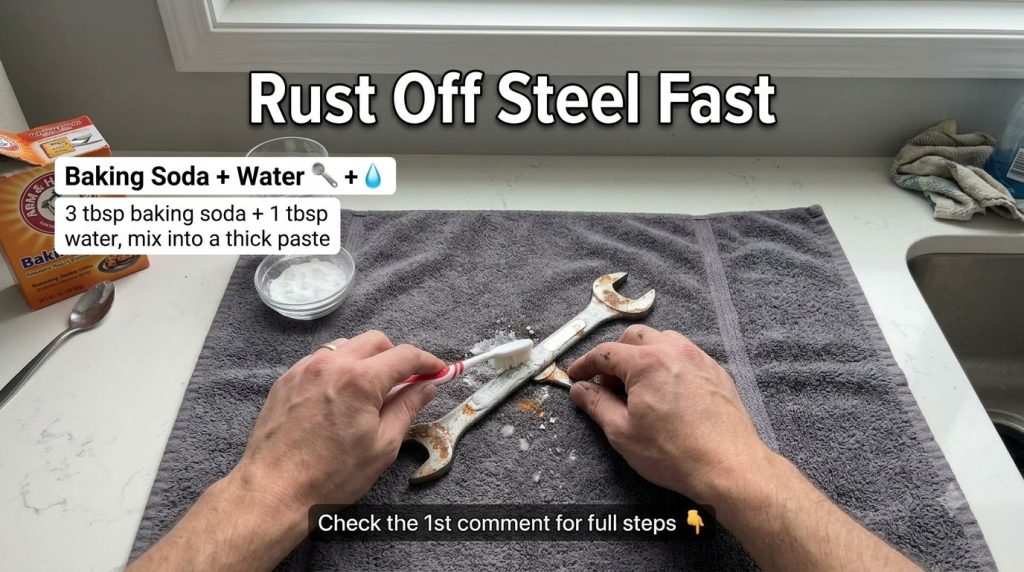
Baking soda is a mild abrasive. When it is mixed with a little water, it forms a thick paste that can loosen rust flakes as you brush without scratching the metal as aggressively as harsher tools. The brush lets you work the paste into the grooves and around the open jaws, where rust tends to collect. Because the method relies on gentle scrubbing rather than strong chemicals, it is a practical option for many household tools.
How to Make It
- Wash the wrench with warm, soapy water to remove grease and dirt, then dry it completely.
- In a small bowl, mix about 2 tablespoons of baking soda with a few drops of water at a time until it forms a thick paste, similar to toothpaste.
- Check the consistency. If it runs off the tool, add a little more baking soda. If it is dry and crumbly, add a drop more water.
How to Use It
- Dip the toothbrush into the paste and coat the rusted areas, especially near the open end and along the shank.
- Scrub in short, firm strokes, working in one direction along the metal. Give the rusty spots about 1 to 2 minutes of steady brushing.
- For heavier rust, let the paste sit on the metal for 5 to 10 minutes, then scrub again. Do not let it dry completely.
- If a few spots remain, rub them gently with fine steel wool, moving with the grain of the metal.
- Rinse the wrench under warm water and remove all paste residue, including inside the jaws.
- Dry the tool immediately with a clean rag, then wipe a thin coat of light oil over the surface to slow new rust.
What to Expect
Light surface rust usually lightens noticeably or disappears after one or two rounds. Deep, flaky, or pitted rust may only improve in appearance and may need stronger methods or professional help. Results depend on how old the rust is and how thick it has become, so it is best to judge the result after drying and oiling, not while the paste is still wet.
Helpful Tips
- Work on a towel or cardboard so the paste does not stain your workbench.
- Use an old toothbrush that you do not plan to use for your teeth again.
- Scrub with the grain of the metal when you use steel wool to avoid heavy scratches.
- Store the leftover paste covered, but make a fresh batch when you need it, since it can dry out.
Important Notes / Safety
Wear gloves and eye protection, especially when using steel wool, because small rust flakes and metal bits can irritate skin and eyes. Test the paste on a hidden spot first if the tool has paint, plating, or a decorative finish, since abrasion can dull or remove it. Avoid mixing baking soda with other household cleaners, and never combine it with bleach or other chemicals. Rinse and dry the tool thoroughly so moisture does not start new rust.