Minor household mishaps can happen when you least expect them. A splash of hot water in the kitchen, a sudden nosebleed, or a bee sting in the backyard can catch anyone off guard. Knowing a few simple, gentle steps can help you stay calm and keep your family comfortable until things settle down.
This guide covers three everyday situations: minor burns, nosebleeds, and bee stings. The tips below are general guidance for small, everyday issues. They are not a substitute for professional medical advice.
1. Handling Minor Burns
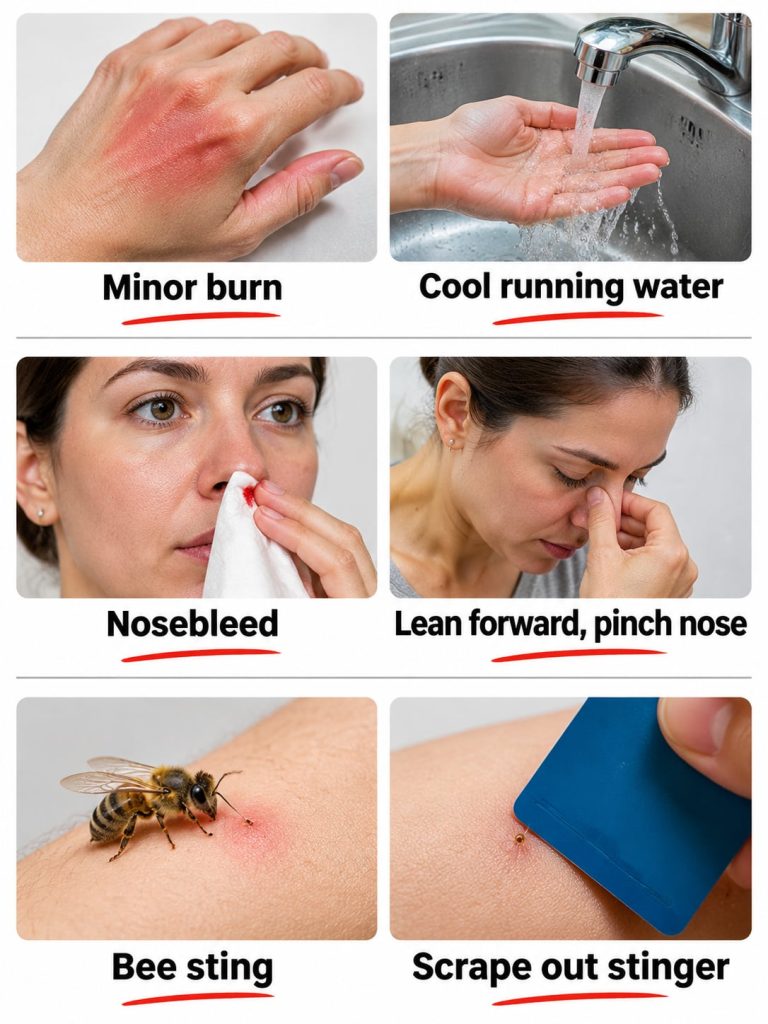
For small burns, such as brushing against a hot pan or a splash of steam, start by moving away from the heat source. Cool the area under cool, not icy, running water for about 10 to 20 minutes. Cooling can help ease the heat and discomfort.
Once the area has cooled, gently pat the skin dry and cover it loosely with a clean, non-stick dressing. Avoid popping any blisters, and skip greasy products like butter, which can trap heat and irritate the skin.
Seek professional help promptly for burns that are large or deep, that appear on the face, hands, feet, or joints, or that show signs of infection.
2. Calming a Nosebleed
Most nosebleeds are harmless and stop on their own. Sit upright and lean slightly forward so blood does not run down the throat. Pinch the soft part of the nose firmly for about 10 minutes, and resist the urge to check too early.
- Breathe slowly through your mouth.
- Place a cold, damp cloth across the bridge of the nose.
- Avoid blowing your nose or tilting your head back.
Contact a healthcare provider if bleeding lasts longer than 20 minutes, follows an injury, or happens often.
3. Soothing Bee Stings
If a bee stings you, check whether the stinger is still in the skin. If it is, scrape it out sideways with a fingernail or the edge of a card rather than squeezing it, since squeezing may release more venom. Then wash the area with soap and water.
A cold compress can help reduce swelling and itching. Some people find a simple paste of baking soda and water soothing for mild irritation. Watch closely for signs of a serious allergic reaction, such as trouble breathing, swelling of the face or throat, dizziness, or widespread hives. These symptoms need emergency care right away.
Build a Simple Home First Aid Kit
Keeping a few basics on hand makes a real difference when something unexpected happens:
- Sterile gauze pads and adhesive bandages
- Non-stick dressings for minor burns
- A reusable cold pack
- Clean tweezers for removing stingers
- Saline wound wash
- Your household’s regular medications and a list of emergency contacts
Check your kit every few months to replace anything used or expired.
Final Thoughts
Staying prepared does not have to be complicated. With a few simple steps and a well-stocked basket, you can handle small mishaps with confidence and care. What is one safety tip you always keep in mind at home? Share it in the comments below, we would love to hear from you!