Most gardeners assume that more water is the only way to keep plants alive in dry weather. The surprising alternative is to bury wood under your beds, so the mound holds moisture for months instead of letting it drain away. This method, called hugelkultur, is one of the most practical ways to build a low-water garden at home.
The idea is simple: rotting logs and branches act like a sponge inside the soil. As the wood slowly decays, it absorbs rainwater, releases it back to plant roots during dry spells, and keeps the soil loose. Over time, many gardeners find they water less often, especially in the second and third growing seasons.
What Hugelkultur Is
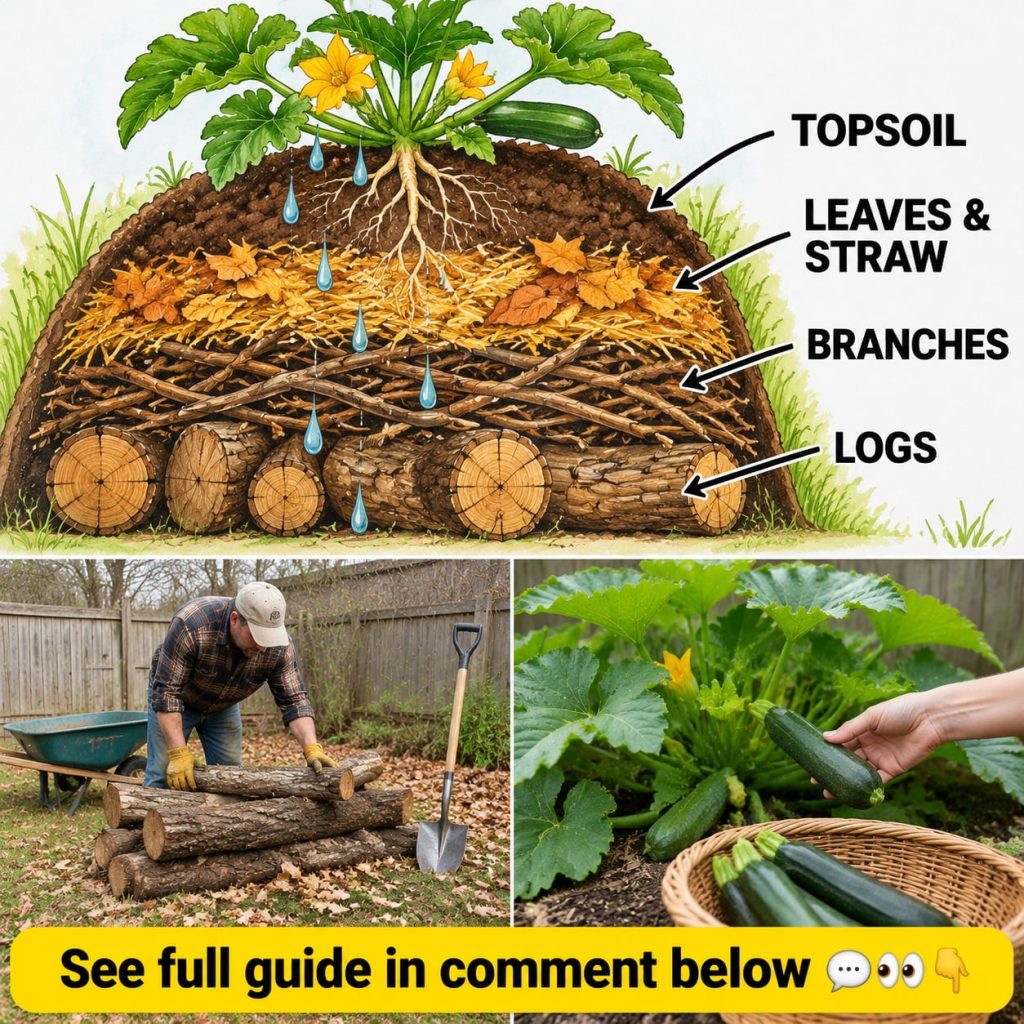
Hugelkultur is a German term that roughly means hill culture. You build a mound of buried wood, organic material, and soil, then plant directly into the top. The buried wood becomes a slow-release water reservoir and a food source for soil life. It works especially well for vegetables, squash, herbs, and perennial beds.
Ingredients and Approximate Measurements
- Logs: 2 to 4 pieces, about 15 to 30 cm in diameter and 1 to 2 m long, or equivalent amounts of branches
- Smaller branches and twigs: enough to fill the gaps between logs
- Nitrogen-rich green material: grass clippings, kitchen scraps, or fresh weeds without seeds, about 1 bucket
- Compost: 2 to 3 wheelbarrows, or about 1 cubic metre
- Topsoil: about 1 cubic metre to finish the mound
A typical starter bed measures about 1.5 to 2 m wide, 1.5 m long, and 0.8 to 1 m tall once settled. Larger mounds hold more water but take more material and time.
Step-by-Step Method
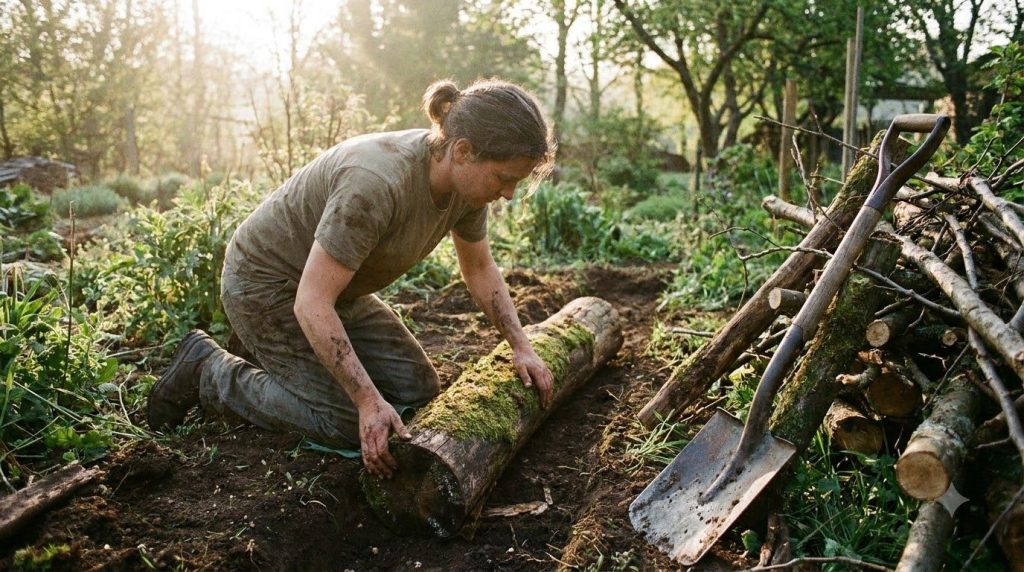
- Mark the bed and dig a shallow trench about 30 cm deep along the center line.
- Lay the largest logs at the bottom and fill the gaps with smaller branches.
- Add a layer of green material over the wood. This helps the wood begin breaking down.
- Cover with compost, then a final layer of topsoil about 15 to 20 cm thick.
- Shape the mound into a rounded hill. Water it thoroughly so the wood begins to absorb moisture.
- Let the mound settle for a few weeks before planting, and top up soil as it sinks.
Quick Tip: Build It in Autumn or Early Spring
Autumn gives the wood time to settle before the growing season. Early spring works too, but expect to water more during the first summer.
How to Use the Bed
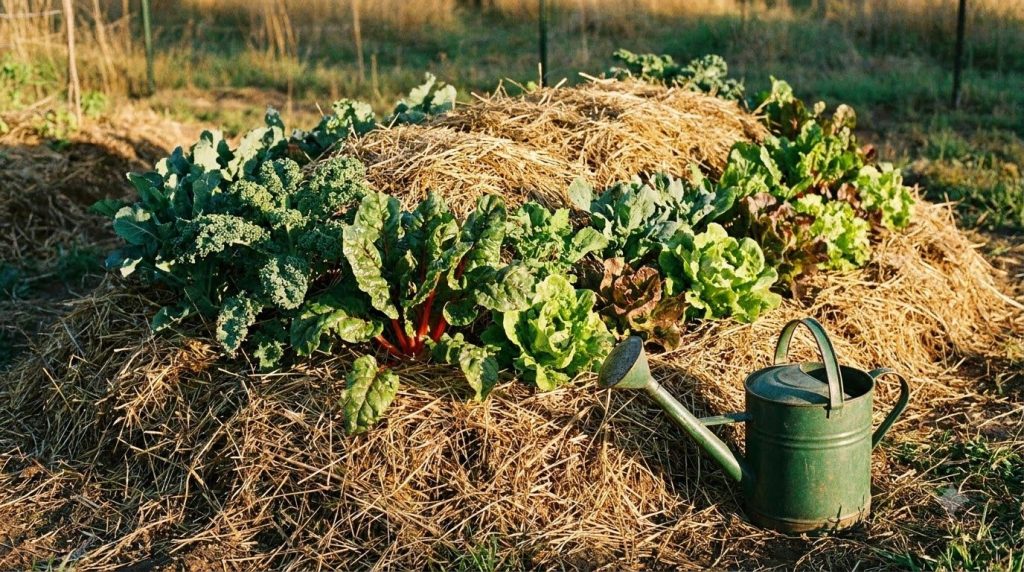
Plant shallow-rooted crops such as lettuce, herbs, beans, and squash on the top and sides. Place thirstier plants on the sides, where water collects at the base of the mound. Mulch the surface with straw or shredded leaves to slow evaporation.
How Often to Water
In the first season, water the mound deeply once or twice a week during dry weather. In later seasons, check the soil with your finger. If the top 5 cm feels dry, water. Many established beds only need extra watering during long heat waves.
Comparison: Hugelkultur vs Standard Raised Bed
| Feature | Hugelkultur Mound | Standard Raised Bed |
|---|---|---|
| Water retention | High after the wood starts breaking down | Moderate, drains faster |
| Setup cost | Low if you use fallen wood | Higher for timber and soil |
| Settling time | Several months | Usually ready in days |
| Best for | Long-term, low-water beds | Quick, tidy planting |
How to Choose the Right Wood
Use untreated hardwood or softwood from your own property or a local tree service. Good choices include oak, apple, poplar, and birch. Avoid black walnut, because it releases compounds that can harm many vegetables. Never use pressure-treated lumber or painted wood.
Storage and Ongoing Care
If you cannot build the bed immediately, store logs off the ground in a dry, shaded spot. Once the mound is built, keep it covered with mulch and add fresh compost each year to feed the soil.
Common Mistakes
- Using treated or painted wood, which can leach chemicals into the soil.
- Burying wood that is too thick, which slows decomposition for years.
- Skipping the settling period and planting immediately, which can leave roots exposed as the mound sinks.
- Overwatering a brand-new mound, which can waste water before the wood absorbs moisture.
- Planting deep-rooted crops only on the top, where the soil dries out first.
Cautions and Who Should Avoid This Method
Hugelkultur is a gardening method, not a treatment for any health or plant disease. If your property has a high water table or soil that stays soggy, a mound may rot too quickly or hold too much water. Those with allergies to certain wood dust should wear a mask when cutting logs. Check local rules before moving large amounts of wood.
Quick Summary
Best preparation: Layer untreated logs, branches, green material, compost, and topsoil in a mound.
Best use case: Vegetables, herbs, and squash in dry or water-sensitive gardens.
Storage: Keep spare wood dry and off the ground until use.
When to use: Autumn or early spring, with extra watering in the first season.
What to avoid: Treated wood, black walnut, and planting before the mound settles.
Frequently Asked Questions
Can I use fresh-cut wood? Fresh wood works, but let it dry for a few weeks if possible. Very wet wood can slow early settling.
How long does a hugelkultur bed last? A well-built mound can keep producing for many years, though the height will drop as the wood breaks down.
Can I plant right away? You can plant small seedlings after the mound has settled for a few weeks. Shallow crops work best at first.
Do I need special soil? No. Compost and ordinary topsoil are usually enough, especially if you add mulch each season.
Can I reuse the wood from an old bed? Yes, but check that the wood has not been treated and that it is still sound enough to hold the mound together.
Does it attract pests? Rotting wood can attract insects and rodents. Keep it covered with soil and mulch, and avoid piling food scraps on the surface.
What plants struggle on hugelkultur? Plants that need very consistent moisture or deep, undisturbed soil may need a different bed.
Final Thoughts
Hugelkultur turns fallen wood into a long-term water reserve. Start with one small mound, watch how it holds moisture over a season, and expand from there. You may also like: read more about building a compost system to feed your new bed. Continue with: the full guide to mulching for dry summers.