Most home gardeners fertilize a fruit tree right at the trunk, and that is exactly where the tree can least use it. The feeder roots that absorb nutrients sit under the outer edge of the branches, called the drip line. Here is the part most people skip: feeding the spot you can see is not the same as feeding the roots that do the work.
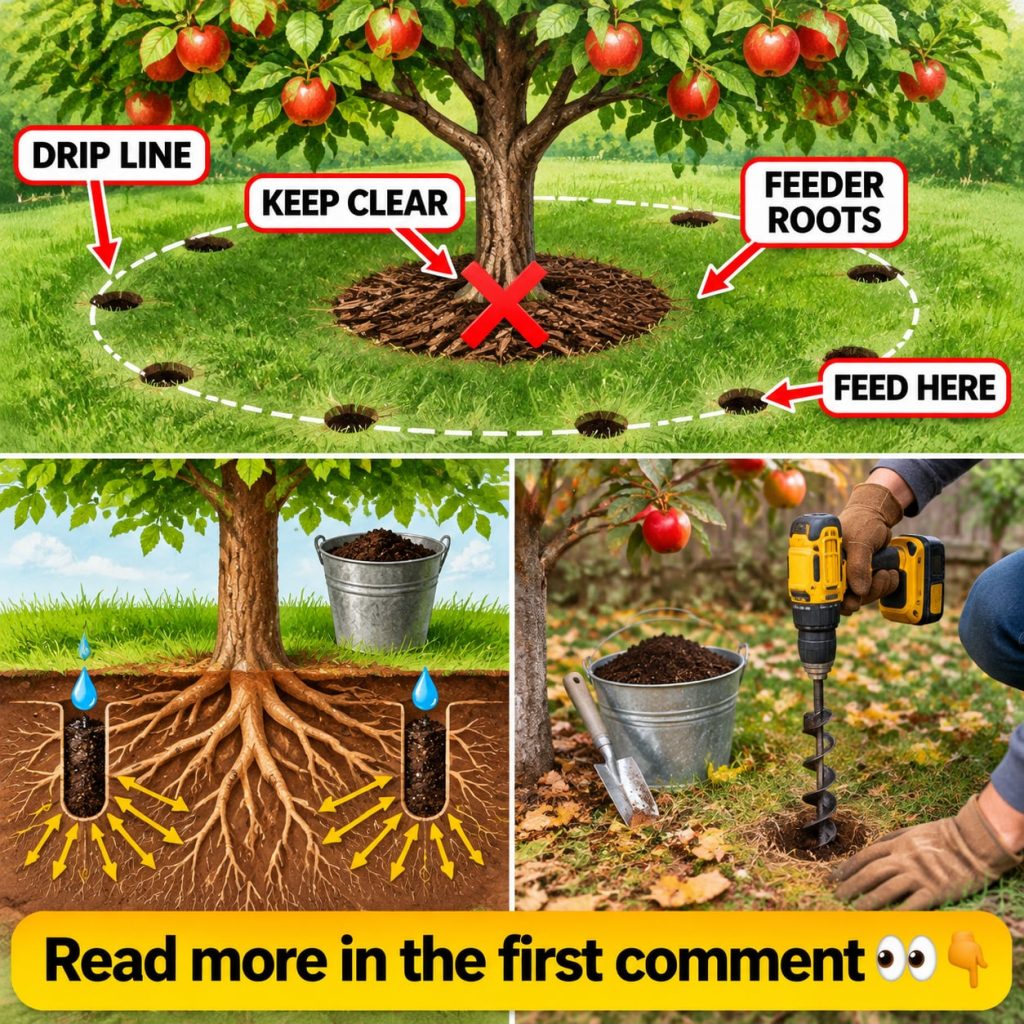
What the Drip Line Is and Why It Matters
The drip line is the ground area directly beneath the outermost branch tips. Rain falls off the canopy there, and the soil stays moist longer. Most fine feeder roots, the thin roots that take up water and nutrients, grow in the top 30 cm of soil and spread outward well past the trunk. Fertilizer placed near the trunk often sits where there are fewer active feeder roots, and it can burn the thick bark and roots located there.
Ingredients and Tools You Need
- A balanced granular fertilizer, such as a 10-10-10 or a fruit tree formula
- Well-rotted compost or aged manure (optional, for slow feeding)
- Organic mulch such as wood chips or shredded leaves
- A garden fork or hand trowel
- A measuring cup or kitchen scale
- A garden hose or watering can
Approximate Measurements
For young trees, a common guideline is about 225 g (0.5 lb) of balanced granular fertilizer per year of tree age, per application, with a practical cap for mature trees. Always follow the label on your product, because concentrations vary. Compost works well as a top layer of about 2 to 3 cm spread across the feeding zone.
Step-by-Step Method
- Look at the canopy and find the outer edge of the branches on the ground.
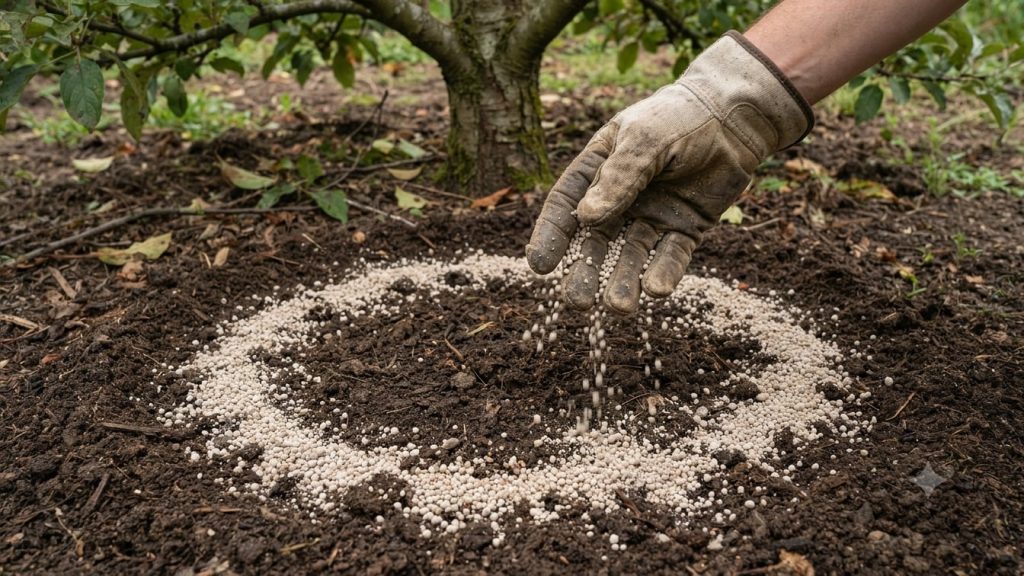
- Measure a feeding zone that starts about 30 to 60 cm from the trunk and extends to the drip line.
- Lightly rake away mulch or debris in that ring.
- Scatter the measured fertilizer evenly across the ring.
- Work the top 5 cm of soil gently with a fork or rake to mix it in.
- Water deeply so the nutrients move toward the roots.
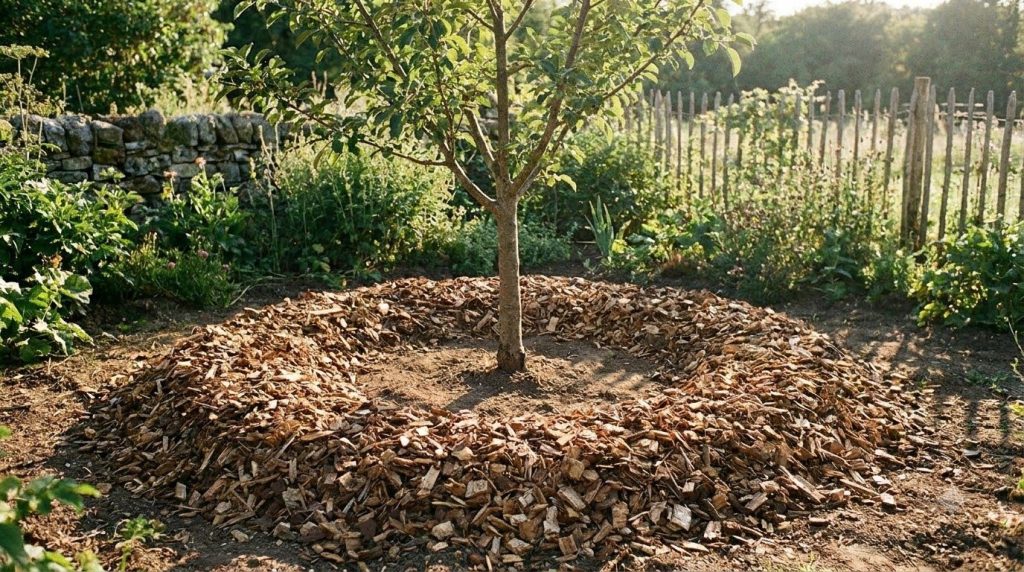
- Replace mulch in a layer of 5 to 8 cm, keeping it about 15 cm away from the trunk.
How to Use It Through the Season
Apply the main feeding in early spring, just before buds swell. A second light application can go on in mid-season if growth looks weak, but stop feeding in late summer so new growth has time to harden before cold weather. Always water after feeding, especially in dry soil.
How Often to Feed
Most fruit trees do well with one or two feedings per year. Young trees that are still establishing may need feeding a little more often, while mature trees usually need less. Check the leaves and new shoot length each season. Pale leaves or very short growth may signal a need for nutrients, but a soil test is the most reliable guide.
How to Choose Fertilizer
Pick a balanced product unless a soil test shows a specific deficiency. Fruit tree formulas are often labeled with nitrogen, phosphorus, and potassium ratios. Too much nitrogen can push leafy growth at the expense of fruit, so avoid high-nitrogen lawn products around fruit trees.
Storage Tips for Fertilizer and Compost
Keep granular fertilizer in a sealed container in a dry shed or garage. Moisture causes clumping and can reduce effectiveness. Store compost in a covered bin so it stays moist but not waterlogged.
Practical Tips
- Walk the drip line with a tape measure once a year to track the feeding zone as the canopy grows.
- Feed after the soil has thawed and is moist, not frozen or waterlogged.
- Use compost or mulch to improve soil structure over time.
Quick Reference: Trunk vs Drip Line
| Feeding Spot | Root Access | Risk | Best Use |
|---|---|---|---|
| At the trunk | Low | Bark and root burn | Avoid |
| 30 to 60 cm from trunk | Medium | Low | Young trees |
| Drip line and beyond | High | Low when watered | Mature and established trees |
Common Mistakes
- Piling fertilizer against the trunk, which can burn bark and invite pests.
- Applying too much because the tree looks slow, which can cause weak growth.
- Feeding late in summer, which encourages tender shoots that get damaged by frost.
- Skipping water after application, which leaves granules sitting dry on the surface.
- Piling mulch against the trunk, which keeps bark wet and creates rot risk.
Cautions and Who Should Be Careful
Follow product labels closely, and wear gloves and eye protection when handling granular fertilizers. Keep children and pets away from freshly fertilized areas until it is watered in. Newly planted trees, stressed trees, and trees in drought should be fed cautiously, since roots may not be ready to absorb nutrients. If you are unsure about your soil or tree health, consider a local soil test or a consultation with an arborist.
Quick Summary
Feed fruit trees at the drip line, not the trunk. Use a balanced fertilizer in early spring, water it in deeply, and mulch lightly with the trunk left clear. Feed once or twice a year, stop in late summer, and store fertilizer dry and sealed. Avoid heavy trunk piles, over-application, and late-season feeding.
FAQ
Can I feed a fruit tree with compost instead of fertilizer?
Yes. Compost improves soil and releases nutrients slowly, which is useful for steady tree health. Many gardeners combine compost with a balanced granular fertilizer for stronger results.
How far from the trunk should I fertilize?
Start about 30 to 60 cm from the trunk and work outward toward the drip line. Mature trees often benefit from feeding right to the drip line and slightly beyond.
How long does granular fertilizer last in the soil?
Slow-release granules can feed for several weeks to a few months, depending on temperature, moisture, and product type. Check the label for release timing.
Can I refrigerate or freeze fertilizer?
No. Fertilizer should stay dry at room temperature in a sealed container. Freezing or refrigeration is unnecessary and can cause condensation problems.
Should I fertilize a tree that has no fruit yet?
Young trees may need feeding to establish strong roots, but avoid heavy feeding if growth is already vigorous. A soil test helps you decide.
When should I avoid feeding?
Avoid feeding during drought, after planting until the tree shows new growth, in late summer, or when the soil is frozen or waterlogged.
Conclusion
Moving your fertilizer from the trunk to the drip line is one of the simplest changes you can make for healthier fruit trees. Measure the feeding zone, spread the fertilizer evenly, water well, and keep the trunk clear.
You may also like: Read more about seasonal pruning for fruit trees in our full guide to orchard care.
Related remedy: See the full guide to organic mulch for home gardens and learn how to make your own compost bin.