Zucchini and bell peppers are two of the most versatile vegetables in the kitchen. They turn up in stir-fries, salads, omelets, and roasted trays, and both are easy to find year-round. But when it comes to your daily vitamins and nutrients, how do they really compare? Let us take a closer look so you can make smarter choices at the grocery store.
A Quick Overview of Each Vegetable
Zucchini is a summer squash with a mild flavor and a very high water content, which makes it light and refreshing. Bell peppers belong to the same plant family as chili peppers, but they are sweet and crisp. Their nutritional profiles share some similarities, yet the differences are meaningful, especially for vitamin C and vitamin A.
Calories and Macronutrients
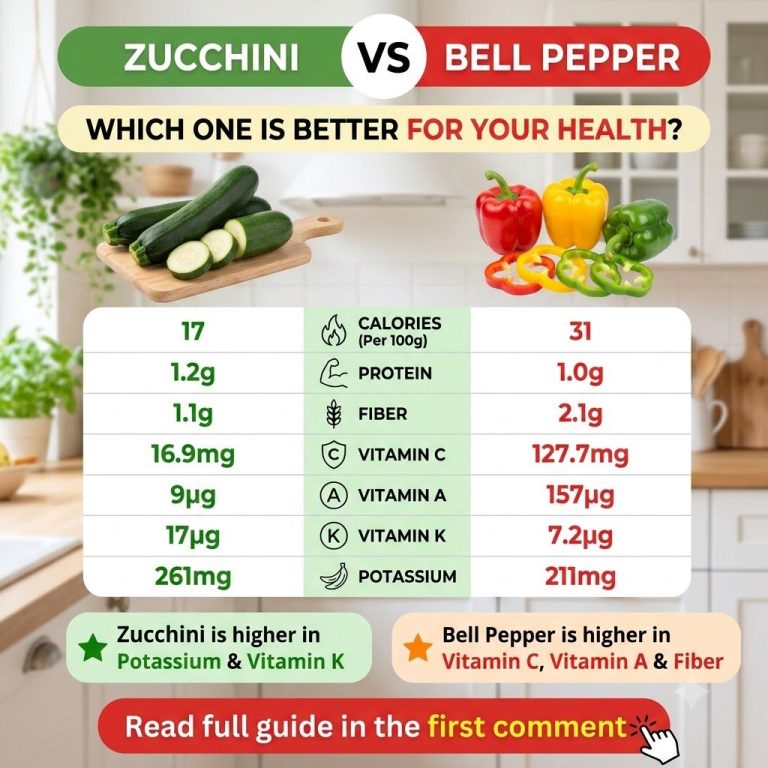
Both vegetables are naturally low in calories, which makes them excellent choices for anyone focused on balanced eating or healthy weight management. As a rough guide, a 100-gram serving of raw zucchini provides around 17 calories, while the same amount of red bell pepper provides around 30 calories. Both contain small amounts of protein and carbohydrates, and they contribute fiber to your meals, which supports digestion and helps you feel full.
Vitamins and Minerals Side by Side
- Vitamin C: Bell peppers, especially red ones, are one of the richest everyday sources of vitamin C. Zucchini also contains vitamin C, but typically in lower amounts.
- Vitamin A: Red and orange bell peppers provide beta-carotene, which your body converts into vitamin A. Zucchini contains some vitamin A, though generally less.
- Potassium: Both vegetables offer potassium, an essential mineral that supports healthy blood pressure and muscle function.
- Folate: Both provide folate, a B vitamin important for cell growth and healthy red blood cell formation.
- Hydration: Zucchini is especially high in water, which can help you stay hydrated throughout the day.
So, Which Veggie Wins?
The answer depends on what you need most. If you are looking for a vitamin C and vitamin A boost, bell peppers are the clear winner. Their vibrant color is a good sign of their antioxidant content, and red peppers usually contain more nutrients than green ones because they are left on the plant longer to ripen. If you want a lighter, hydrating option with a mild taste that works well in many recipes, zucchini is an excellent choice.
In practice, you do not have to pick just one. Including both in your weekly meals gives you a wider range of nutrients and keeps your plate interesting.
Practical Tips for Adding More Vegetables
- Add diced bell peppers and zucchini to scrambled eggs or omelets for an easy breakfast.
- Roast a tray of mixed vegetables with olive oil, herbs, and garlic for a simple side dish.
- Use zucchini noodles as a lighter alternative to pasta when you want more vegetables in your meal.
- Keep sliced bell pepper and cucumber in the fridge as a crunchy snack with hummus.
- Choose colorful bell peppers, since deeper colors often signal higher levels of certain nutrients.
The Bottom Line
Zucchini and bell peppers are both nutritious, low-calorie vegetables that deserve a regular place on your plate. Bell peppers generally offer more vitamin C and vitamin A, while zucchini provides hydration and a gentle, versatile flavor. Eating a variety of colorful vegetables is one of the simplest ways to support your long-term health.
Have you tried mixing these two vegetables into your weekly meal plan? Comment ‘List’ below to receive more healthy food comparisons from our team.