Are you curious about the ketogenic, or keto, diet and its potential to transform your health? The keto diet is a popular low-carb, high-fat eating plan that aims to shift your body’s metabolism. Instead of burning carbohydrates for energy, your body enters a state called ketosis, where it efficiently burns fat for fuel.
Many people discover the keto diet for its reported benefits, including supporting weight loss and providing sustained energy throughout the day. This article will guide you through the core principles of the keto diet, its key advantages, and a clear list of what to eat and what to avoid to get started.
Understanding the Ketogenic Diet: Your Fuel for Fat Burning
The essence of the ketogenic diet lies in its unique macronutrient distribution. By drastically reducing carbohydrate intake and replacing it with fats, you encourage your body to transition into a metabolic state called ketosis. In ketosis, your liver produces ketones from fat, which then become your body’s primary energy source.
The Macronutrient Breakdown for Keto Success
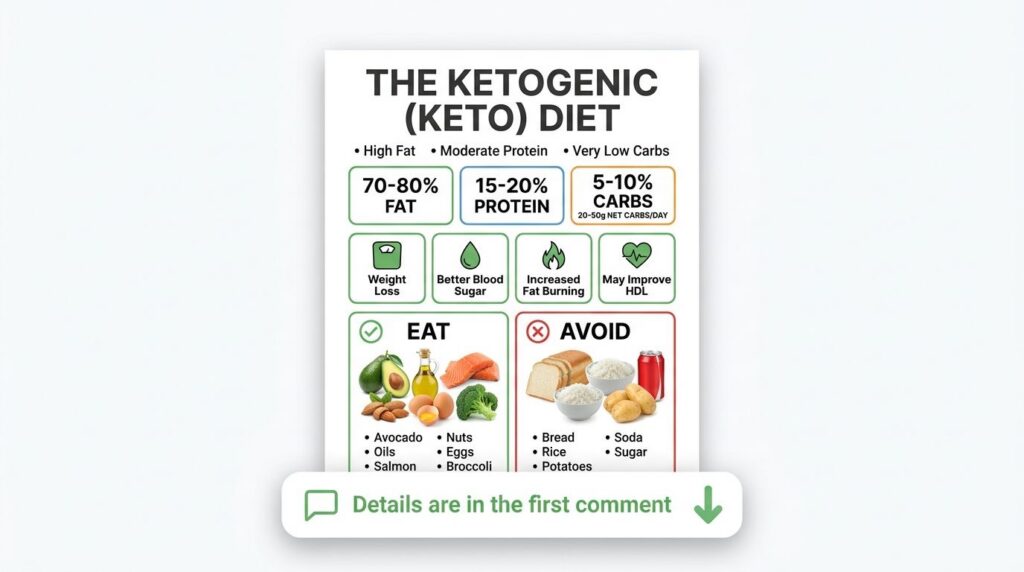
To achieve and maintain ketosis, specific ratios of macronutrients are crucial. The infographic highlights these percentages:
- 70-80% Fat: This is the cornerstone of the keto diet. Healthy fats become your main energy source, helping you feel full and satisfied.
- 15-20% Protein: Protein is essential for muscle maintenance and various bodily functions. While important, too much protein can sometimes be converted to glucose, potentially hindering ketosis, so moderation is key.
- 5-10% Carbs: This is the most restrictive aspect. Keeping carbohydrate intake very low signals your body to switch from burning carbs to burning fat.
Key Benefits of Embracing the Keto Lifestyle
Beyond its primary goal of fat-burning, the keto diet is associated with several compelling health benefits. Many individuals report positive changes in their overall well-being when following this dietary approach.
Weight Loss Support
One of the most widely recognized benefits of the keto diet is its potential to aid in weight loss. By reducing carbohydrate intake, you often experience decreased appetite, which can lead to consuming fewer calories overall. Additionally, burning fat for fuel can be an effective strategy for shedding excess weight.
Stabilized Blood Sugar Levels
Since the keto diet significantly limits carbohydrate intake, it naturally helps regulate blood sugar. This can be particularly beneficial for individuals looking to manage their blood sugar and avoid the spikes and crashes associated with high-carb meals.
Enhanced Fat Burning
The very mechanism of the keto diet—inducing ketosis—means your body becomes a more efficient fat-burning machine. Instead of relying on external carbohydrates, your body taps into its fat stores (and dietary fat) for a steady supply of energy.
Potential Improvements in HDL Cholesterol
Some studies suggest that adopting a ketogenic diet may contribute to improvements in certain markers of heart health, such as an increase in High-Density Lipoprotein (HDL) cholesterol. HDL is often referred to as “good” cholesterol because it helps remove other forms of cholesterol from your bloodstream.
What to EAT on a Ketogenic Diet
Choosing the right foods is paramount for successful keto adherence. The diet emphasizes nutrient-dense, whole foods that are high in healthy fats and moderate in protein, with very low carbs. Here are some of the best keto-friendly foods:
- Avocado: Rich in healthy monounsaturated fats, fiber, and potassium.
- Olive Oil: A staple healthy fat, ideal for cooking and dressing.
- Salmon: An excellent source of omega-3 fatty acids and high-quality protein.
- Almonds: A good source of healthy fats, fiber, and vitamin E, perfect for snacking in moderation.
- Eggs: Versatile and nutrient-dense, packed with protein and healthy fats.
- Broccoli: A low-carb vegetable that provides fiber and essential vitamins.
Foods to AVOID on Keto
To maintain ketosis, it’s essential to steer clear of foods that are high in carbohydrates. These foods can quickly kick your body out of its fat-burning state. Here’s a list of common foods to avoid on a ketogenic diet:
- Bread: Most breads are high in refined carbohydrates.
- Rice: A significant source of carbohydrates that should be avoided.
- Potatoes: Starchy vegetables like potatoes are too high in carbs for a keto diet.
- Soda: Sugary drinks are loaded with carbs and artificial ingredients, making them entirely unsuitable for keto.
Getting Started with Keto: Practical Tips
Transitioning to a ketogenic diet can feel daunting at first, but with a clear understanding of the principles, it becomes much easier. Focus on incorporating the “Eat” list foods into your meals and strictly limiting items from the “Avoid” list. Planning your meals ahead of time can be incredibly helpful for staying on track.
Hydration and Electrolytes
When you reduce carbohydrate intake, your body sheds water and electrolytes. It’s important to drink plenty of water and consider supplementing with electrolytes like sodium, potassium, and magnesium to prevent symptoms often referred to as “keto flu.”
Listen to Your Body
Every individual responds differently to dietary changes. Pay attention to how your body feels and adjust your food choices within the keto guidelines as needed. Consulting with a healthcare professional before making significant dietary changes is always a wise step.