Most people bag up their yard trimmings and toss out an old wire coat hanger without a second thought. That is the step most DIY decorators miss, and it is exactly what can turn a pile of clippings into a full, good-looking wreath for your front door.
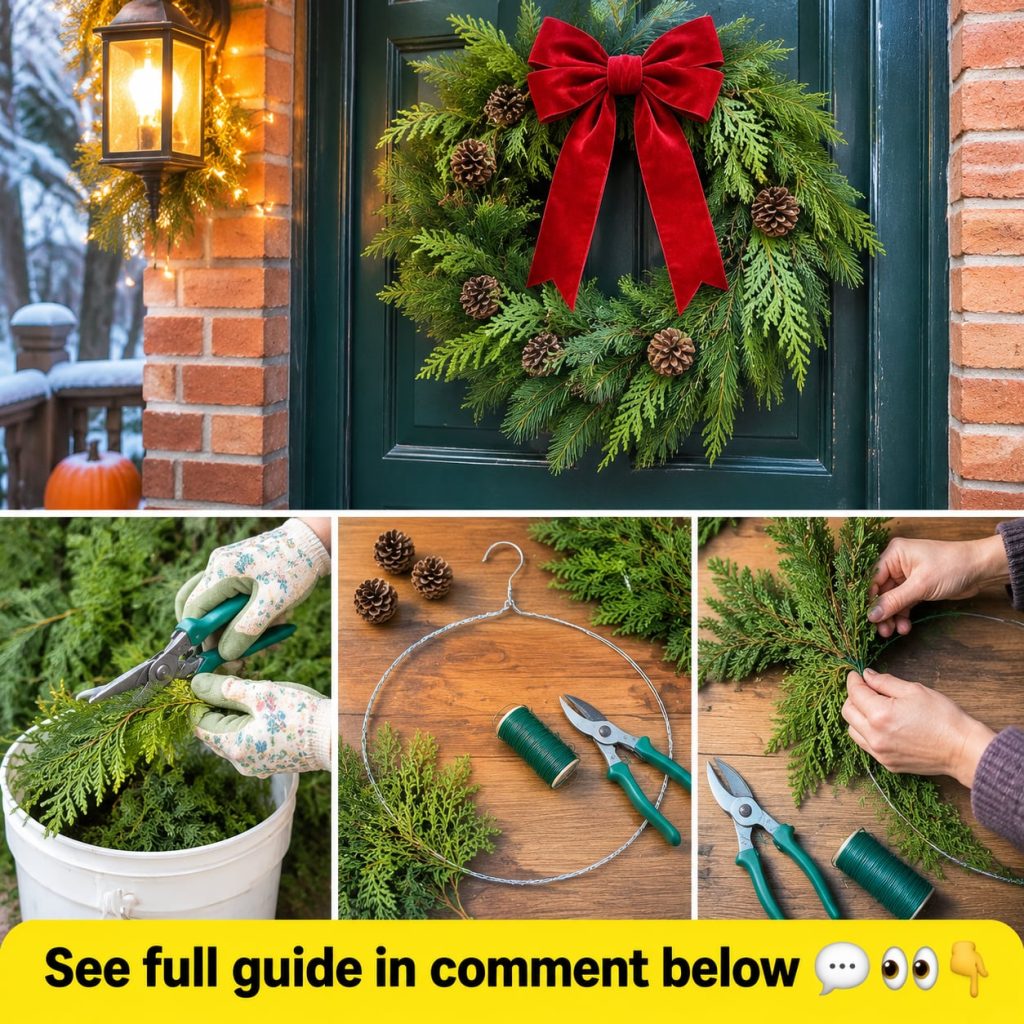
What It Is
This is a simple upcycled wreath. A wire coat hanger is reshaped into a circular frame, then wrapped with small sprigs of fresh evergreen or other hardy yard clippings. Because the base is free and the greenery comes from your own yard, the total cost can stay close to zero if you already own a few basic tools.
Ingredients and Materials
- 1 metal wire coat hanger (a sturdy, non-plastic version works best)
- Fresh evergreen clippings such as cedar, juniper, pine, or boxwood, about 15 to 25 sprigs
- Floral wire or green garden twine, about 2 to 3 yards
- Pruning shears or sharp scissors
- Wire cutters or old pliers
- Optional accents: dried orange slices, pinecones, berry sprigs, or a simple ribbon
Approximate Measurements
Aim for a finished wreath about 12 to 14 inches across. Bend the hanger into a circle roughly 10 inches in diameter, leaving the hook at the top. Cut your greenery into sprigs 4 to 6 inches long. Plan for roughly 15 to 25 sprigs for a full look.
Step-by-Step Method
- Remove the paper or plastic covering from the hanger if there is any. Straighten the neck and the bottom bar.
- Bend the hanger into a round shape with the hook at the top. Use pliers to smooth any sharp points.
- Cut the floral wire into 8 to 10 inch lengths or wrap the twine loosely around the frame to anchor it.
- Lay three or four sprigs together so the tips point in the same direction. Hold them against the frame.
- Wrap the stems tightly to the wire base. Work around the circle one bundle at a time.
- Overlap each new bundle slightly over the stems of the previous one. This hides the wire and keeps the wreath full.
- Keep going until the whole frame is covered. Fill any thin spots with extra sprigs.
- Add your accents by wiring them into the front of the wreath. Attach a ribbon loop at the top for hanging.
How to Use It
Hang the wreath on the door using the hook or a ribbon loop, out of direct wind and heavy rain if possible. A covered porch or a sheltered spot near the entry works well. For a deeper look, add a second, smaller wreath or a ribbon-wrapped bundle beside it.
How Often to Replace It
Fresh clippings usually last about one to two weeks outdoors in cold weather, depending on the plant and how much sun and wind it gets. Plan to refresh the greenery or swap in new sprigs if the color fades or the needles start dropping.
Fresh vs Dried Materials
| Option | Best For | Typical Lifespan | Notes |
|---|---|---|---|
| Fresh evergreen clippings | Classic look and scent | 1 to 2 weeks outdoors | Cut in the morning and wire the same day |
| Dried pinecones and fruit slices | Accents and texture | Several weeks or longer | Dry fully before wiring to avoid mold |
| Mixed fresh and dried | Longer-lasting display | 2 to 4 weeks | Place dried accents on the outer edge |
How to Choose Your Clippings
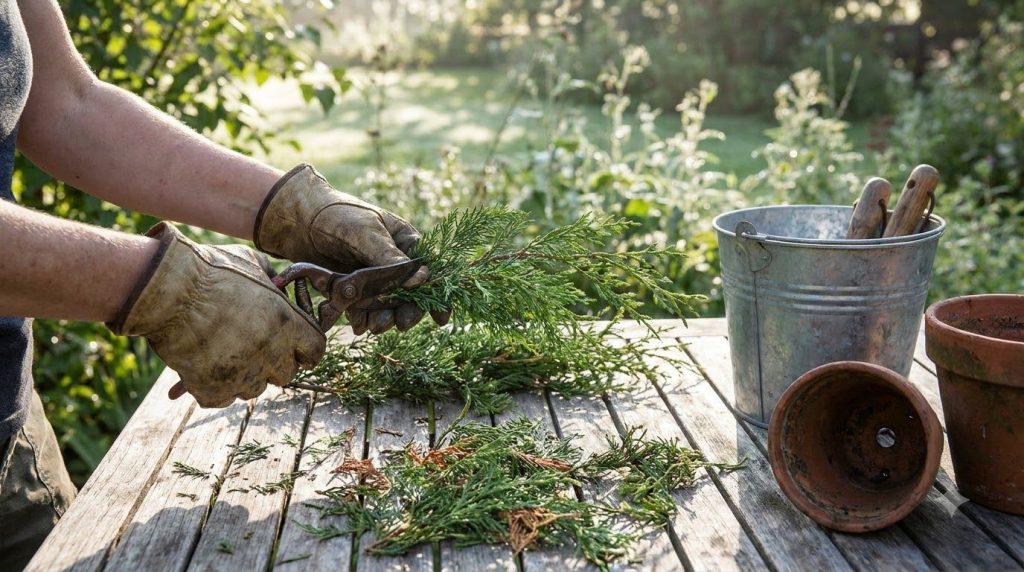
Look for healthy, flexible branches with no browning, pests, or sticky residue. Cedar, juniper, pine, and boxwood are common picks because they hold their shape. Avoid plants that were recently sprayed with weed killer or pesticide, since these chemicals can linger on the leaves and are not safe to handle around pets or children.
Storage
If you are not hanging the wreath right away, lay it flat in a cool, shaded spot. Mist the greenery lightly every day or two. Keep spare sprigs in a bucket of water in a cool garage, and do not seal them in a closed plastic bag, which traps moisture and encourages mold.
Practical Tips
- Start with a small wreath to practice the wrapping technique before making a larger one.
- Wrap each bundle in the same direction so the wreath looks even and balanced.
- Use a heavier gauge wire for the frame if your hanger bends too easily.
- Check the back of the wreath for loose wire ends and tuck them in before hanging.
Common Mistakes
- Using wilted or brittle clippings, which shed needles quickly.
- Skipping the wire wrap and relying on tape, which fails in wind or rain.
- Overloading one side, leaving the frame lopsided.
- Leaving sharp hanger ends exposed, which can scratch doors or snag clothing.
- Hanging the wreath in direct, hot sun, which dries out greenery faster.
Cautions and Who Should Avoid This Project
Some common landscape plants are toxic if eaten, including yew and certain berries. Keep the finished wreath and loose clippings away from pets and small children. Wear gloves when cutting, since some evergreens leave sticky sap and can irritate sensitive skin. If you have allergies to specific plants, choose a different greenery.
Quick Summary
- Best preparation: Fresh, flexible clippings wired onto a smooth metal hanger frame.
- Best use case: A front door or porch display for the holiday season.
- Storage: Keep spare sprigs in water in a cool place and mist lightly.
- When to use: Make it within a day or two of cutting the greenery.
- What to avoid: Sprayed plants, wet storage bags, and hot direct sun.
FAQ
Can I use dried clippings instead of fresh?
Yes, but dried greenery is more brittle and will not hold the same full shape. Mixing a few dried accents with fresh base sprigs is often the easiest approach.
How long will the wreath last outdoors?
Most fresh evergreen wreaths last one to two weeks in cold weather. Protected spots extend that time.
Can I refrigerate spare greenery?
Yes. Wrap the cut sprigs in a slightly damp paper towel, place them in a loose bag, and keep them in the refrigerator until you are ready to use them.
Can I freeze the clippings?
Freezing is not recommended for wiring, since thawed greenery turns limp and dark. Refrigeration works better for short-term storage.
What part of the plant works best?
Flexible side shoots with plenty of foliage are easiest to wire. Avoid thick, woody stems that do not bend.
Can I reuse the hanger frame next year?
Yes. Remove the old greenery, straighten any bent wire, and store the frame in a dry place.
When should I avoid this project?
Skip it if you have plant allergies, if your yard greenery has been treated with chemicals, or if you cannot keep the finished wreath away from pets.
Conclusion
A coat hanger and a handful of yard clippings can produce a wreath that looks far more expensive than it cost. Start with fresh greenery, wrap tightly, and keep the finished piece sheltered so it lasts through the season.
You may also like: Read more about simple DIY holiday decor ideas
See the full guide: Learn how to make a garden-fresh herb wreath