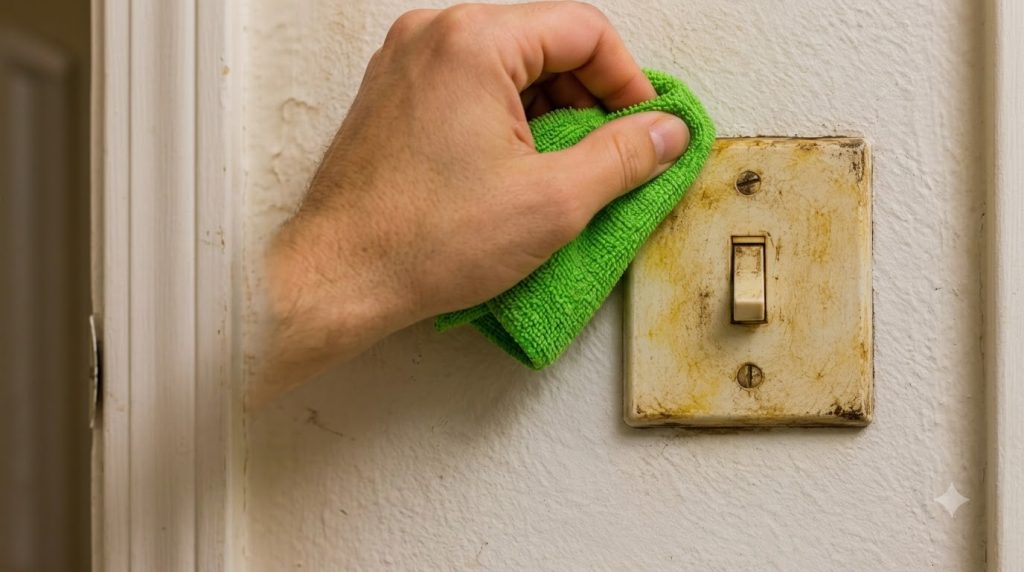
Light switch plates are easy to forget. Over months of thumbs, fingertips, and bumped elbows, they pick up a greasy film that gathers around the edges, under the toggle, and along the screw heads. In busy hallways and kitchens, that film can turn yellow and feel sticky. The good news is that a light switch plate is a small surface, and a simple homemade spray can lift most of the buildup without harsh scrubbing.
What You Need
This method uses basics that most homes already have. You will need:
- 1 cup warm water
- 1 teaspoon mild dish soap
- 1/2 teaspoon baking soda
- A clean spray bottle
- A microfiber cloth, plus a second dry cloth
- A cotton swab, such as a cotton bud
- A small bowl or jug for mixing
Stir the baking soda into the warm water until it is mostly dissolved, then add the dish soap. Pour the mixture into the spray bottle. Baking soda does not dissolve completely, so some grit will settle at the bottom. That is normal, and shaking the bottle before each use keeps the mix evenly blended.
Safety First
Light switches carry electricity, so take a few precautions before you start:
- If you plan to wipe near the toggle or screws with anything damp, switch off the power at the breaker for that circuit first.
- Never spray liquid directly onto the switch, the plate opening, or an outlet. Moisture can get inside and cause damage or a shock risk.
- Keep the cloth damp, not wet. A cloth that drips will push liquid into gaps around the plate.
- Avoid bleach and vinegar mixes on painted walls. Both can dull paint and leave marks, so keep the cleaning solution simple.
Step-by-Step Method
- Turn off the power. Switch off the breaker that controls the switch if you will be working around the toggle with anything damp. Test the switch to confirm it is dead before you touch it.
- Shake the spray bottle. Give it a good shake so the baking soda is evenly mixed through the water.
- Spray the cloth, not the switch. Mist the microfiber cloth lightly until it feels cool and damp when you press it between your fingers. Spray only the cloth.
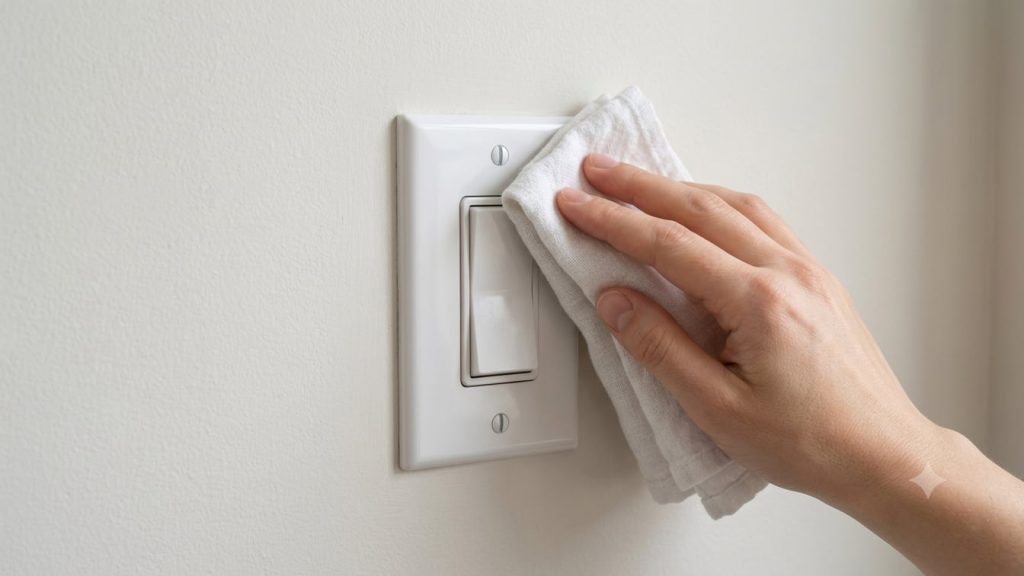
- Wipe the plate in strips. Work from the top of the plate downward, using one long, gentle stroke at a time. Fold the cloth to a clean section after each pass so you do not spread grime back across the plate.
- Work around the toggle and screws. Dip a cotton swab into the solution, squeeze out the extra liquid, and gently trace around the toggle base, the screw heads, and the seam where the plate meets the wall. Use short, light movements.
- Dry the plate. Wipe the whole plate with a clean, dry cloth. Remove any moisture left in the corners so that water does not sit in the gaps.
Tips for Stubborn Buildup
Some plates need a second pass. If the grime around the screws is still dark after the first clean, let the damp cloth rest on the spot for a minute, then wipe again. Avoid pressing hard, since a plastic plate can scratch or crack. For textured plates, use the cotton swab to lift dirt out of the grooves rather than scrubbing the surface. Check your work in daylight, because dirt is often easier to spot at an angle.
Frequently Asked Questions
What if my switch plates have turned yellow?
Yellowing on plastic plates often comes from grease and cooking residue rather than the plastic itself. This method may lighten the film, but it may not restore the original color. If the plate has discoloured over many years, a gentle clean is still worth doing, and replacing an old plate is a low-cost option if you are unhappy with the result.
Does this work on textured plates?
Yes, but go slowly. Textured plates hold dust in the raised bumps and in the grooves. Use the cotton swab to work the solution into those areas, then dry each section right away so the texture does not hold moisture.
How often should I clean light switches?
For most homes, a light clean every month or two is enough. Switches in high-traffic hallways, kitchens, and children’s rooms may need attention more often. A quick wipe with a barely damp cloth between deeper cleans helps keep grime from building up.
A Realistic Expectation
This homemade spray works well on everyday grease and dust, but it will not remove every mark. Old paint splatters, heavy nicotine staining, and deep scuffs may need a different approach or a professional cleaner. Clean switches that look a little tired are still an improvement over grimy ones, and this method keeps things simple, gentle, and affordable.