Small changes at the dinner table can add up to big wellness benefits over time. The good news is that you do not need a complicated diet to support your body. You simply need to know which everyday foods work in your favor and which ones are best kept occasional. This guide walks through three key areas of health, your eyes, your blood, and your heart, and shows you practical swaps you can start using today.
Why Food Choices Matter for Your Body
Your body relies on a steady supply of vitamins, minerals, fiber, and healthy fats to keep tissues working well. Foods that are rich in nutrients help support normal function, while foods high in added sugar, refined carbohydrates, and fried fats tend to offer fewer nutrients for the calories they provide. Thinking about your plate in terms of nutrient density, rather than strict rules, is one of the most sustainable ways to eat well.
Supporting Your Eyes: Carrots and Colorful Vegetables
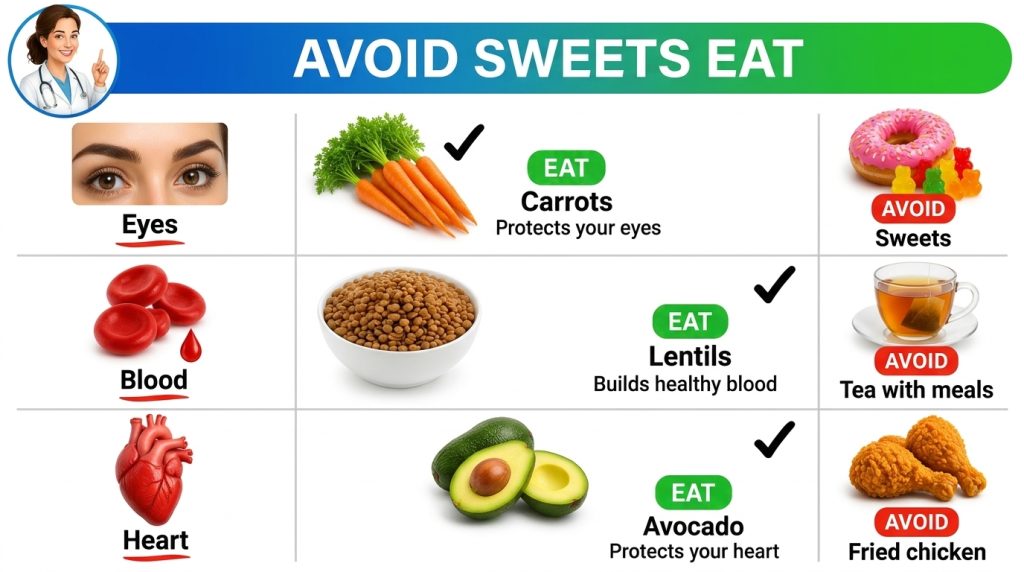
Carrots are a classic example of an eye-friendly food. They are rich in beta-carotene, which your body converts into vitamin A, a nutrient involved in normal vision. Other orange and dark leafy vegetables, such as sweet potatoes, spinach, and kale, offer similar benefits along with additional antioxidants.
Easy ways to add more eye-supporting vegetables
- Grate carrots into salads, soups, or grain bowls.
- Roast sweet potato wedges as a side dish for lunch or dinner.
- Stir a handful of spinach into eggs, pasta, or smoothies.
Why sweets are best kept occasional
Donuts, gummy candies, and other sugary treats are often low in vitamins and minerals while being high in added sugar. Enjoying them now and then is perfectly fine. The key is treating them as occasional treats rather than daily staples, so that your overall eating pattern stays rich in whole, nutritious foods.
Supporting Your Blood: Lentils and Iron-Rich Foods
Lentils are a budget-friendly powerhouse. They provide plant-based iron, folate, and fiber, nutrients that play a role in healthy red blood cells and overall energy. Pairing iron-rich plant foods with a source of vitamin C, such as bell peppers, citrus, or tomatoes, can help your body absorb iron more effectively.
Smart tips for blood-supporting meals
- Cook a big batch of lentils and use them in soups, salads, or tacos during the week.
- Add lemon juice or sliced bell peppers to your lentil dishes.
- Choose whole grains over refined white bread and rice when possible.
Timing your tea
Tea is a pleasant, low-calorie drink, and many varieties contain beneficial plant compounds. However, tea contains compounds that may reduce how well your body absorbs iron from plant foods when consumed right alongside a meal. If you rely on plant-based iron, consider enjoying your tea between meals instead of with them.
Supporting Your Heart: Avocados and Healthy Fats
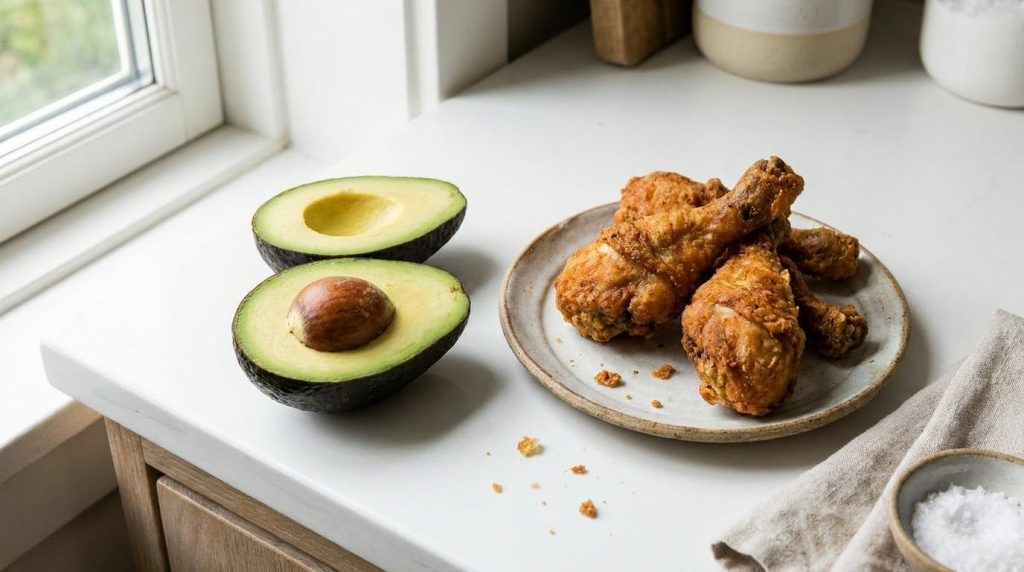
Avocados are rich in monounsaturated fats, fiber, and potassium, nutrients that are commonly associated with heart-healthy eating patterns. Swapping some saturated fats for unsaturated fats, such as those found in avocados, nuts, seeds, and olive oil, is a practical step many people can take.
Simple heart-friendly swaps
- Spread mashed avocado on whole-grain toast instead of butter.
- Bake or air-fry chicken instead of deep-frying it.
- Use olive oil or avocado oil for light cooking and salad dressings.
Putting It All Together
You do not need to be perfect to benefit from better food choices. Start with one or two swaps this week, such as adding carrots to lunch, choosing lentils for dinner, or trading fried chicken for baked. Over time, these small changes can become habits that support your eyes, blood, and heart. For personal guidance, especially if you have a medical condition or take medication, speak with a qualified healthcare professional or registered dietitian.