Most people assume that a dark bottle with the words extra virgin on the label is enough. It often is not. Some oils are diluted with refined oils, and the label alone cannot tell you what is inside. The good news is that you can run two simple kitchen checks in a few minutes. They will not replace a laboratory test, but they can flag oils that deserve a closer look.
What It Is
Authentic extra virgin olive oil is mechanically pressed from olives without heat or chemical solvents. It has a fresh aroma, a clean fruity flavor, and a slight peppery or bitter finish. Cheaper blends often taste flat or greasy and can lack those notes entirely. The two home checks below focus on the most obvious signs of dilution and poor quality.
What You Need
- The olive oil bottle you want to check
- A refrigerator with a steady temperature
- A clear glass or small jar
- A clean spoon and a small plate
- A second bottle of oil for comparison, if you have one
Test 1: The Refrigerator Check
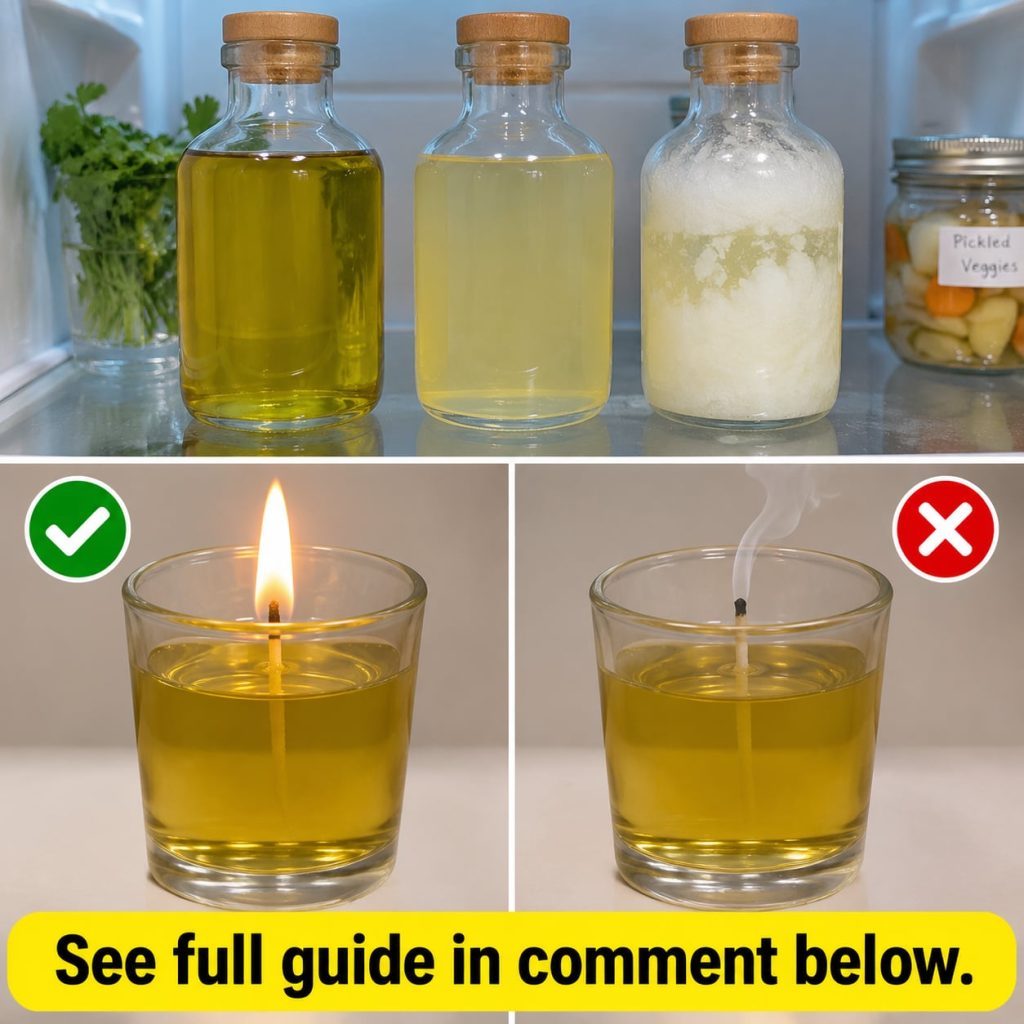
Pure olive oil begins to thicken and turn cloudy at cold temperatures. Many oils with a high share of refined or seed oils stay almost fully liquid.
- Pour about 50 ml of the oil into a clean glass jar.
- Place the jar in the refrigerator for 24 hours. Keep it away from the back wall where the temperature drops most.
- Check the texture. Genuine extra virgin olive oil usually becomes cloudy, semi-solid, or waxy. Some blends remain clear and fluid.
- Let the jar return to room temperature before judging the color and clarity.
Here is the part most people skip: a cold test does not prove purity. Some pure oils stay liquid longer depending on the cultivar and temperature. Use this as a warning sign, not a verdict.
Test 2: The Smell and Taste Check
Your senses can reveal freshness and common defects. Pour a small amount into a clean cup and warm it slightly between your palms.
- Smell it first. Look for fresh grass, green fruit, or herbs. Stale, musty, crayon-like, or vinegar-like smells suggest oxidation or poor storage.
- Taste a small sip. A good extra virgin oil often tastes fruity and may leave a peppery sensation at the back of the throat.
- Notice any greasy, flat, or waxy flavor. Those are common signs of refined oil or old product.
Quick Tip: Compare two bottles side by side. The contrast in aroma and bitterness is easier to notice than a single bottle judged alone.
How to Use the Results
If the oil passes both checks, it is likely fresh and reasonably authentic. If it fails one check, do not assume it is fake, but avoid using it as a finishing oil for salads or dipping. Try another bottle from a source with a clear harvest date and origin.
How Often to Test
Test each new bottle once. You do not need to repeat the process for every refill from the same trusted brand. Retest if the flavor changes suddenly, the bottle has been stored in heat, or the price is far below normal market levels.
How to Choose Olive Oil
Look for a harvest date, not only a best-before date. Choose dark glass or tin packaging, and buy the size you can use within a few months. Oils with a named origin, a protected designation, or a certification from a recognized testing program usually give you more verifiable information.
Storage
Keep olive oil in a cool, dark cupboard away from the stove. Close the cap tightly after each use. Do not store it in the refrigerator unless you want thicker texture for baking or cold use; refrigeration is not needed for freshness.
Comparison Table
| Check | Usually Points to Pure Olive Oil | Warning Sign |
|---|---|---|
| Refrigerator | Cloudy or semi-solid after 24 hours | Stays fully clear and fluid |
| Smell | Fresh grass, green fruit, or herbs | Musty, stale, or crayon-like |
| Taste | Fruity with a peppery finish | Greasy, flat, or waxy |
| Packaging | Dark glass or tin with harvest date | Clear plastic and no date |
Common Mistakes
- Treating the refrigerator test as proof of authenticity.
- Testing oil that has been exposed to heat or sunlight, which can confuse the results.
- Storing the bottle beside the stove or in a sunny window.
- Judging by price or color alone. Color varies between harvests and does not indicate quality.
- Leaving the cap open while cooking, which speeds up oxidation.
Cautions and Who Should Be Careful
Olive oil is a food, but people with food allergies or sensitivities should check ingredient labels and consult a healthcare professional if they have concerns. If you notice an unusual taste, odd smell, or any discomfort after eating an oil, stop using it. Home tests do not detect every adulterant, so if you need guaranteed purity for medical or commercial reasons, use a laboratory-tested product.
Quick Summary
- Best check: refrigerate for 24 hours and then smell and taste.
- Best use: finishing oil for salads, bread, and dishes where flavor matters.
- Storage: cool, dark, tightly closed.
- When to use: within a few months of opening.
- What to avoid: clear plastic bottles, no harvest date, and oil with stale or greasy flavor.
FAQ
Can the refrigerator test prove olive oil is fake?
No. It is a useful warning sign, but some pure oils remain liquid in the cold. Use it alongside taste and packaging checks.
Is it safe to refrigerate olive oil after testing?
Yes. Refrigeration is safe, though the oil will thicken. Let it warm to room temperature before pouring.
How long does olive oil last after opening?
Most extra virgin olive oil tastes best within a few months of opening. Keep it sealed and away from heat and light.
Can I freeze olive oil to test it?
Freezing is not recommended for home testing. Long freezing can change the texture and make the result harder to read.
Does a dark bottle guarantee quality?
No, but dark glass or tin helps protect the oil from light. Quality still depends on harvest, production, and storage.
Is cloudy olive oil bad?
Not always. Cloudiness can come from cold temperatures or natural sediment in unfiltered oil. A rancid smell is a better sign of spoilage.
Should I use fake-tested oil for cooking?
If it fails your checks, use it for cooking at moderate heat rather than raw finishing, and buy a better bottle for salads and drizzling.
Conclusion
Simple kitchen checks can help you avoid poor-quality olive oil, but they are indicators rather than certainties. Combine the refrigerator test, smell and taste, and a careful look at packaging to make a practical decision. You may also like: read more about choosing fresh olive oil in our full guide. Continue with: our storage tips for keeping cooking oils fresh longer.