Sweet potatoes are often treated as one vegetable, but the orange, white, and purple varieties differ in both nutrients and color. If you usually reach for the orange sweet potato, you may be missing the distinct antioxidant profiles found in the white and purple types. Understanding these differences can help you choose sweet potatoes on purpose rather than by habit.
In this guide, we’ll walk through each variety, what gives it its color, and how to use it in everyday cooking. Whether you’re planning a balanced plate or simply curious, you’ll leave with a clearer picture of how these three potatoes compare.
Why Sweet Potatoes Come in Different Colors
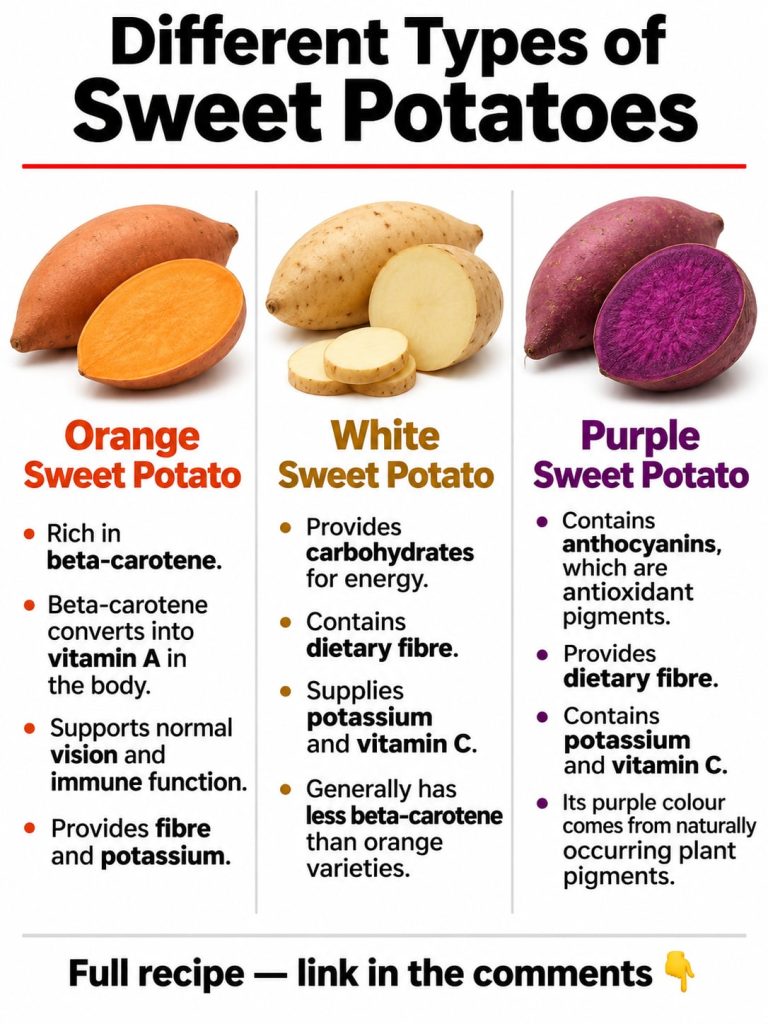
The color of a sweet potato is a useful clue to its nutritional character. Pigments in the flesh and skin reflect different groups of plant compounds. Orange varieties are typically associated with carotenoids, while purple varieties are commonly linked to anthocyanins, the same family of pigments found in blueberries and red cabbage. White varieties tend to be lighter in pigment, so their profile is often described in terms of their milder flavor and texture.
Orange Sweet Potatoes
Orange sweet potatoes are the variety most people know. Their deep color comes largely from beta-carotene, a compound the body can convert into vitamin A. They are a familiar choice for roasting, mashing, and baking, and their naturally sweet flavor makes them easy to enjoy in many dishes.
- Color: bright orange flesh
- Notable plant compound: beta-carotene
- Best known for: sweet flavor and soft, moist texture
White Sweet Potatoes
White sweet potatoes have pale, creamy flesh and a drier, more starchy texture than orange types. Their flavor is more subtle and less sweet, which makes them a good fit for dishes where you want the potato to blend in rather than dominate. Because they are lighter in pigment, they are often compared with other starchy vegetables when planning a balanced plate.
- Color: cream to pale yellow flesh
- Texture: drier and firmer after cooking
- Best used in: mashed, roasted, or stirred into soups and stews
Purple Sweet Potatoes
Purple sweet potatoes stand out for their vivid color, which comes from anthocyanins. These antioxidant pigments are the reason the variety is often highlighted for its unique nutritional profile. The flesh holds its color well during cooking, making it an eye-catching addition to meals and baked goods.
- Color: deep purple flesh and skin
- Notable plant compound: anthocyanins
- Best used in: roasted sides, colorful bowls, and desserts
Comparing the Three Varieties at a Glance
- Orange: sweet, soft, and rich in beta-carotene.
- White: mild, drier, and versatile in savory dishes.
- Purple: vibrant in color and notable for anthocyanins.
Choosing a mix of colors is one simple way to add variety to your meals. Each type brings a different flavor, texture, and set of plant compounds to the table.
Simple Tips for Cooking Each Variety
- Roast orange potatoes to bring out their natural sweetness.
- Use white potatoes in mashes or soups where a creamier, less sweet base works well.
- Cook purple potatoes gently to help preserve their vivid color.
Frequently Asked Questions
Is one sweet potato color healthier than the others?
All three varieties can fit into a balanced diet. Orange, white, and purple types offer different nutrients, so rotating between them can add variety to your meals.
Why is the purple color so intense?
The deep purple shade comes from anthocyanins, pigments that are also found in many other colorful fruits and vegetables.
If you have specific dietary needs or health conditions, it’s a good idea to speak with a qualified healthcare professional or registered dietitian before making major changes to your diet.
Which color do you reach for most often? Share your favorite way to cook sweet potatoes in the comments and let us know which variety you’d like to try next.