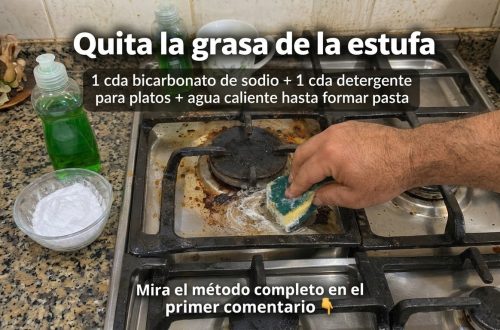
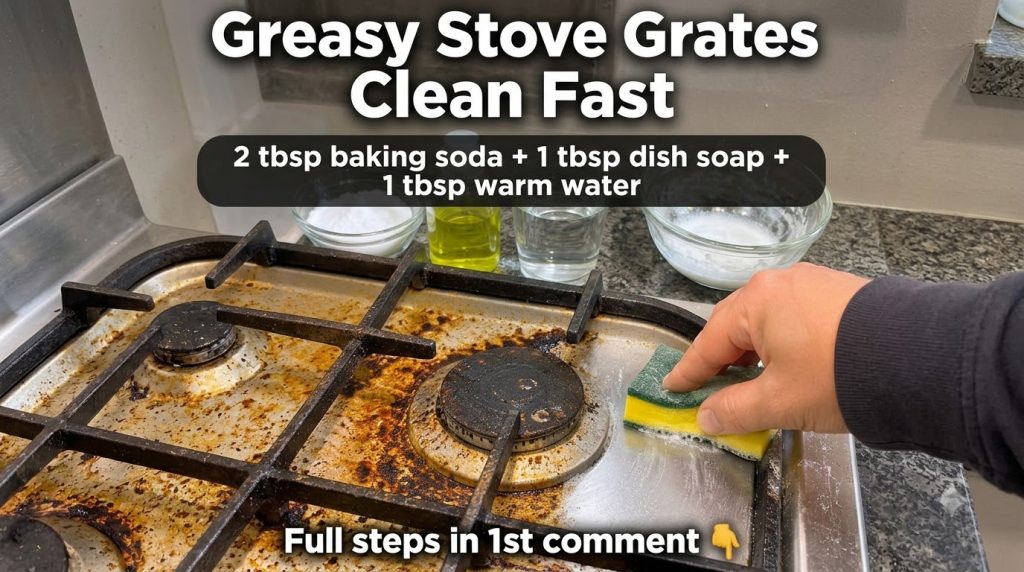
Greasy gas stove grates and burner caps are one of those kitchen jobs that keeps getting pushed to the bottom of the list. Over time, cooking splatter bakes onto the cast iron and turns into a dark, sticky film that wipes off poorly with a quick swipe. The good news is that most of this buildup comes off with warm soapy water, a little patience, and the right sponge. Here is a simple routine you can follow to get your stovetop looking clean again without harsh effort.
What You’ll Need
- Warm water
- Mild dish soap
- Baking soda (optional, for stubborn spots)
- A non-scratch scrub sponge (the green-and-yellow kind works well)
- A stiff nylon brush or old toothbrush for crevices
- Microfiber cloths
- A large basin, sink, or tub for soaking
Why This Method Works
Grease is oily, so it needs a soap that can break it up and let it rinse away. Warm water helps loosen cooked-on residue, and the soaking step gives the soap time to work into the grime. Baking soda adds a little gentle grit that helps lift stubborn spots without the sharp fumes of heavier products. A non-scratch sponge is important because it cleans well while protecting the finish on your cast iron and steel.
How to Make It
- Turn off all burners and let the stove cool completely before you start.
- Lift off the grates and burner caps. Take a quick photo of how they sit so you can reassemble them correctly.
- Fill your basin with warm water and add a generous squeeze of dish soap. Stir until it is lightly sudsy.
- Submerge the grates and burner caps and let them soak for 15 to 20 minutes. Heavier buildup may need up to 30 minutes.
- If spots still look dark after soaking, mix baking soda with a few drops of water to form a thick paste. Spread it over the stubborn areas.
- Scrub the grates and caps with the non-scratch sponge, using the brush for corners and the small openings around the burner.
- Rinse thoroughly with clean water and dry every piece completely with a microfiber cloth.
How to Use It
Start with the grates and burner caps, since they hold most of the grease. Work in small sections so the soap stays active. Use gentle circular motions on the cast iron and follow the direction of the grain when you clean the stainless steel around the burners. Wipe the steel with a damp cloth and then buff it dry so streaks and glare do not build up.
What to Expect
Light grease should lift in one soak and one scrub. Older, baked-on residue may need a second round, and some dark scorching may lighten rather than disappear completely. That is normal, especially on well-used cast iron. Regular wipe-downs after cooking will make future cleaning much faster.
Helpful Tips
- Clean the stovetop after it cools slightly each time you cook. Fresh grease is far easier to remove than baked-on buildup.
- Check the small flame ports on the burner caps and clear any debris with a dry brush so the burners light evenly.
- Make sure the burner caps sit flat and centered before you turn the gas back on.
- Keep a spare sponge just for the stove so it does not carry leftover food residue to other dishes.
Important Notes and Safety
- Never clean grates or burners while the stove is hot or still connected to a lit flame.
- Do not use steel wool or abrasive scouring pads on brushed stainless steel, since they can leave permanent scratches.
- Avoid soaking cast iron for hours or leaving it wet, because this can encourage rust. Dry it fully before putting it back.
- Do not mix bleach with ammonia, vinegar, or other cleaners. Combining them can release harmful fumes.
- If you notice a gas smell or the burners do not light correctly after reassembly, turn off the gas and check that all parts are seated properly before trying again.