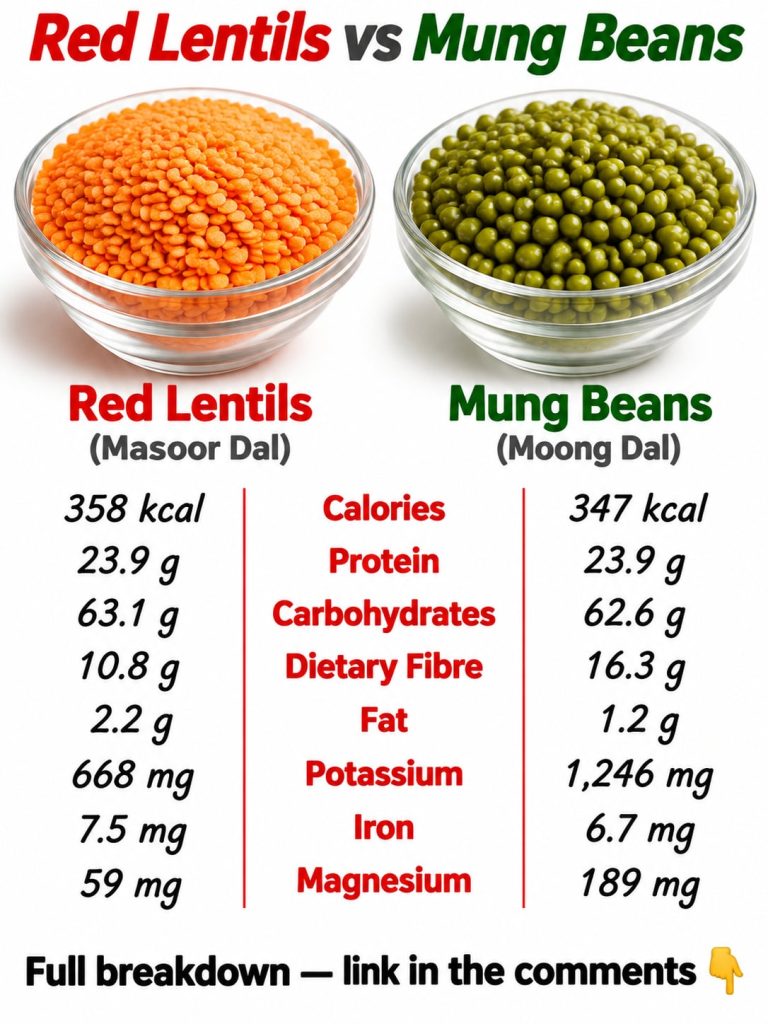
Red lentils and mung beans are two of the most popular plant-based staples in kitchens around the world. Both are affordable, cook relatively quickly, and work well in soups, dals, salads, and bowls. Choosing between them often comes down to taste and texture, but their mineral and fiber profiles can tell a useful story about how each one fits into your daily nutrition.
In this guide, we look at how red lentils and mung beans compare when it comes to fiber, potassium, and magnesium. You will also find practical ideas for using both in everyday meals, so you can decide which one fits your wellness goals or simply enjoy a little more variety on your plate.
Why Compare Red Lentils and Mung Beans?
Both red lentils and mung beans are legumes, which means they are valued for their plant-based protein, their fiber, and their mineral content. Because they look and cook differently, many people use them interchangeably without thinking about what each one brings to the table. A closer look at the numbers helps clarify the differences.
Nutrient values vary by variety, preparation, and portion size, so the comparisons below are general guides rather than exact measurements. Think of them as a starting point for building meals that suit your own goals.
Fiber: Supporting Digestion and Fullness
Fiber is one of the nutrients that legumes are best known for. Dietary fiber is commonly associated with healthy digestion and a feeling of fullness after meals. Both red lentils and mung beans contribute a meaningful amount of fiber per cooked cup, and they can be a helpful addition to a balanced diet.
- Red lentils are often described as a strong source of fiber for their size and cook down into a soft, creamy texture that blends easily into soups and stews.
- Mung beans also provide fiber and tend to hold their shape better when cooked whole, which can make them a good choice for salads and stir-fries.
Potassium: A Mineral for Everyday Balance
Potassium plays a role in normal muscle function and fluid balance. Many people do not get as much potassium as they could from their daily food choices, so legumes are a useful place to look. Red lentils and mung beans both contain potassium, and including either one regularly can help contribute to your daily intake as part of a varied diet.
Magnesium: A Nutrient Often Overlooked
Magnesium is involved in many processes in the body, including muscle and nerve function. It is found in a wide range of plant foods, and legumes are among the more convenient sources. Mung beans are often noted for a slightly higher magnesium content than red lentils, while red lentils remain a valuable part of a mineral-rich diet.
How to Use Each in Your Meals
The best choice often depends on the dish you have in mind. Here are a few simple ways to get the most from each one.
Cooking With Red Lentils
- Rinse the lentils under cold water until the water runs mostly clear.
- Simmer them in broth or water with onions, garlic, and spices for about 15 to 20 minutes, until soft.
- Stir the cooked lentils into soups, curries, or mashed spreads for a creamy texture.
Cooking With Mung Beans
- Soak the mung beans for a few hours or overnight if you want a shorter cooking time.
- Cook them in plenty of water for about 30 to 45 minutes, until tender but still holding their shape.
- Add them to salads, grain bowls, or stir-fries with fresh vegetables and herbs.
Simple Ways to Add Variety
You do not need to choose just one. Rotating between red lentils and mung beans across the week is an easy way to enjoy different textures and a broader range of nutrients. A bowl of red lentil soup one day and a mung bean salad the next can make plant-based meals feel fresh and satisfying.
Frequently Asked Questions
Which one has more fiber?
Both are good sources of fiber, and the difference between them is usually modest. The best choice depends on how you prefer to cook and eat them.
Which one is better for wellness goals?
Neither is a single answer for everyone. Both can be part of a balanced, varied diet. If you have specific health goals or dietary needs, consider speaking with a qualified healthcare professional or registered dietitian.
Final Thoughts
Red lentils and mung beans each bring valuable fiber, potassium, and magnesium to your plate. Rather than picking a single winner, many readers find that using both is the most practical way to build nourishing, balanced meals. If you would like the complete comparison guide mentioned in the original infographic, leave a comment with the word LENTILS and follow the instructions to receive it.
This article is for general educational purposes and is not medical advice. Please consult a qualified healthcare professional for guidance about your individual nutritional needs.