Unlock better health and nourish your heart and brain with essential omega-3 fatty acids. These vital fats play a crucial role in nearly every cell in your body, supporting everything from cognitive function to cardiovascular health. While many are aware of omega-3s, knowing the best food sources and how to incorporate them into your daily diet can sometimes feel overwhelming.
This comprehensive guide dives into eight of the top omega-3 rich foods, revealing their impressive nutritional content per 100g and offering practical tips on how to enjoy them. From plant-based powerhouses like flaxseeds and walnuts to the rich benefits of oily fish like salmon and mackerel, you’ll discover delicious ways to boost your intake and feel your best.
Let’s explore these essential foods and transform your approach to healthy eating!
The Power of Omega-3s: More Than Just Heart Health
Omega-3 fatty acids are a type of polyunsaturated fat that our bodies cannot produce on their own, making them an ‘essential’ nutrient we must obtain from our diet. The three main types are Alpha-linolenic acid (ALA), Eicosapentaenoic acid (EPA), and Docosahexaenoic acid (DHA).
While ALA is primarily found in plant sources, EPA and DHA are abundant in fatty fish. These fatty acids are renowned for their powerful benefits, particularly for the heart and brain. They can help reduce inflammation, lower triglyceride levels, support healthy blood pressure, and contribute to optimal brain function and mood regulation. Including these foods as part of a balanced diet can be a simple yet profound step towards overall wellness.
Your Guide to 8 Top Omega-3 Rich Foods
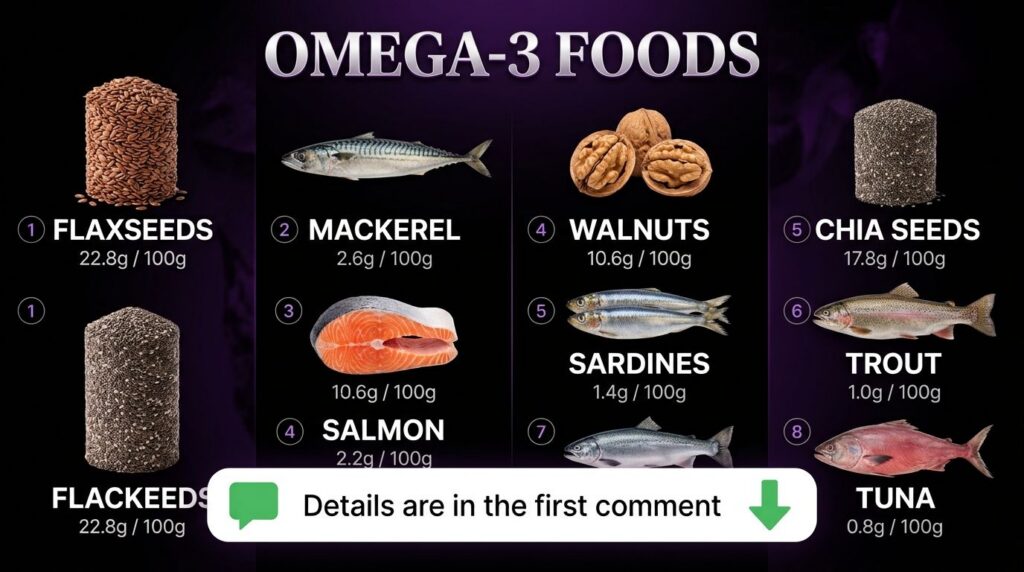
Here’s a detailed look at some of the best foods you can add to your diet to significantly increase your omega-3 intake, complete with their impressive omega-3 content per 100g.
1. Flaxseeds: A Plant-Based Powerhouse (22813 mg per 100g)
Flaxseeds are tiny seeds packed with a mighty punch of ALA omega-3s, fiber, and lignans. They are an excellent choice for those seeking plant-based sources of essential fats.
- How to enjoy: For optimal absorption, always consume ground flaxseeds. Sprinkle them over oatmeal, yogurt, or salads. Blend into smoothies for a creamy texture and nutritional boost. They can also be used as an egg substitute in baking (one tablespoon ground flaxseeds mixed with three tablespoons water equals one egg).
2. Walnuts: The Brain-Boosting Nut (9079 mg per 100g)
Walnuts are the only tree nut that provides a significant amount of ALA omega-3s, alongside antioxidants and other beneficial nutrients. Their unique fatty acid profile makes them particularly beneficial for brain health.
- How to enjoy: Enjoy a handful as a healthy snack. Add chopped walnuts to your morning cereal, oatmeal, or yogurt. They also make a fantastic addition to salads, pasta dishes, or baked goods like banana bread and muffins.
3. Chia Seeds: Tiny Seeds, Mighty Benefits (17552 mg per 100g)
Chia seeds are another fantastic plant-based source of ALA omega-3s, fiber, and protein. These hydrophilic seeds absorb liquid and form a gel, making them incredibly versatile in the kitchen.
- How to enjoy: Create a delicious chia seed pudding by mixing them with milk (dairy or non-dairy) and letting it set overnight in the refrigerator. Sprinkle over smoothies, yogurt, or salads. They can also be used as a natural thickener in sauces or jams. Consider them a key ingredient in many healthy breakfast ideas and healthy meal prep ideas.
4. Mackerel: An Oily Fish Delight (5134 mg per 100g)
Mackerel is a fatty, oily fish known for its rich flavor and high content of EPA and DHA omega-3s. It’s also an excellent source of vitamin B12 and selenium.
- How to enjoy: Grilled or baked mackerel fillets are a delicious main course. Canned mackerel can be a convenient addition to salads, sandwiches, or mixed with a little mayonnaise and herbs for a quick spread.
5. Salmon: The King of Omega-3 Fish (2260 mg per 100g)
Salmon is arguably the most popular source of EPA and DHA omega-3s, renowned for its delicate flavor and flaky texture. It’s also rich in high-quality protein and vitamin D.
- How to enjoy: Bake, grill, pan-sear, or poach salmon fillets. Serve with roasted vegetables, a fresh salad, or brown rice for a complete and high protein low calorie meal. Salmon is incredibly versatile for various healthy meal prep ideas.
6. Sardines: Small Fish, Big Impact (2205 mg per 100g)
Don’t let their small size fool you—sardines are powerhouse sources of EPA and DHA omega-3s, calcium, and vitamin D. They are also a more sustainable and budget-friendly option compared to larger fish.
- How to enjoy: Enjoy sardines straight from the can on crackers or toast. Add them to salads, pasta sauces, or mash them with lemon juice and olive oil for a quick, nutritious snack.
7. Trout: Freshwater Omega-3 Source (1729 mg per 100g)
Trout, particularly rainbow trout, is a delicious freshwater fish offering a good amount of EPA and DHA omega-3s, along with lean protein. It has a milder flavor than salmon, making it appealing to a wider palate.
- How to enjoy: Trout can be baked, grilled, or pan-fried. Stuff with herbs and lemon for a simple yet elegant meal, or flake cooked trout over green salads.
8. Tuna: A Convenient Omega-3 Option (1391 mg per 100g)
Tuna, especially albacore or skipjack, provides a solid dose of EPA and DHA omega-3s. It’s a staple in many pantries for its convenience and versatility.
- How to enjoy: Use canned tuna in sandwiches, salads, or tuna melts. For a fresh option, seared tuna steaks are a delicious and quick meal. Remember to choose light or skipjack tuna for lower mercury content and aim for moderate consumption.
Maximizing Your Omega-3 Intake: Practical Tips
Incorporating these omega-3 rich foods into your diet doesn’t have to be complicated. Here are a few simple strategies:
- Variety is Key: Don’t stick to just one source. Rotate through plant-based options and various fatty fish to get a broad spectrum of nutrients.
- Snack Smart: Keep walnuts or trail mix with chia seeds handy for easy, nutritious snacks.
- Breakfast Boost: Add flaxseeds or chia seeds to your morning oatmeal, yogurt, or smoothies.
- Meal Prep: Cook a larger batch of salmon or mackerel at the beginning of the week for easy additions to lunches and dinners. Invest in best meal prep containers for convenience.
- Canned & Convenient: Keep canned sardines, mackerel, or tuna in your pantry for quick meal solutions.
Frequently Asked Questions About Omega-3s
How much omega-3 do I need daily?
Recommendations vary, but generally, adults are advised to consume around 250-500 mg of combined EPA and DHA per day. Plant-based ALA needs are often higher. Always consult with a healthcare professional for personalized advice.
Are omega-3 supplements necessary?
While food sources are always preferred, supplements may be beneficial for individuals who don’t consume enough omega-3 rich foods or have specific health conditions. Discuss with your doctor before starting any supplement regimen.
What’s the difference between plant and marine sources of omega-3s?
Plant sources like flaxseeds, walnuts, and chia seeds provide ALA, which the body must convert into EPA and DHA. This conversion process is inefficient. Marine sources (fatty fish) directly provide EPA and DHA, making them more readily available for the body to use.